


The President of the Government, Pedro Sánchez, has celebrated the agreement reached between the Executive, the autonomous communities and social agents to launch the State Housing Plan 2026-2030, an initiative endowed with up to 7,000 million euros and aimed at expanding the supply of affordable housing. Sánchez has described the pact as “historic” after “many months of negotiation and work.”
The Chief Executive recalled, in a message published on his X account, that the plan was proposed at the last conference of presidents, held almost a year ago. The proposal for the distribution of funds was accepted this Thursday by all the autonomous communities during the housing sector conference, an endorsement that Sánchez considered “great news for Spain.”
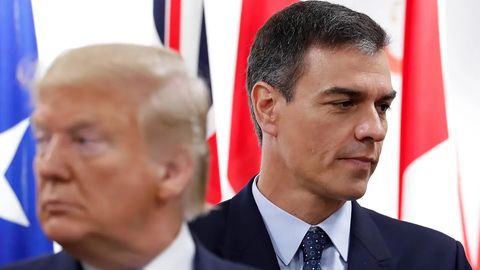
Trump proposes the expulsion of Spain from NATO: an email is leaked that confirms it and Sánchez responds, “we work on official documents”

Pedro Sánchez meets with Chinese businessmen to generate more employment in Spain
“I hope that others will come after her,” stated the president, who has defended the need for public administrations to work in a coordinated manner “to solve the housing problem.” In his opinion, this institutional cooperation is “the only way” to address one of the country’s main social and economic concerns.
A plan with triple the funds than the previous one
The State Housing Plan 2026-2030 will have a provision of up to 7,000 million euros, an amount that triples that of the previous plan. The program will distribute its resources into three large blocks: 40% will be allocated to protected housing, 30% to the rehabilitation of the existing residential park and the remaining 30% to aid for youth emancipation, the reduction of the rate of financial effort and intervention in stressed areas.
One of the most relevant elements of the plan is the indefinite protection of public housing financed with these funds. According to the announced design, the properties that are acquired or promoted under the program will permanently maintain the classification of protected housing, with the aim of preventing the public park from ending up being incorporated into the free market.
The new scheme also modifies the distribution of financial effort between administrations. The State will assume 60% of the planned investment, while the autonomous communities must contribute the remaining 40%. This proportion represents a greater effort for regional governments compared to previous plans, in which their contribution stood at 25% of the budget.
The agreement comes in a context of strong pressure on the residential market, marked by rising rent prices, difficulties in accessing purchases and the shortage of affordable housing in large urban areas. It now remains to be known the specific development of the calls, the territorial execution criteria and the calendar with which the administrations will begin to deploy the aid.