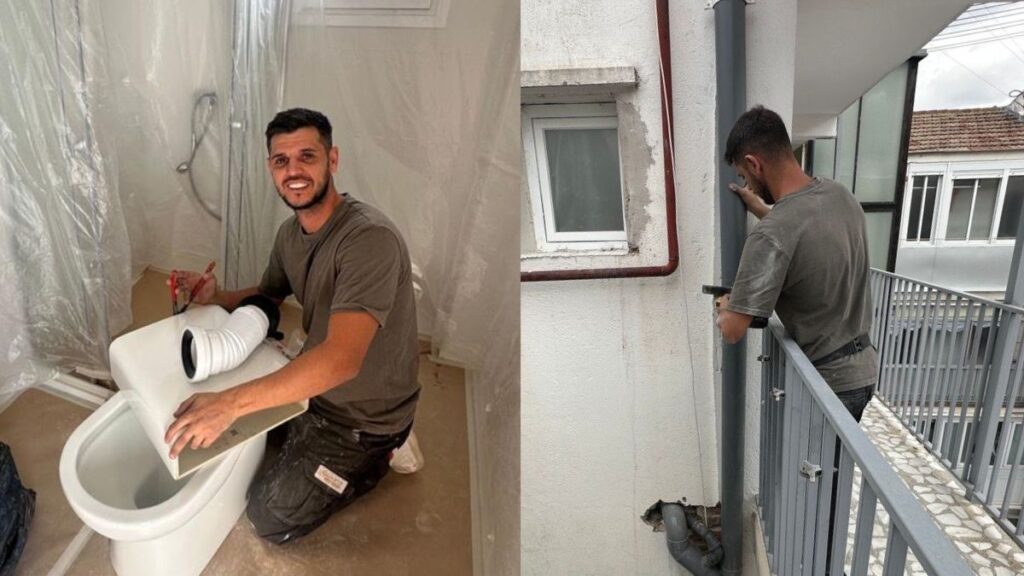
Talking about the salaries earned in traditional jobs is no longer as rare as it used to be. More and more professionals tell how much they earn and under what conditions they work, above all, to dismantle the idea that these jobs are poorly paid or have no future. This happens with plumbing, whose perception that society has is not very positive and is one of the reasons why fewer and fewer young people want to dedicate themselves to it.
This is what Santi Villafruela tells it, a 37-year-old self-employed plumber with more than two decades of experience, who shared his career in an interview with NewsWorkin which he talks about the reasons that led him to choose this profession, the evolution of his working conditions and the salary reality of the sector.
An animal shelter offers a free house in Greece for petting cats two hours a day: they only ask that they be over 25 years old, in good physical shape and stay for a month

The EU changes the rules: companies must report salaries in their job offers and publish the average salary of their staff from 2026
His first contact with the trade dates back to adolescence, when he started working with a relative. Since then, his career has been marked by the constant search for work independence.
After several years as a salaried employee, Santi decided to start out on his own, a decision that, as he says, meant a change in his economy because he went “from earning about 1,200 euros a month to having a salary that allows me to live in peace, travel and treat myself.”
How much does a self-employed plumber earn?
Currently, he assures that his net income is around 4,000 euros per month, once taxes and expenses have been deducted. However, he warns that these figures do not reflect the reality of the job, since the long hours, physical effort and responsibility associated with the job make a difference.
“The salary does not match the work you do, especially physically,” he says, emphasizing that “a good plumber should earn around 3,000 euros a month for everything that the daily work entails.”
“You spend all day beating yourself up, on your knees, with busted hands, with back pain, carrying weight and climbing to heights that, unlike a person who is sitting in a chair, do not run those risks.”
Differences between self-employed and salaried plumbers
One of the aspects that Santi highlights is the gap between those who are self-employed and those who are salaried. As he points out, “a plumber on staff rarely exceeds 1,800 euros per month, unless he has higher-ranking responsibilities.”
A difference that leads the professional to defend self-employment as a more profitable option within the sector, since “today, a plumber will earn more being self-employed than working for a company,” as he maintains.
Despite this, he recommends acquiring previous experience before taking the step. He considers it essential to know all the facets of the trade from within before starting out alone and therefore advises that “the ideal is to learn as much as possible first and, when the time comes, work on your own,” he concludes.