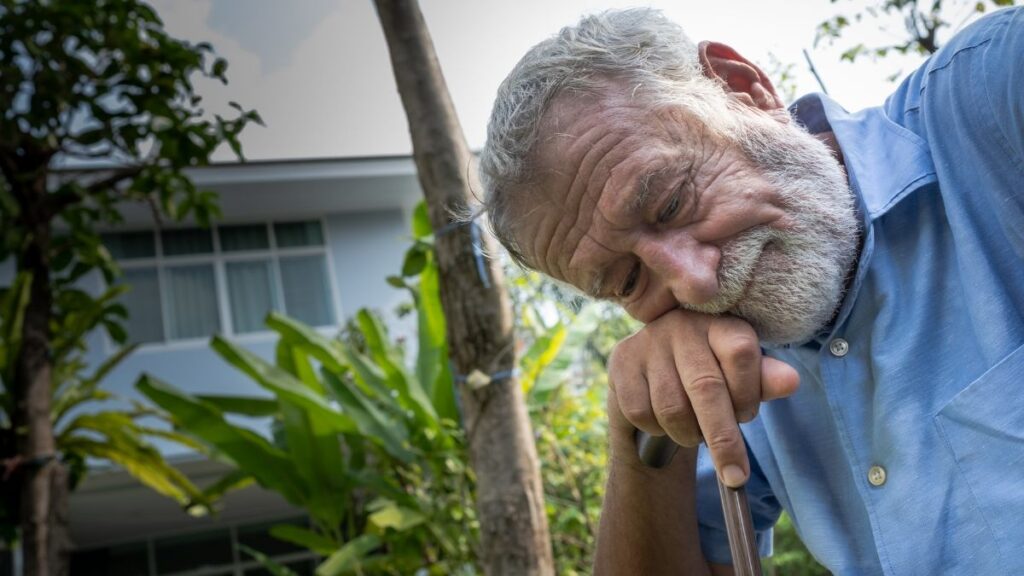
Psychologists agree that the mental strength seen today in the generation that grew up between the 1960s and 1970s is not a coincidence, but a result of the environment in which they grew up. At that time, the expressions of affection or family protection that are observed today were less frequent and the children or young people at that time had to find a way to face adversity alone.
Thus, different psychological approaches appear that interpret this hardness as a way of adapting to environments defined by self-sufficiency, a lack of explicit emotional support and work, which at that time was different from the concept we have today.
Carl Jung, pioneer of depth psychology: “Loneliness does not come from not having people around, but from being unable to communicate the things that seem important to one”
Two farmers reject 22 million euros in exchange for selling their land to build a data center: “they mean nothing”
In the so-called decade of the 70s, day-to-day life went by with many fewer tools to deal with emotional problems. There were no social networks, and it was more difficult to access mental health specialists. In fact, these types of problems were not as normalized as they are today, and many of those who suffered from them were ashamed to admit it.
Raising children was different, from the first moment they were taught to be autonomous, to solve their own problems themselves. If this behavior were transferred to the year 2026, it could be said that they were “emotionally repressed.” Could it be that in those years the absence of complaints, assuming responsibilities or verbalizing feelings were understood as something positive and not symbols of emotional repression?
Children exposed to an adverse environment later become functional and well-adjusted adults.
Psychologist Emmy Werner, in a study that began in the 1970s, found that about a third of children who were exposed to adverse situations later became functional and adapted adults.
This was due to the presence of protective factors linked, in many cases, to the assumption of responsibilities and the development of practical skills, beyond emotional support. From here came a generation that understood resilience as the way to face life.
Werner was not the only one who found this generation a source of inspiration and Ann S. Masten studied how adaptation mechanisms were activated that allowed the then children and young people to face extreme situations. And when this is talked about, it is about family crises or lack of money.
Problems showing affection to others
One of the most characteristic traits of those who grew up in the 60s and 70s is the difficulty in showing affection. They were completely dedicated to both work and home care, leaving aside direct emotional communication.
Facing complicated situations with confidence is an advantage but it also has its dark side. This is none other than not knowing how to manage your emotional side. Psychologists agree that this attitude is a response that is conditioned by the environment.
Experts do not want to “idealize the past”
Psychology experts agree that the debate should not enter into an idealization of the past or a simple criticism of what is happening. It is about understanding the conditions by which this generation presents behaviors that are different from those seen in the 21st century.
Now emotional health is treated in a deeper way, incorporating new tools to integrate vulnerability and strength. Emotional strength and at the same time the expression of feelings should not be contradictory, but complementary.
Understanding this hardness helps current generations understand what their elders have gone through to redefine their self-care models.