
When an owner sells a home that is rented, one of the main doubts for both the buyer and the tenant is what happens to the property. lease. Although many people believe that the sale of the property allows the rental to end automatically, the Urban Leases Law (LAU) establishes just the opposite and protects the continuity of the tenant in the home.
Article 14 of the LAU states that the new owner must maintain the rental contract that was already signed and assume the obligations of the previous landlord. That is, even if the owner of the home changes, the tenant can continue living in it during the minimum time recognized by lawwhich is 5 years or 7 if the landlord is a legal entity.
Gonzalo Bernardos, economist, on rents: “A vulnerable tenant is now considered anyone who earns less than 1,600 euros”

A BBVA company recovers a home after the rent reached its maximum term despite the fact that the tenant was vulnerable and had a social contract of 177 euros: Justice confirms that it is not obliged to renew it or offer a new one
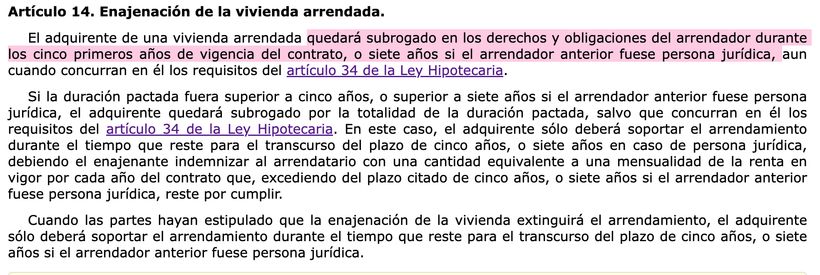
This means that if a person signs a rental contract and, for example, in the second year the owner sells the apartment, the buyer cannot force the tenant to leave the home simply because he or she has acquired the property.
The new owner takes the position of the former landlord
Another of the most common doubts is what happens when a rented home changes ownership. In these cases, the Urban Leasing Law (LAU) establishes that the buyer takes over the position of the former landlord and must maintain both the duration of the contract and the conditions agreed upon with the tenant.
This means that the new owner begins to collect the rent and assumes the obligations derived from the rental, without being able to unilaterally modify the contract or require the tenant to leave the home before the legal deadline.
Even so, the regulations themselves contemplate some exceptions. Among them, the possibility of recovering the home to use it as a habitual residence, provided that this option expressly appears in the contract and the requirements set forth in article 9.3 of the LAU are met.
The tenant also has preferential right to buy the home
In addition to guaranteeing the continuity of the rental, the legislation recognizes another important right for the tenant when the owner decides to sell the home. Article 25 of the LAU establishes the so-called right of preferential acquisition, which allows the tenant to have priority to purchase the property before other potential buyers.
The law states that the owner must communicate to the tenant his intention to sell the home, indicating the price and essential conditions of the operation. From that moment on, you have a legal period to decide if you want to exercise that right and acquire the property under the same conditions offered to third parties.
If the owner sells the home without previously communicating the transaction to the tenant, or does so by hiding the real conditions of the sale, the tenant can exercise the so-called right of withdrawal, which allows him or her to keep the home after the sale has been made, acquiring it under the same conditions agreed upon with the buyer. In this case, you have a period of 30 calendar days from when you are formally notified of the sale to exercise that right and replace the buyer.