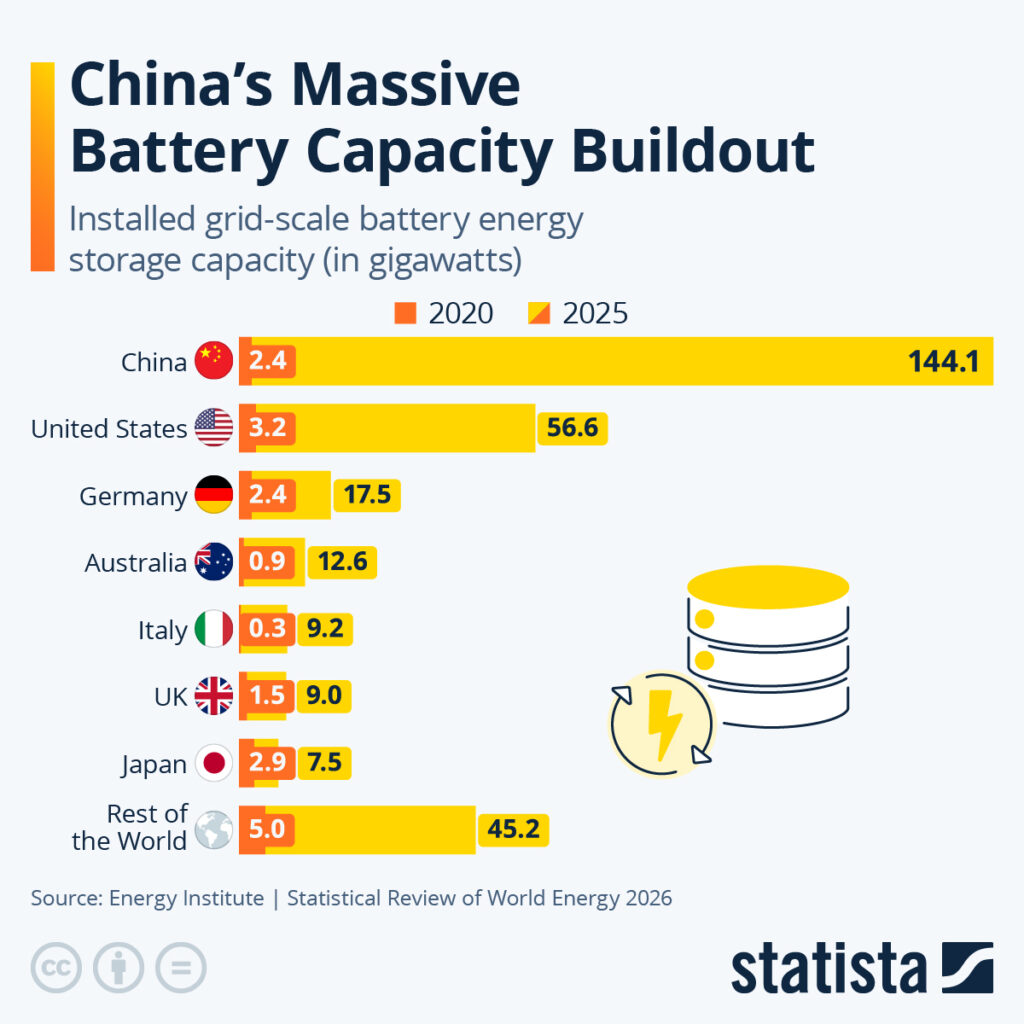
China has established itself as the world leader in large-scale battery energy storage. Between 2020 and 2025, its installed capacity went from just 2.4GW to more than 140 GWa figure that far exceeds that of the United States, which is around 57 GWand to the rest of the countries of the world.
This growth responds to the rapid deployment of renewable energies, especially solar and wind. As these technologies produce electricity intermittently, storage systems allow surplus energy to be stored when generation is high and released when demand increases or renewable production decreases. In this way, batteries provide stability and flexibility to the electrical grid.
Chinese leadership is also explained by a combination of public policies, regulatory incentives and a powerful domestic battery manufacturing industry. In many regions of the country, new renewable projects must incorporate storage systems, which has accelerated the adoption of this technology. Additionally, declining battery costs and the strength of the local supply chain have further boosted the market.
Overall, the development of energy storage has become a key element for the energy transition. As the share of renewable energy increases, greater storage capacity is essential to ensure a more reliable, efficient and resilient electricity supply.