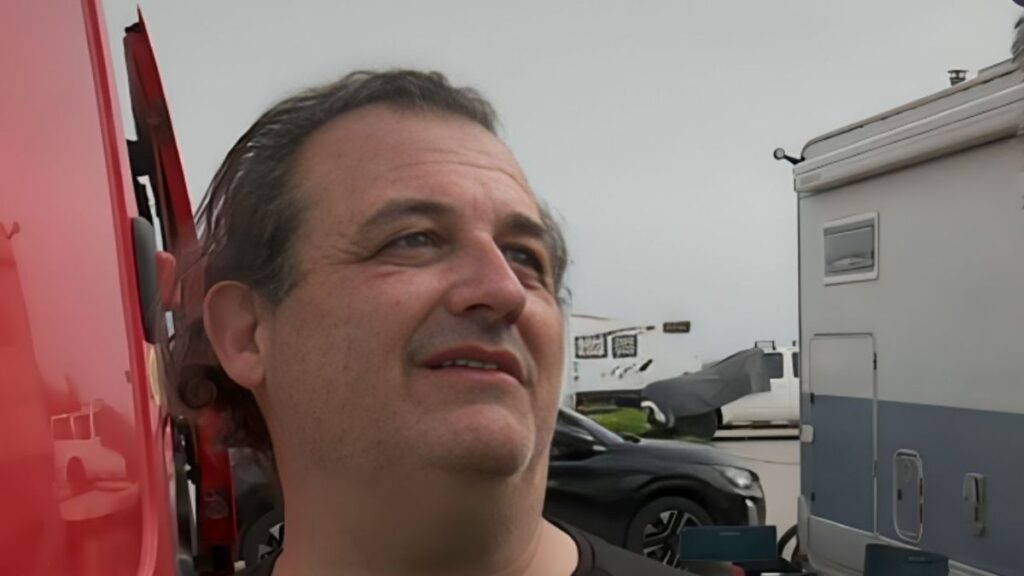
Rafael works at the Malaga airport “with a normal salary”, but he cannot afford to rent an apartment and has been forced to live in a motorhome. He is separated and, when it is his turn to be with the girl, they have come to share a bed in just a few square meters, until he has changed vehicles so that the little girl can have her own bunk, this is how he explains it to Public Mirror.
It is not an isolated case: in the vacant lot where he lives, at least 17 airport workers (baggage handlers, coordinators, catering staff) have turned trucks and caravans into the only possible home despite having a payroll and stable employment.
Housing at a luxury price
The scene is better understood with the context of housing in Spain. Rent closed 2025 with an average increase of 8.5% in the country, standing at 14.7 euros per square meter, according to data from Idealista.
That means that a 60-meter apartment in Spain costs more than 800 euros, but in stressed and tourist areas the figure skyrockets. On the Costa del Sol alone, recent reports put the rental of 60 meters at around 900 euros per month in municipalities such as Benhavís, Estepona or Torremolinos, and up to 1,000 euros per month in Marbella.
That is to say, the roof has become more expensive much faster than salaries, which have grown around 2 or 3% annually, while rents have risen close to or greater than 8%. In Malaga, one of the provinces with the most expensive square meter in Andalusia, the average rent for 60 square meters is around 846 euros per month, with increases of more than 13% in just one year.
For an airport worker with an average salary, dedicating more than 50% of salary to housing is the norm, it is not the exception…, a situation that conflicts with the common recommendation of not exceeding 30% of income.
Living on wheels
As rent skyrockets, caravanning has been transformed. In 2025, more than 7,000 new camping vehicles were registered in Spain and the second-hand market “continues to skyrocket,” according to the ASEICAR employer association.
What was once leisure has now become a refuge: more and more people are buying a second-hand motorhome to live in and not to travel. Rafael himself has sold his old van-house to another family “in the same situation”, who also cannot afford an apartment and is also moving to 10 square meters on wheels.
The price is not less either. The new second-hand motorhome cost him 24,000 euros, financed like someone buying a car, in exchange for being able to offer his daughter her own bed.
Even so, many residents of the wasteland pay between 400 and 500 euros per month to park and live in their vehicles, amounts that show the extent to which the real estate market has expelled workers with payroll into precarious situations.
And Rafael, with a steady job, assumes that “with a normal salary it is unfeasible to have a home in Malaga” and that, for now, his most realistic option is to continue “living on wheels” while he tries to give his daughter something resembling a home.