In recent years there has been talk of the digital euro. As defined by the European Central Bank (ECB), it would be “a digital form of cash” that would function as an electronic means of payment issued by the ECB. Therefore, it would be available to all citizens of the euro area for any digital payment. This euro would always have the same value as the physical one, for example, “a digital euro and a one-euro coin would be worth the same,” according to the European organization.
Furthermore, the ECB adds that neither they nor the Eurosystem “could identify who you are or what you buy from the payment data obtained” and that in the offline mode, the level of privacy “would be comparable to that of cash.” For the banking entity, “in an increasingly digitalized society”, this digital euro “would be a new advance for our single currency.”
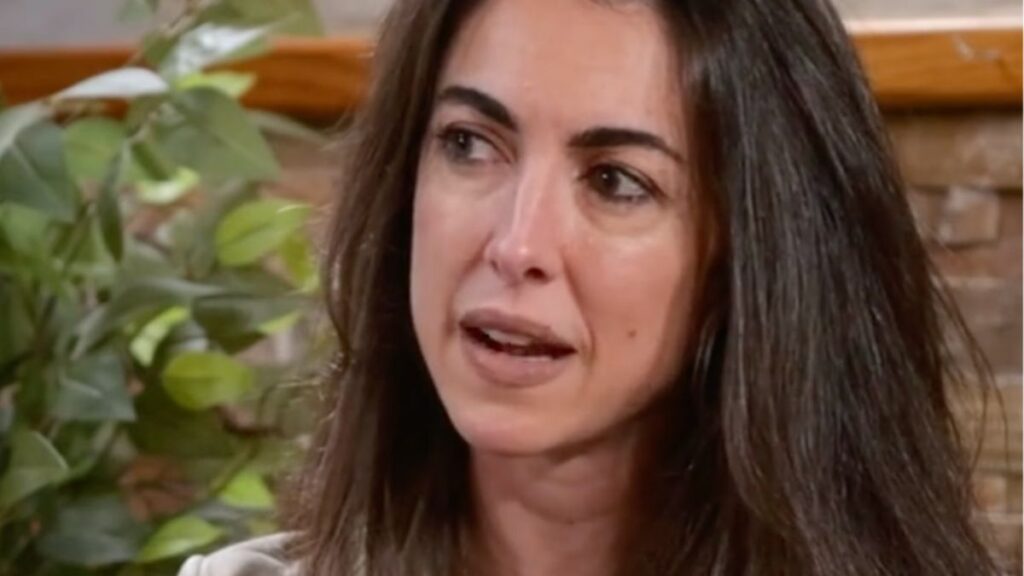
Now, not all financial experts think the same. The expert Esmeralda Gómez (graduate in Mathematics with a specialty in Astrophysics, doctor in Economics and with a master’s degree in Quantitative Finance), explained at the end of 2025 for the Organization of Consumers and Users (OCU) that the digital euro would be “very dangerous.”
“We have to have physical money at home. There is a somewhat dangerous current that is pushing us all to use the digital means of payment with traceability. So, our freedom is a little in check right now. We have to protect ourselves and one of the ways is by paying with physical money,” he says in the aforementioned interview, within the ‘Talks with Meaning’ cycle.
“If physical money disappears tomorrow, we are at the mercy of what happens there and what they say”
This financial expert explains that, although “they try to convey it as something positive that will put an end to fraud,” this supposed benefit would come “at the expense of the freedoms of 500 million people.”
“The moment they impose in one way or another, that they invite the population and with the absence of financial education the population ends up transferring their savings and deposits to a Eurodigital, if physical money disappears tomorrow, we are at the mercy of what happens there and what they say,” he warns.
In this sense, he states that “with the digital euro they will be able to condition your habits in a possible future”, adding below why and how: “If you are a good citizen, according to what I dictate, I will leave the digital euro to you, but if not, maybe I will freeze it, freeze your savings or penalize you. Or we will establish a social credit as is happening right now in China.”
Esmeralda Gómez, throughout the interview, places great emphasis on financial education, considering that, today, Spain would be suspended. A deficiency that not only causes us to make the mistake of investing in abusive products, but also causes us to delegate in aspects that we should not, such as in the construction of the retirement pension.