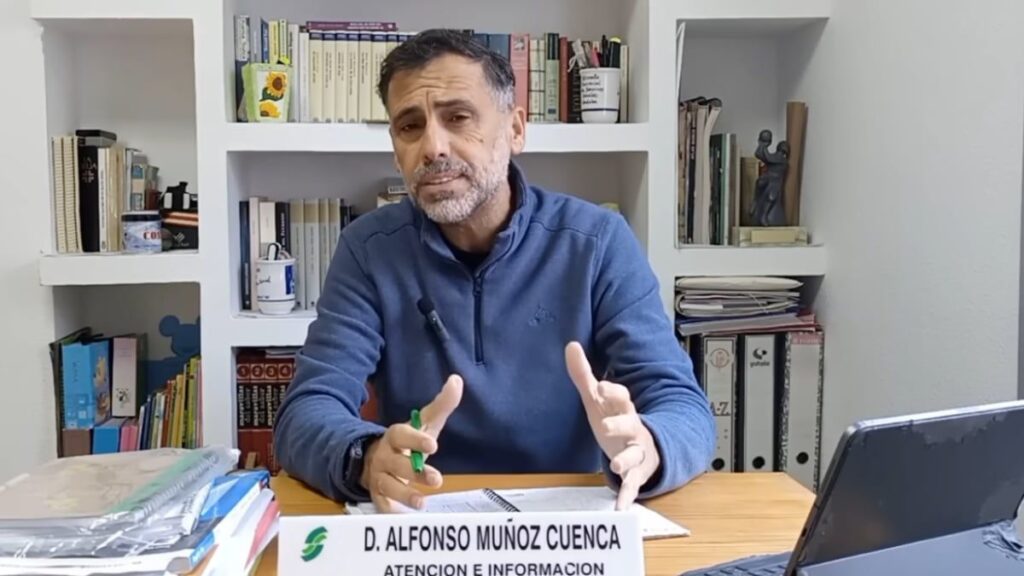
The Government of Spain has raised pensions according to the CPI so that pensioners do not lose purchasing power, but leaving a silent bill in thousands of homes. This reaches the pharmacies and the pension payroll, with a withholding that was not applied before. This is how he tells it Alfonso Muñoz Cuencaa Social Security official specialized in pensions and benefits, who explains how the pharmaceutical co-payment for pensioners and personal income tax in 2026 works.
“There are more and more pensioners to whom this pharmaceutical co-payment is applied,” and they notice it “when they arrive at the pharmacy and notice that they have to pay medication costs,” says the official.
The reason is not that the rule has been tightened, but that “pensions have been increasing in accordance with the CPI and the limit that existed for not paying for medication has remained stagnant for many years, specifically since its entry into force in 2012.” In other words, more than 14 years.
Muñoz explains who is left out of the payment, leaving the rest very limited. According to his explanation, “almost all pensioners must pay for medication, except” those who are not required to present income and also do not exceed “11,200 euros”, which translates as a pension “less than 800 euros per month.” In this sense, the official is sincere and says that “practically almost all pensioners who receive a minimum pension exceed that limit and, therefore, have to pay for medication.”
To this exception are added the groups that, by their nature, remain outside the co-payment: non-contributory pensionsMinimum Living Income, family benefit for dependent children, insertion income and recipients of unemployment benefits. The underlying idea is simple and, in 2026, increasingly visible. If the threshold does not move, the revaluation ends up pushing those who were previously inside towards payment.
Why is there personal income tax in pensions?
The second part of Alfonso’s notice is about tax matters and, for many, more difficult to assume. “More and more pensioners are having personal income tax withheld from their pension,” he explains, and adds the question he often hears. “If I am collecting a pension, why do I have to continue paying personal income tax?”
To answer this question, it is best to go to the Personal Income Tax Law (Law 35/2006 on Personal Income Tax) where article 17.2 clearly states that “social security pensions and passive assets and passive classes, as well as other public benefits for retirement, disability, widowhood or similar, will be considered income from work.”
That point is what explains why there is withholding, just as it happens with a payroll, even though the payer is Social Security. And it also explains why the real debate is not whether the pension is taxed “yes or no”, but how much and in what cases it is exempt.
Muñoz explains which are the three major exemptions that do not have personal income tax and which are absolute permanent disability or major disability, orphanhood and non-contributory pensions. In the law, the exemption from benefits for absolute permanent disability or severe disability is included as exempt income in article 7 of the aforementioned law. Pensions and passive assets due to orphanhood and, in general, certain public benefits linked to that situation are also considered exempt.
Here it is convenient to explain and clarify something that citizens usually mix in the same label. Not every permanent disability is “great disability.” The General Social Security Law distinguishes degrees, including absolute permanent incapacity for all work and severe disability (which requires a third person for the most basic acts of life such as eating or dressing).
Withholdings depend on income, community and family
Muñoz insists that the rate is not fixed. “The percentage of personal income tax withholding that is applied to a pension depends on three factors”: the gross annual amount, the regional brackets and the family situation. And that is why he recommends going to the individual calculation. “The correct thing would be to go to the withholding calculator that the Tax Agency has on its website” (which can be accessed through this direct link).
Two real examples: minimum pension and half pension
To better understand all this, Alfonso explains two cases where the double effect is seen, retention and co-payment. In the first, a pensioner with a “minimum pension with a dependent spouse” receives “1,256 euros per month,” and calculates a personal income tax withholding of “1.08%,” about “13.56 euros per month.” Added to this is the pharmaceutical co-payment of “10%” with a monthly limit of “8.23 euros”. Result, “a withholding between personal income tax and monthly pharmaceutical copayment of 21.78 euros.”
In the second, a retiree with “1,600 euros per month” would bear a withholding of “10.1%”, which amounts to “165.86 euros per month”, plus a pharmaceutical co-payment of “10%” with a limit of “18.52 euros”. The message is repeated, but on a different scale. “More and more pensioners have personal income tax applied to their pension, even in a minimum pension, and they also have a pharmaceutical co-payment, even in a minimum pension.”