

Early retirement is an option for workers who want to end their career early. The problem is that it is not “free”, since Social Security applies reducing coefficients in the form of a percentage that cut the amount of the pension forever, and which can reach up to 21% in the voluntary modality or even 30% in the involuntary modality.
This is a reality that almost every worker is clear about. However, what very few know is that there is a fear that accepting this cut could end up harming the spouse with a lower widow’s pension in the future. Luckily, regulations and experts are clear: this “punishment” is not inherited.
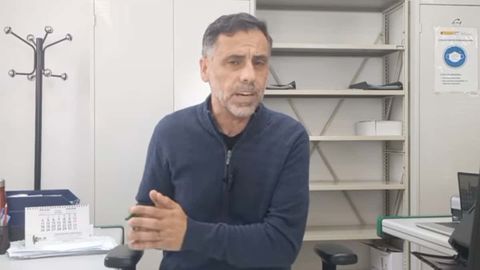
Alfonso Muñoz, Social Security official: “Early retirement does not reduce the spouse’s future widow’s pension”
The Supreme Court denies a widow’s pension to a woman after 22 years of cohabitation and two children together: she did not register as a de facto couple
Alfonso Muñoz Cuenca, a Social Security official specialized in pensions, has clearly explained that “the widow’s pension is calculated on the same regulatory basis that was used to calculate the retirement pension, not on the amount that the pensioner has been receiving.” That is, the system ignores the cut for early retirement when it comes to protecting the survivor.
The key is in the difference between Regulatory Base and Final Pension
To understand why the spouse is safe, you have to know that Social Security uses two different concepts. On the one hand, there is the regulatory base, which is the “starting number” obtained from the average of the contribution bases of recent years. On the other hand, there is the final pension, which is the result of applying the cuts due to advancing the retirement age.
According to Muñoz Cuenca, when the retiree dies, Social Security does not look at how much money the pensioner was collecting in his bank account. What the system does is go back to the original regulatory base of the deceased (the one that had no cuts). The corresponding percentage of widowhood is applied to this figure, that is, it will be 52% in general, which can rise to 60% for those over 65 years of age or 70% if there are family responsibilities.
To make it understandable, Muñoz Cuenca gives an example with a worker who has a regulatory base of 1,500 euros:
- If you retire at the ordinary age: You receive 100%, that is, 1,500 euros. Upon death, your spouse receives 52% of those 1,500 euros (780 initial euros).
- If you retire a year early: A cut is applied and your pension drops, for example, to 1,421.25 euros. However, upon death, widowhood is recalculated on the original 1,500 euros base.
The result for the spouse is exactly the same in both cases. Early retirement penalizes the worker’s pocket while he or she lives, but not the survivor’s pocket.
Requirements to receive the pension if you were already a pensioner
Another advantage of the deceased being already retired is the simplification of procedures. As established by the General Social Security Law, holders of contributory retirement pensions are automatically considered “subjects responsible” for death and survival benefits.
This means that, in these cases, the system considers the contribution requirement fulfilled and does not require additional minimum periods from the deceased. The surviving spouse (or the registered de facto couple who meets the cohabitation requirements of article 221) will only have to prove family ties to access the right.
In short, the decision to retire before the ordinary age (set gradually until reaching 67 years of age in 2027) only affects the benefit of the interested party himself, guaranteeing fair and complete protection for the family in the future.