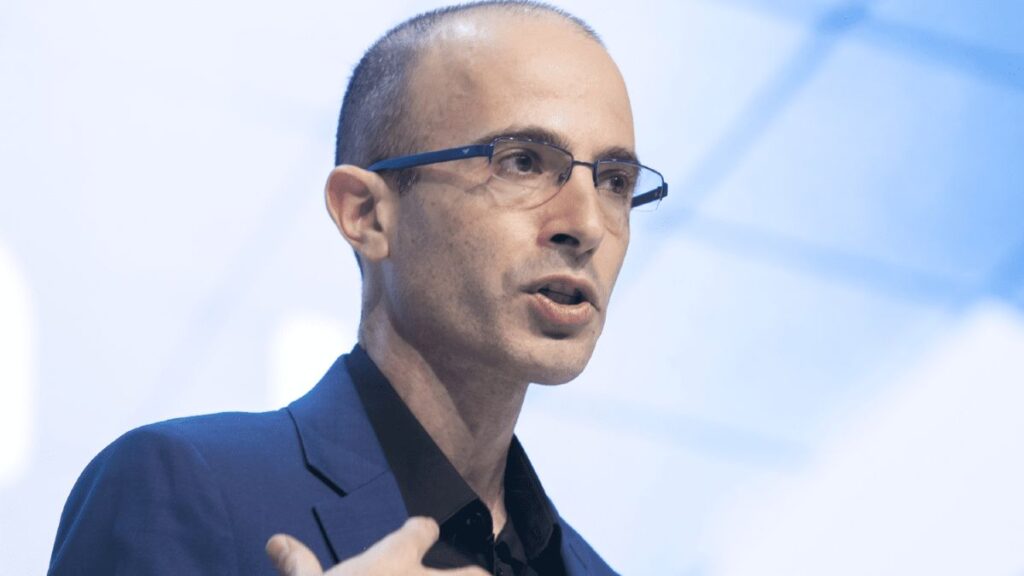
The world as we know it is about to disappear and, with it, the usefulness of the knowledge acquired over decades. This is what Yuval Noah Harari, the historian and philosopher who has become the most influential voice of the technological era in 2026, defends.
For the author of Sapiensthe speed of Artificial Intelligence will force citizens to constantly reinvent themselves, where the ability to “forget” will be more valuable than that of accumulating data. “The key to adapting to the new world is to forget. You have to be able to forget what you think you know,” says the thinker.
Psychology agrees that people who start everything and finish nothing are not lazy, but rather their brain has become addicted to the novelty and the initial kick of each project.
An 84-year-old landlord: “I don’t want them to pay my rent, but to help me live better”
The end of early specialization
Harari maintains that the traditional educational system is becoming obsolete in the face of a technology that is already capable of programming and improving autonomously. This reality will directly impact the labor market, eliminating consolidated professions in just two decades. According to the philosopher, we are heading towards a scenario of absolute uncertainty where linear learning has died.
“We know that many current professions are going to disappear. Others will emerge, but we don’t know which ones,” explains Harari. For this reason, he believes that “teaching young people a set of very specific skills is a bad idea.” Instead, the philosopher proposes promoting resilience and flexibility, since what we learned in our youth will no longer be useful when we reach 30 or 50 years of age.
The danger of human hacking
Beyond employment, Harari’s concern lies in the vulnerability of the Homo Sapiens. In a context where Big Data and algorithms can know our desires better than ourselves, the philosopher warns of the risk of becoming “hackable animals.” To avoid this, he proposes a solution that seems rescued from antiquity: deep self-knowledge.
“The first step towards knowledge is to recognize that we don’t know something. If you pretend to know, you will never learn anything new,” he states emphatically. For the historian, the honesty of recognizing one’s own ignorance is the only defense against an AI that seeks to predict and manipulate human behavior.
Silence as resistance
Faced with the advance of “Dataism”, the new religion that values beings only for their ability to process data, Harari practices what he preaches. The philosopher, who does not use smartphonededicates two hours a day to meditation and holds absolute silence retreats for 60 days a year.
This philosophy of life, which is already strongly felt in Spain in the face of the debate on Universal Basic Income and digital ethics, suggests that the greatest luxury of 2026 is not the latest technology, but the ability to maintain attention.
“The ability to say ‘I don’t know’ requires a lot of honesty and courage,” he concludes, reminding us that, in the 21st century, mental flexibility is not an option, but a survival strategy.