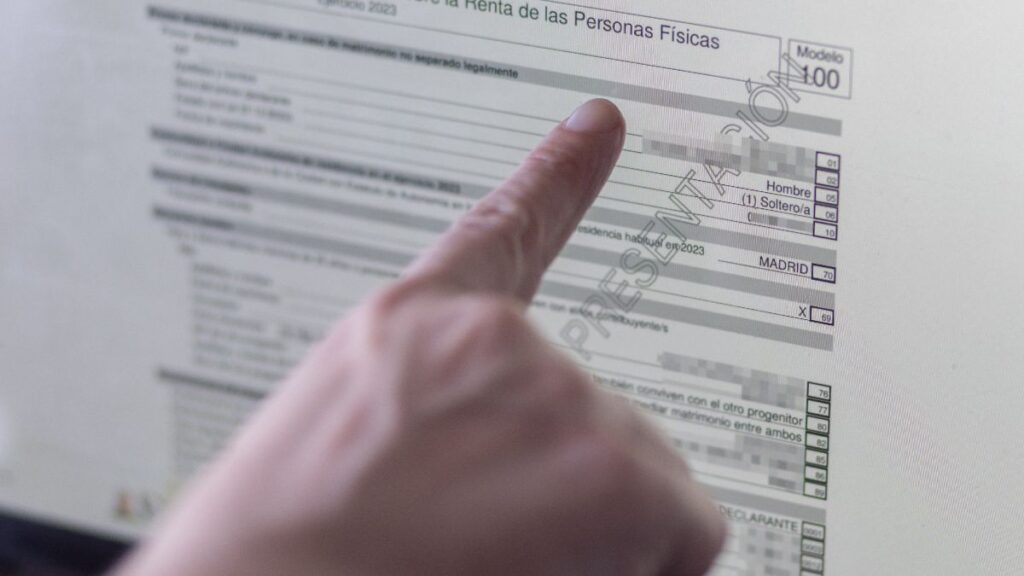
The Treasury does not charge more than what is due, since it simply regularizes what you already owed and was not withheld during the year. The Income Tax return is the adjustment between what was paid month by month and what actually corresponded according to all the income for the year. When this adjustment is negative, the result is payable. These are the most frequent causes.
Two payers applying separate withholdings
Each company calculates personal income tax withholding on the salary it itself pays, without knowing how much the other employer pays. If in 2025 you worked for two companies and the second paid more than 1,500 euros, each one will have withheld applying a lower rate than that corresponding to the sum of both salaries.
Example: one company retains the annual salary as if it were 18,000 euros and the other as if it were 10,000 euros. But the sum is 28,000 euros, and the rate that corresponds to that section is higher than the one that each one applied separately. That difference appears as a debt when filing the return.
The SEPE applies only a 2% withholding
Unemployment benefits are taxed as income from work, just like a salary. The problem is that the State Public Employment Service applies a minimum withholding of 2%, regardless of what the taxpayer’s real marginal rate is.
A worker who received 15,000 euros in unemployment benefits in 2025 has only 300 euros withheld. If your actual effective rate is 12%, you should have paid €1,800. The difference, 1,500 euros, appears when submitting the declaration. Those who want to avoid this adjustment can request a higher withholding from SEPE using form 145 during the collection period.
Profits from the sale of shares, funds or real estate
Capital gains derived from the sale of financial assets or real estate are only withheld at source when the seller acts through a Spanish financial entity and under the established conditions. In many cases, especially in the sale of real estate or shares in unlisted companies, there is no prior withholding.
The rate applied to these earnings based on savings ranges from 19% to 30% depending on the amount. If during the year a flat, shares or funds were sold at a profit, and that money did not pass through any intermediary that was retained, the statement will include the full debt.
Subsidies and public aid that do not retain
Public aid is taxed in personal income tax as capital gains according to article 14.2.c) of the Personal Income Tax Law. The young rental bonus, of 250 euros per month, adds up to 3,000 euros per year that must be declared even if no entity has withheld anything at the time of collection. The same applies to subsidies from the Vehicle Renewal Plan, aid for housing rehabilitation or certain regional benefits.
Anyone who received any of this aid in 2025 and does not take it into account when reviewing the draft may be in for a surprise. The Tax Agency has access to the data of the administrations that grant this aid and cross-references it with the declaration submitted.
Salaries between 22,000 and 35,200 euros: the effect of the reduction of withholdings
In 2023, the Government reduced the withholding rate applicable to salaries of up to 35,200 euros to offset the impact of the increase in the SMI. The result is that many workers in that bracket received more net money on the payroll during the year, but with a lower withholding than what corresponds to their real rate.
According to the calculations released by the Treasury technicians (Gestha), the difference can be between 400 and 900 euros to be paid depending on the exact salary and personal circumstances. The closer the salary is to 35,200 euros and the lower the family responsibilities, the greater the adjustment will be.
What can you do if you pay
If the result is payable, it does not have to be paid at once. The Tax Agency allows the amount to be divided into two payments: 60% before June 30 and the remaining 40% before November 5, without interest or surcharge. To benefit from this division, simply mark the corresponding option when submitting the declaration.
If the amount is high and cannot be assumed within these deadlines, there is also the possibility of requesting a deferral or extended installment through the Tax Agency’s electronic headquarters, although in that case late payment interest is generated.