In March, Social Security paid the Minimum Vital Income (IMV) to 829,399 homes, in which 2.5 million people live. The monthly payroll has reached 495.6 million euros, with an average amount of 543 euros per household.
Coverage has added 125,920 more benefits in one year, a growth of 18% in protected households. Since the IMV was launched in 2020, 3.5 million people have received the benefit.
The profile continues to be predominantly female: 68% of the owners and 53.4% of the beneficiaries are women. The average age of those receiving aid is 28.5 years, and drops to 20 if the holders are excluded.
More than a million minors
Minors are the largest beneficiary group. The benefit reaches 1,034,319 children and adolescents, 41% of the total, since the IMV increases according to the number of children in the cohabitation unit. Seven out of ten protected households (570,548) live with minors, and almost 140,000 are single parents, headed mostly by women.
Added to this coverage is the Childhood Assistance Complement (CAPI), a reinforcement for each dependent child that 573,831 households received in March. The average aid is around 66 euros per child and 120 per household, with three sections: 115 euros per month for the youngest children (0 to 3 years old), 80.5 euros between 3 and 6 years old and 57.5 euros between 6 and 18.
This supplement can be requested independently from the IMV, because its income thresholds are higher. A family of two adults and two children with income of up to 4,182 euros per month can access it, which opens the door to households with low or moderate incomes.
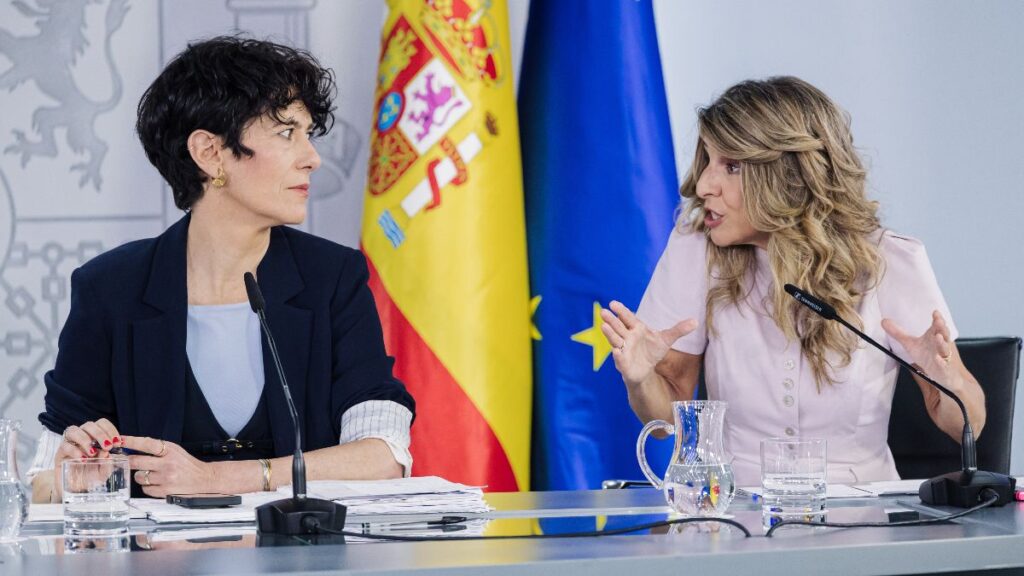
“The Minimum Living Income makes a difference especially in childhood. Today, 41% of the beneficiaries are minors and in almost seven out of every ten protected homes there are boys and girls,” says the Minister of Inclusion, Social Security and Migration, Elma Saiz.
Andalusia concentrates almost a third of the benefits
Andalusia is the community with the most recipient households, 259,073, almost a third of the national total. They are followed by the Valencian Community (93,539), Catalonia (83,011), Madrid (67,953) and the Canary Islands (39,767).
Regarding the amount, Navarra pays the highest average amount, 752 euros per month, ahead of Melilla (715 euros), Ceuta (684 euros), the Basque Country (677 euros) and Asturias (670 euros). At the opposite extreme, Extremadura registers the lowest average, 459 euros, followed by Castilla-La Mancha (462) and Murcia (474). The differences respond to the composition of households and the income thresholds of each territory.
How to access the IMV
To apply for the benefit you must have resided in Spain legally and continuously for at least one year, and prove a situation of economic vulnerability due to lack of income or sufficient assets. Community citizens prove this by registering in the central registry of foreigners, while third-country nationals need the corresponding authorization.
The IMV is compatible with income from work as long as it does not exceed the guaranteed income for each type of home. Its employment incentive has been applied to 735,000 households in the last three years. The double income review system also allows families to know in advance whether the benefit is going to increase, decrease or be extinguished according to what they declared the previous year.