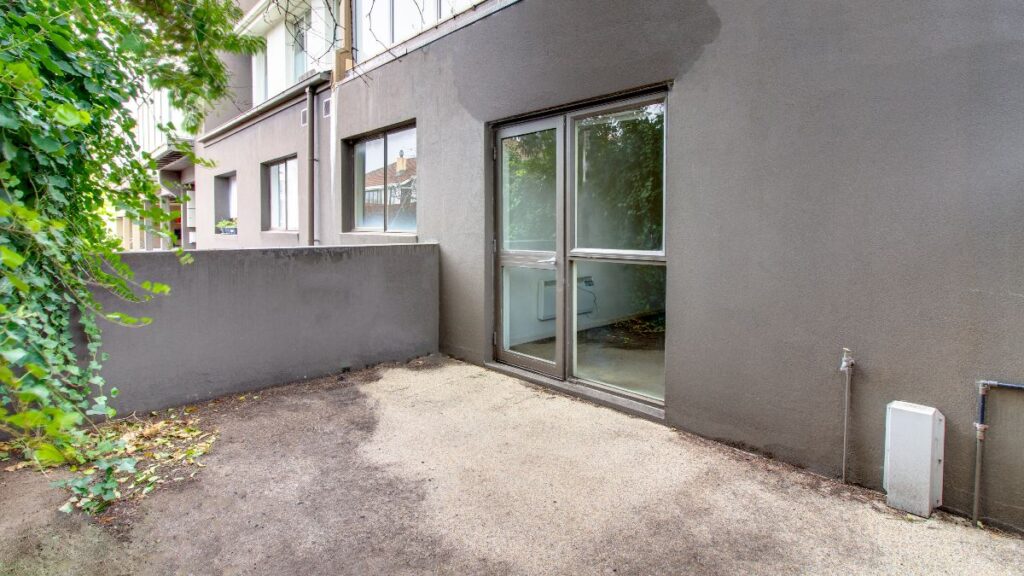
When two homes are attached or have adjoining patiosit is common for there to be a wall that marks the separation between both properties. The problem may appear when cracks, detachments or any other damage begin to appear and a repair must be made. At that moment a doubt may arise among the neighbors: who really belongs to the wall and who has to pay for the work?
The answer will depend on whether it is a party wall, that is, a wall over which the owners of the two properties have rights, or if it belongs exclusively to one of them.
The Civil Code establishes a series of rules to determine this and, in addition, makes it clear that when there is a party wall, the repair costs do not correspond only to the neighbor from whose home the wall is accessed or on whose side the damage is most visible. In these cases, the owners who have the right to the wall will have to be responsible for its repair in the proportion that corresponds to each one.
How to know if the wall that separates two houses belongs to both neighbors
Article 572 of the Civil Code establishes that it is presumed that there is a party wall, as long as there is no title, evidence or some external sign that demonstrates the contrary, in the walls that separate adjacent buildings up to the common height of both.
This same presumption also applies to walls that divide gardens or corrals and to fences, fences and hedges that separate rural properties.
Taking this into account, when there is a wall or dividing wall between two homes and there are no documents or anything to prove that it belongs to one of them, there may be a party wall.
Despite this, it is not an absolute presumption, and article 573 includes several cases in which there may be signs that the wall belongs only to one of the neighbors.
For example, it occurs when the entire wall is built within the land of one of the properties and not on the line that separates both properties. It may also be indicative that the wall supports the loads, floors or structures of one home, but not those of the other.
The Civil Code also contemplates other signs, such as the existence of certain openings or windows or the way in which the wall is constructed. Therefore, to know if a wall is truly a party wall, it will be necessary to check both the existing documentation and its characteristics and location.
If the wall belongs to both of them, both have to pay for its repair
Once it has been determined that it is a wall or party wall, the Civil Code also establishes who must bear the costs. Article 575 states that the repair and construction of party walls must be paid for by all the owners of the properties who have rights over them, in proportion to the right that corresponds to each one.
Therefore, if the wall that separates two homes belongs to both owners and needs repair to remain in good condition, one of the neighbors would not have to bear the entire cost of the works alone.
Nor does it necessarily mean that the expense always has to be shared 50%, since the law itself indicates that each person participates in proportion to their right to the wall.
The same article includes an exception in which a neighbor can avoid paying for the preparation of this type of wall and that is if he renounces its party wall, although he can only do so if that wall is not supporting a building he owns.
In addition, there are situations in which the cost may fall solely on one of the owners. For example, article 576 establishes that if one of them demolishes a building resting on a party wall, he will have to pay for the repairs and works necessary to prevent this demolition from causing damage to the wall.
Rodrigo, electrician: “People don’t mind spending 4,000 euros on a sofa, but they do mind spending 4,000 euros on an electrical installation because you can’t see it”
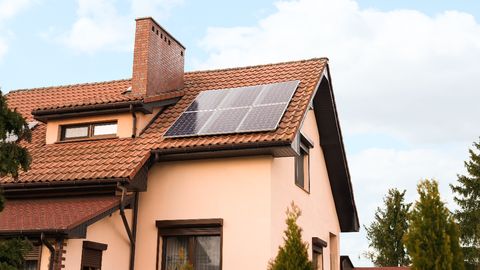
They install 28 solar panels on the roof to save energy and the City Council forces them to remove them because they damage the aesthetics of the building
Therefore, the fact that a wall is a party wall implies that, as a general rule, its conservation and repair corresponds to the owners who share rights over it, but before distributing any expense it will be necessary to determine if a party wall really exists and what is the origin of the repair that the wall needs.