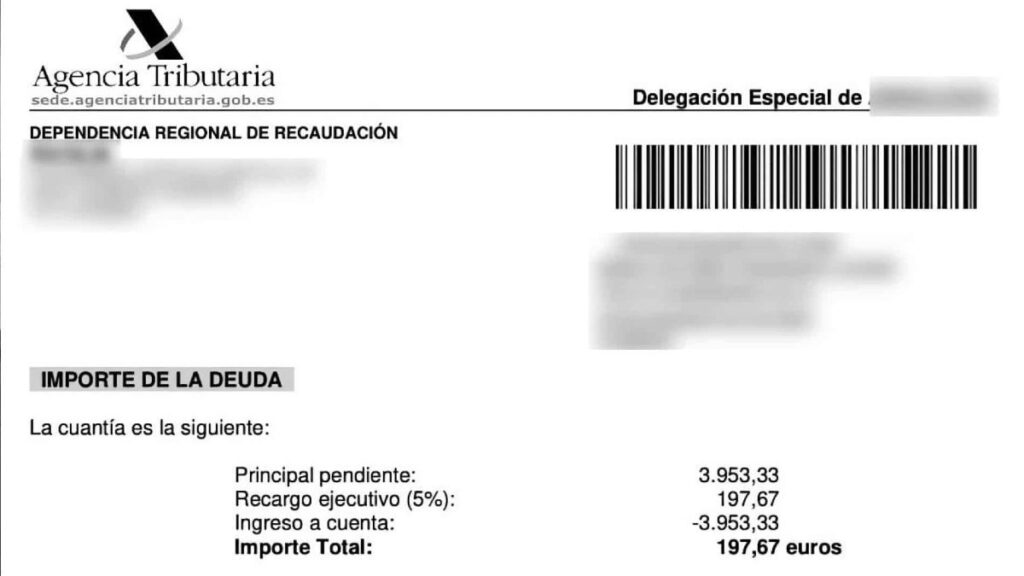
With the Income Tax campaign already started, there are many who wonder if they declare everything they should declare or not, and if they do it correctly. When we talk about self-employed workers, companies and invoices, the Tax Agency gets serious and does not miss a single one. Although issuing an invoice may seem like a very simple and routine procedure, there are those who do not do it well and this can be very expensive. The Treasury can penalize errors in billing that many taxpayers are unaware of and that, in the most serious cases, can reach very high figures.
Article 201 of Law 58/2003 (which can be consulted at this BOE), General Tax, which regulates infractions for failing to comply with billing obligations. This precept literally states that:
“Failure to comply with billing or documentation obligations constitutes a tax violation.”
That is, not only is it penalized not to issue an invoice, but also to do so incorrectly, incompletely or with erroneous data.
In the most serious cases, sanctions can reach up to 150% of the amount of the operation. That is, if an incorrect invoice affects a transaction of 100,000 euros, the fine could reach 150,000 euros, depending on the severity and whether there is concealment or fraud.
This type of infringement is especially relevant because it affects millions of self-employed workers and small businesses that issue invoices on a regular basis and that, in many cases, are unaware of the exact requirements of the regulations.
Fixed fines of 150 euros and others of up to 150%
When it comes to more common failures, such as not correctly complying with the requirements of an invoice, the sanction consists of a proportional fine of 1% of the amount of the affected operations. If the problem is more serious, such as not issuing or not keeping invoices, the percentage rises to 2% of the total amount.
In cases where the amount of the operations cannot even be determined, the Treasury applies a fixed fine: 300 euros for each invoice not issued or not kept.
The situation changes when the violation is considered very serious. This occurs, for example, when invoices are issued with false or falsified data. In that case, the penalty becomes much higher and can reach 75% of the amount of all the operations.
Furthermore, for minor non-compliance related to circulation documents or incorrect billing, the law establishes a specific penalty of 150 euros for each document.
Finally, the rule allows these amounts to be increased: if there is a substantial or repeated breach, the resulting penalty can be up to 150%.
What errors in an invoice can cause a penalty
It is not necessary to falsify documents to be sanctioned. The regulations consider quite common situations such as:
- Not issuing an invoice when it is mandatory.
- Issue invoices without all the required data (NIF, date, VAT breakdown, etc.).
- Include incorrect or incomplete data.
- Do not keep invoices or receipts.
- Use computer systems that do not guarantee the integrity of the records.
In fact, the General Tax Law itself requires the preservation and provision of all documentation with fiscal significance when the Treasury requires it, including invoices and accounting records.
A practical example
A self-employed person issues several invoices throughout the year, but in them he or she omits mandatory data or makes errors in the VAT applied. If the Treasury detects these irregularities, it can initiate a sanctioning procedure.
If these are specific errors, the sanction could be a fixed fine. But if the failures affect high amounts or are repeated, the Tax Agency may consider the infraction as serious or very serious.
For example, if an incorrect invoice implies a tax base of 50,000 euros and is classified as a very serious violation, the penalty could reach up to 150%, that is, 75,000 euros.
Many do not take this sanction into account
Unlike other better-known fines that usually affect hundreds of taxpayers, such as not submitting the Income Tax return or not responding to a request, billing errors go more unnoticed and many affected people, in fact, are not aware of the error until the sanction reaches them.
But they are important, since errors in invoices affect the daily operations of self-employed workers and companies.
- They can accumulate if there are many incorrect invoices.
- They are easily detected in inspections or data cross-checks.
Furthermore, with digitalization and the mandatory use of increasingly controlled computerized billing systems, these types of sanctions are becoming more important.
The billing system could also be penalized
The law also requires that computer billing systems guarantee the integrity, traceability and unalterability of the data, something that the Treasury increasingly controls.
This means that not only the invoice itself, but also the system used to generate it is penalized if it does not meet the requirements.