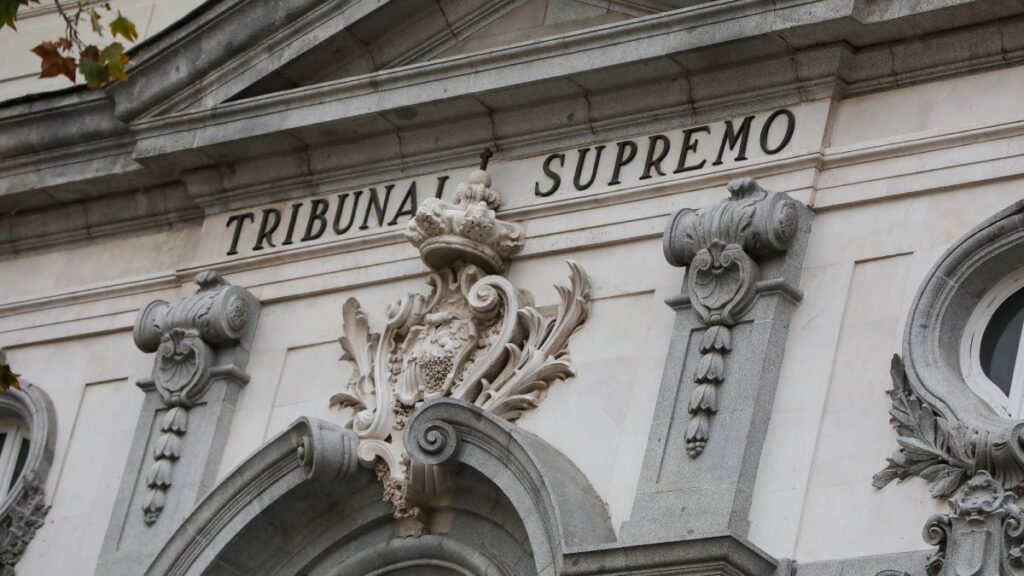
The Supreme Court establishes that security guards, explosives guards and cleaning personnel working in a quarry are not entitled to reduction coefficients from the ordinary retirement age if it is not demonstrated that they endure exceptional exposure to risk. The High Court thus rejects USO’s appeal, explaining that, in this case, the conditions required to lower the ordinary retirement age and thus be able to access early retirement do not exist.
According to the ruling STS 1347/2026, this link is available Judiciarythe union demanded that a coefficient of 0.10 be recognized for explosives guards and 0.05 for security guards and cleaning personnel from auxiliary companies. They explained that all of them provided services outside a mining operation and were subject to dust, noise and other risks inherent to the environment.
Now, the Supreme Court recalls that the regulations do not grant this benefit automatically, since the General Social Security Law itself establishes that the ordinary retirement age can only be lowered in activities whose jobs are “of an exceptionally painful, toxic, dangerous or unhealthy nature” and that also present high rates of morbidity or mortality. In fact, it is the same line that Social Security explains in its official website that these coefficients only operate in especially arduous, dangerous, toxic or unhealthy activities and within the legal procedure provided for this.
The ruling also recalls that the Miner’s Statute applies to companies dedicated to the exploitation and exploitation of deposits and that the reduction in the retirement age extends to the groups included in its scope when these circumstances of hardship, toxicity, dangerousness or unhealthiness occur. Furthermore, the Royal Decree 2366/1984 It provides for a coefficient of 0.10 for outdoor personnel when they directly participate in mining work with dust risks and 0.05 for the rest of outdoor workers who participate directly in these tasks.
Why the Supreme Court rejects applying the reduction in the retirement age
The High Court distinguishes between working within the environment of a quarry and carrying out functions that are actually exposed to a mining risk of exceptional intensity. The Court admits that these workers were subjected to dust, noise, shocks or falls, but emphasizes that “not being a risk of an exceptional nature” prevents the reduction coefficient from being recognized. It also adds that “the existence of singularly relevant morbidity or mortality rates” was not found.
The Supreme Court points out that the explosives guard does not load or manipulate explosives and that his presence in blasting operations is sporadic. Regarding the security guard, he points out that he works largely in a closed checkpoint, more than two kilometers from the farm, and that his rounds usually take place when there is no productive activity. And regarding the cleaning staff, it indicates that they mainly carry out tasks in offices, changing rooms and toilets, with only occasional exposure in crushing areas.
Therefore, the idea or key that must be clear in this ruling is that it is not enough to provide services in a quarry or mining facility. To access these reducing coefficients, you must prove direct participation in mining work and, in addition, especially qualified danger or hardship. If this proof does not exist, the reduction of the ordinary retirement age does not proceed.