


The Supreme Court (TS) determines that contributions for the retirement contingency made by the State Public Employment Service (SEPE) during the receipt of unemployment benefits for those over 52 years of age cannot be computed as income for the purposes of complying with the limit established to access or quantify a non-contributory pension. The high court thus corrects the criteria of the Xunta de Galicia, which reduced the amount of a beneficiary’s benefit by including these contributions among the income of the family unit.
As the ruling explains (available in the Judiciary), the Xunta de Galicia recognized the non-contributory retirement pension with a monthly amount of 98.90 euros, by computing as income of his spouse both the 430.27 euros per month of the subsidy for those over 52 years of age and the 297.15 euros per month corresponding to the retirement contributions that the SEPE made in his name.
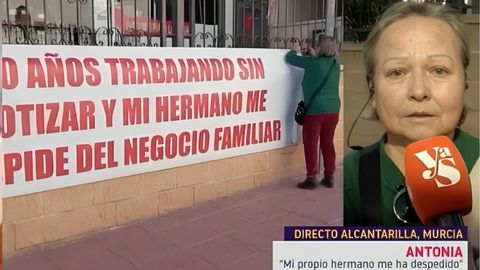
Antonia (66 years old): “I worked for the family business for 30 years and I discovered that they have not paid contributions for me; I have had to sell everything to eat”

The Supreme Court rejects that a company compensates overtime with a generic bonus and accumulated breaks without credit
The Superior Court of Justice of Galicia (TSJG) accepted this practice as good, understanding that the assistance benefit was made up of both the subsidy in the strict sense and the amount of the contribution, and that both items had to be taken in their gross amount as work income countable in accordance with article 363.5 of the General Social Security Law (LGSS).
The Supreme Court rejects it, since this contribution does not imply any financial attribution in favor of the beneficiary of the subsidy. The ruling explains that the SEPE does not pay the fee to the worker, but rather deposits it directly into the General Treasury of Social Security, so the unemployed do not receive any goods or rights that they can dispose of. Without capital gain, one cannot speak of computable income for the purposes of article 363.5 LGSS, regardless of whether the contribution is benefit-related.
The court points out that the contribution has never been considered the worker’s income in any area of the legal system, neither labor, nor Social Security, nor tax. He adds that the contributions are deposited directly into the General Treasury of Social Security and function as a tax, without the worker accumulating his own savings that he can recover later.
The Supreme Court supports its explanation in the financing model of the Spanish system. The ruling recalls that article 110.1 General Social Security Law establishes a distribution system for all Social Security regimes, in which contribution operates as a regulatory political principle and does not imply capitalization. There is no correlation between the contributions made throughout one’s working life and the economic benefits of the system that follow mathematical or actuarial guidelines.
Risk of double counting with future contributory retirement
The high court also warns that this practice would generate an incompatibility with the future contributory retirement pension that could be derived precisely from these contributions. Considering the contribution as income at the present time and later computing the pension generated with those same contributions would imply duplication contrary to the logic of non-contributory benefits, whose purpose is to address a situation of need protected by article 41 of the Constitution.
The Supreme Court unifies doctrine and establishes that the contributions for the retirement contingency made by the managing entity of the unemployment benefit for those over 52 years of age lack the nature of computable income for the purposes of earning a non-contributory pension. The ruling is aligned with the criteria already established by STS 828/2025, issued in an analogous case referring to the non-contributory disability pension.