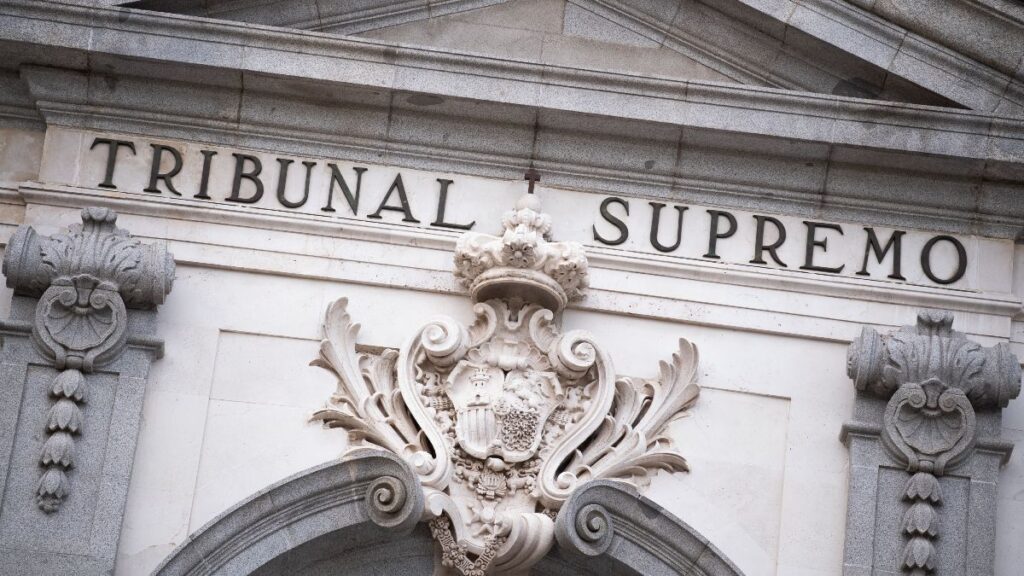
The Supreme Court establishes that the National Social Security Institute (INSS) cannot paralyze the payment of a judicially recognized disability pension through the parallel opening of a review file for improvement. In the ruling, the High Court agrees with the pensioner and makes it clear that, when the right to receive that benefit has already been ruled by a judge, the administration cannot suspend its execution based on a parallel administrative resolution, but must abide by the ruling and pay the recognized pension.
The ruling STS 272/2026 studies the case of a worker who was denied a review by Social Security to aggravate her total permanent disability. After going to court, the TSJ of Galicia recognized her absolute permanent disability in 2021, with effect from January 28, 2019. From there, and before the resolution was final, the INSS began on its own a process to review the disability for “improvement”, withdrew her absolute pension in 2020 and managed to have a court initially archive the execution of the ruling favorable to the woman.
The Supreme Court remembers that the execution of final sentences cannot be left to the discretion of the administration. The general rule indicates that the qualification of a disability allows changes to occur in the state of health and for the INSS to initiate reviews over time. Now, justice itself recognizes a limit, and that is that when a pension is being recognized in the courts, the INSS cannot use its own degree resolutions to block the execution of that judicial title.
That is precisely what happens here, since in these cases the debate does not turn only on whether the worker has improved or not, but on whether the administration can use a parallel route to nullify the courts. And without respecting the hierarchy of a judicial sentence, real legal security for the citizen is not born.
Why the Supreme Court does not allow the INSS to block the pension with another file
The INSS defended that its resolution for “improvement” should paralyze payments, relying on other cases where the courts did allow convictions to be filed. The High Court, however, determines that a legal review process after a final ruling cannot be confused with a maneuver initiated before the judges finish deciding. In this case, the Court recalls verbatim that “there are not two pensions – one from IPA and the other from IPT – but rather a single IPA pension which is the one recognized in the ruling whose execution was requested and which the INSS must comply with.”
The Chamber also differentiates this assumption from that analyzed in other cases provided by the managing entity. In these situations, the ex officio review “occurs at a time after” the finality of the original sentence and the administrative act enjoys a presumption of legality. The same does not happen here. The administrative file was activated before the first sentence became final. In plain language, the administration cannot use a parallel bureaucratic process to boycott an ongoing court order.
The Supreme Court implicitly admits that the INSS maintains its power to review the status of beneficiaries intact. Even so, he emphasizes that the solution is not to avoid payment by filing the execution, but to pay what the court ruled. In fact, the ruling itself settles the issue by declaring the worker’s right to receive her absolute pension from 2019, condemning the INSS to pay it immediately with “any revaluations and improvements that may apply.”