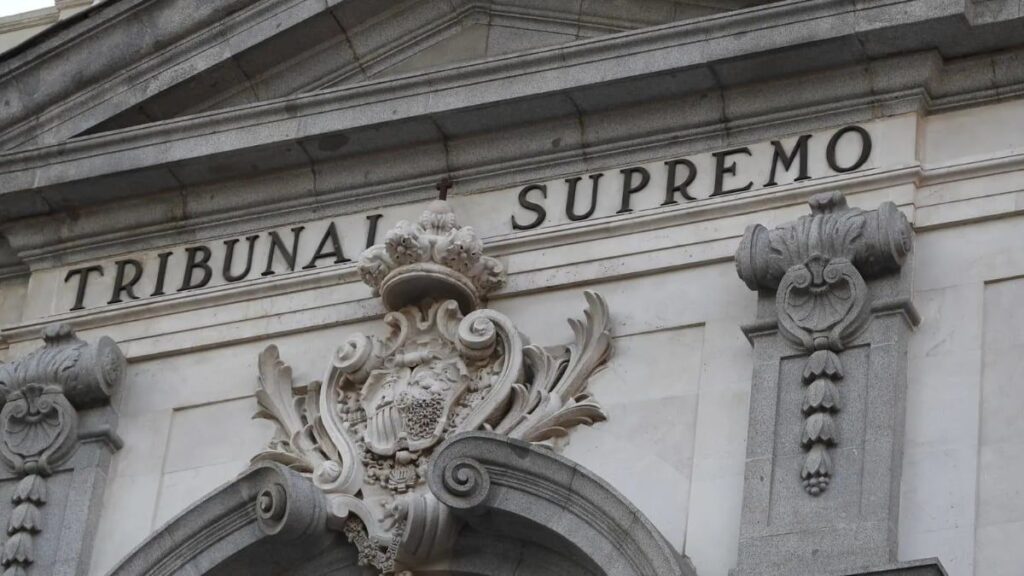


Early retirees who took advantage of an Employment Regulation File (ERE) should know that they have the right to collect the maternity supplement (now known as gender gap complement). The Supreme Court has established doctrine, explaining that voluntary affiliation to a leave plan does not make early retirement “voluntary” for the purposes of excluding this aid.
In this sense, it must be explained that the National Institute of Social Security (INSS) denied this supplement based on the old article 60.4 of the General Law of Social Security, which expressly excluded these cases by considering them “early access to retirement at the will of the interested party.” In this way, the Supreme Court ruling corrects this, explaining that the real cause of the termination is business restructuring (a collective dismissal) and, therefore, “the termination is not voluntary.”
You may be interested

Congress asks that Social Security stop penalizing early retirements with more than 40 years of contributions

We sold everything we had, quit our jobs and retired in Europe at the age of 60: “Life is calmer here”
An ERE is not a “voluntary” early retirement
If we look at the previous regulations (applicable to retirements before 2021), article 60.4 of the LGSS excluded from the maternity supplement cases of “early access to retirement at the will of the interested party.” Social Security interpreted that if a worker voluntarily “signed up” to the lists of an ERE to receive compensated leave, that “will” already existed.
Given this interpretative gap, the Supreme Court analyzed the real cause of the dismissal, which is the collective dismissal, recalling that article 207 of the General Social Security Law defines early retirement “for reasons not attributable to the worker” as that which derives, among others, from “collective dismissal for economic, technical, organizational or production reasons.” For this reason, the High Court concludes that adhering to said dismissal does not make it a free decision, but rather a consequence of the ERE.
From “voluntary” early retirement to collecting 5% more in pension
This ruling from the Supreme Court, STS 4753/2025, which can be consulted here Liaison of the Judicial Branch, refers to a worker, Pascual, who worked in banking. He “received a paid leave measure offered by BANCO POPULAR in the context of a Collective Dismissal file… for economic, productive and organizational reasons” (a key fact in this ruling).
When he requested early retirement in 2017 (applying the previous regulations that we have explained), Social Security recognized it, but classified it as a “voluntary early retirement.” Thus, years later, the now retired father of two children requested maternity supplement, which was denied because it was his voluntary retirement. Faced with this situation, this retiree decided to go to court.
After going through several courts, the conflict reached the Supreme Court where the retiree was ruled in favor. The High Court explains that, although the membership was voluntary, the reason for the termination was not. “The termination is not voluntary, because the worker took advantage of the early retirement plan, collectively agreed upon” within the framework of the ERE. Therefore, “retirement cannot be classified as voluntary for the purposes required by article 60 of the LGSS” and, consequently, “the plaintiff is entitled to the requested pension supplement.”
Not applicable to all pensioners
It must be clarified that this case is not generally applicable to all workers who have early retirement. Now, even if it is not, it does set a precedent, that is, a retiree in the same situation and with the application of the same regulations, if Social Security denies it, can go to court to request the application of this doctrine, since it establishes a “legal precedent” that the lower courts must follow.