The International Monetary Fund (IMF) has revised downwards its economic growth projections for Spain in the coming years as a result of the impact of the conflict in the Middle East. In its latest report, the organization places GDP growth at 2.1% in 2026 and 1.8% in 2027, which means a cut of two and one tenth, respectively, compared to its previous estimates, in the month of January.
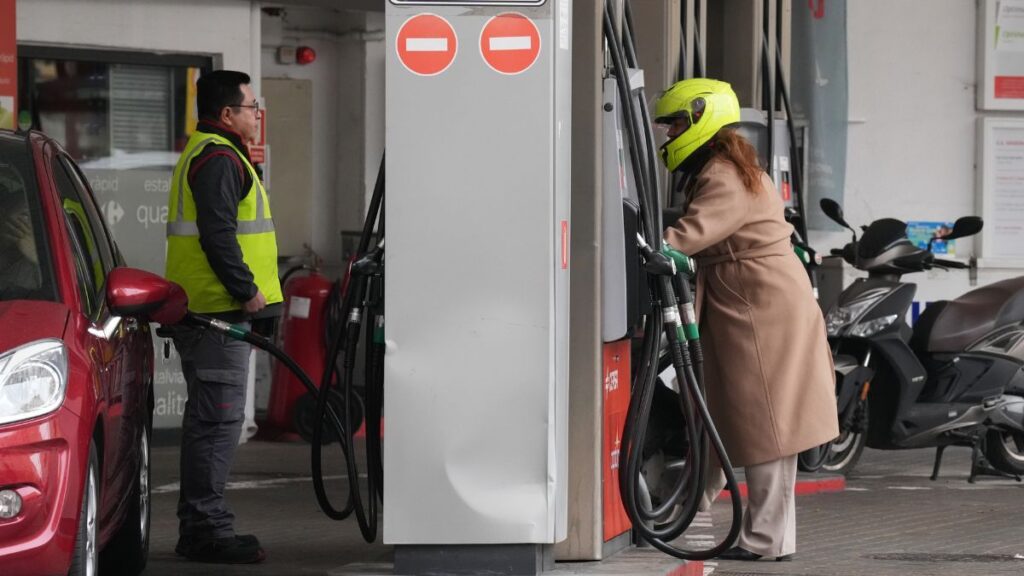
Despite this correction, the institution maintains that the Spanish economy will maintain a “solid” expansion rate in the short term. The main risk factor identified is the rise in oil prices, derived from the escalation of war between Iran, the United States and Israel, which will directly affect energy costs and, by extension, economic activity.
Oil puts pressure and renewables cushion
The IMF emphasizes that the impact of the conflict will be unequal depending on the energy source, that is, whether oil or gas is analyzed. While the increase in the price of crude oil will have a clear negative effect, the increase in gas prices will be more limited in Spain thanks to the increase in renewable energies in the electrical system.
In this sense, Romain Duval, head of IMF mission for Spain, highlights that, after the war in Ukraine, the country has strengthened its relative position compared to other European partners in energy matters. “Spain will be less affected than some of its peers in the euro zone when it comes to gas,” he points out, although he warns that this advantage does not extend to oil.
The organization also expects inflation to be around 3% at the end of 2026, before moderating to 2.2% in 2027, in a context marked by the evolution of energy prices.
Domestic demand will sustain growth
Despite this adverse environment, the IMF identifies internal demand, that is, the Spaniards themselves, as the main driver of the economy. Private consumption will continue to be supported by wage growth and a labor market that continues to show dynamism, as well as by a progressive reduction in the household savings rate.
Investment, for its part, will be boosted by the last tranche of the Next Generation EU European funds and by the rebound in housing construction. These factors will partially offset the loss of momentum in sectors such as tourism or the growth of the active population, which had sustained expansion in recent years.
Downside risks and geopolitical volatility
The IMF warns, on the other hand, that the risks for the Spanish economy are “mostly downward.” A prolonged conflict in the Middle East could result in a more persistent increase in energy prices, a tightening of financial conditions and more uncertainty, with negative effects on investment and consumption.
Added to this are other external factors, such as the escalation of global trade tensions, and internal elements such as political division, which, according to the organization, could make it difficult to apply the necessary measures to guarantee fiscal sustainability, due to the impossibility of reaching agreements.
Factors that could improve the scenario
On the positive side, the IMF identifies several factors that could sustain or even boost growth. Among them, the greater resilience of tourism stands out, which could act as a refuge from instability in other regions and favor Spain by diverting visitors to destinations far from the conflict. Likewise, the agency points out that a favorable immigration policy would contribute to maintaining the increase in the active population since a more rapid reduction in the household savings rate, to pre-pandemic levels, could translate into greater dynamism in consumption.
Despite the positive aspects, the organization insists on the high uncertainty of the current context. “The situation continues to be very volatile,” warns Duval, stressing that the evolution of energy prices will be decisive for the course of the Spanish economy in the coming years.