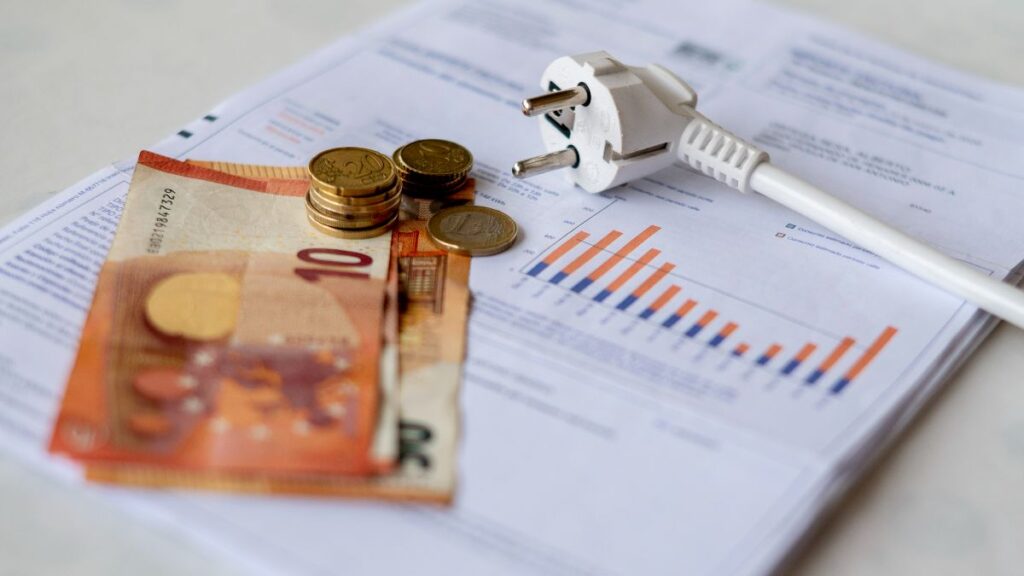
The tax reduction applied by the Government in the final stretch of March has reduced the electricity bill of the average user covered by the semi-regulated rate by 2.5%, the so-called Voluntary Price for Small Consumers (PVPC), according to the analysis released by FACUA-Consumers in Action. The receipt stood at 71.35 euros, compared to 73.19 in the month of February.
The association links this decrease to the entry into force, on March 21, of Royal Decree-Law 7/2026, of March 20, which approves the Comprehensive Response Plan to the Crisis in the Middle East. The rule reduced the VAT on electricity supply to 10% and the special tax on electricity to 0.5%. If this tax reduction had not been approved, FACUA maintains, the March bill would have amounted to 82.09 euros, 12.2% more than in February.
In year-on-year terms, the receipt also shows a moderation. The 71.35 euros in March 2026 are 6.1% below the 75.99 euros recorded in the same month of 2025. The comparison with previous years also reflects the strong volatility of the electricity market in recent years. FACUA recalls that the average user’s bill was 58.53 euros in March 2024, 71.57 in 2023 and 176.73 in 2022, in the midst of an extraordinary increase in energy prices.
Analysis of receipt and price evolution
The organization’s analysis places the average price per kilowatt hour at 23.87 cents in peak hours, 14.06 cents in flat hours and 12.17 cents in off-peak hours. Compared to March of last year, these amounts represent drops of 6.3% at peak, 6.5% at flat and 2.4% at valley. The power term is also reduced, going from 3.30 euros in January and February to 2.87 euros after the tax reduction. Throughout 2025, that fixed part of the receipt remained at 3.21 euros.
FACUA maintains, however, that the tax reduction does not correct the underlying problems of the pricing system. The association has been demanding for years that nuclear and hydraulic energy be left out of the daily marginal auction and begin to operate with fixed prices established in the long term by the Government. In his opinion, this change would avoid the so-called windfall benefits of technologies whose costs are not related to the higher prices that end up setting the market.
The organization also reproaches the Executive that the new decree is limited to a tax reduction and leaves out other measures that it considers necessary to contain the receipt. Among them he cites the recovery of a cap on gas, to which he attributes the increase in the price of the set of technologies that compete in the daily auction, and the setting of maximum prices in the electricity sector.
FACUA reproaches the Government for the lack of promotion of the social bonus
Along with this diagnosis of the wholesale market, FACUA once again focuses on two domestic issues that, in its opinion, remain neglected. On the one hand, it denounces the lack of powerful institutional campaigns to promote the application for the social bonus, an aid that, according to the association, continues to be underused due to ignorance or the false belief that one is not entitled to it. On the other hand, it insists on the need for consumers to review the contracted power. The organization estimates that households pay nearly one billion euros more per year for having more kilowatts than they really need.
The user profile used by FACUA for its calculations is that of a home with 4.4 kilowatts of contracted power and a monthly consumption of 366 kilowatt hours. This pattern distributes the use of electricity between 45% in off-peak hours, 29% in peak hours and 26% in flat hours, in accordance with the traditional average consumption reference published by the National Commission of Markets and Competition. On that basis, the association concludes that the tax reduction approved in March has alleviated the bill, although it insists that the structural problem of the electrical system remains intact.