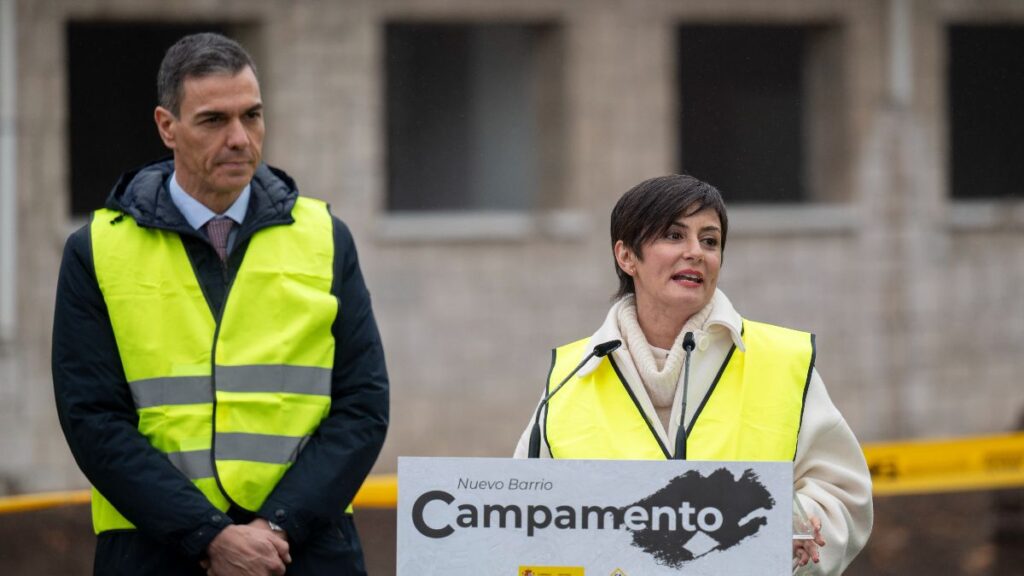
The Council of Ministers plans to approve this Tuesday the State Housing Plan 2026-2030, a program endowed with up to 7,000 million euros, triple that of the previous one, which introduces as the main novelty the permanent shielding of public housing. The initiative, which will be articulated by royal decree and will come into force after its publication in the BOE, aims to increase the affordable housing stock and alleviate access tensions, especially among young people and in areas with greater price pressure.
The plan is structured into five axes: the promotion of public housing, rehabilitation with criteria of efficiency and accessibility, support for youth emancipation, improvement of affordability measured through the effort rate and action in stressed areas.
In this way, the plan contemplates the redistribution of spending in three large blocks: 40% will be allocated to the construction and acquisition of permanent protected housing, 30% to the rehabilitation of the existing stock and the remaining 30% to different lines of direct aid, including those aimed at youth emancipation, the reduction of the effort rate of households and intervention in stressed markets.
The most significant measure is the introduction of the principle of indefinite protection for publicly funded housing. This implies that the properties promoted or acquired under this plan will not be able to lose their protected status over time, a common practice in previous decades that allowed part of the public stock to leave for the free market. With this change, the Executive seeks to consolidate a stable stock of affordable housing in the long term, in line with models in other European countries.
The text reaches the Council of Ministers almost four months late compared to the initial calendar of the Ministry of Housing, which had planned its approval for the end of last year. According to the department headed by Isabel Rodríguez, this postponement has served to incorporate contributions from the autonomous communities, although disagreements regarding financing still persist.
Financing and distribution between the State and autonomies
The plan introduces important changes to its financing. The State will assume 60% of the investment, while the autonomous communities must contribute the remaining 40%. This distribution represents an increase in the regional effort compared to previous plans, where its contribution was around 25%.
This point has raised criticism from several regional governments of the Popular Party, which consider that the scheme “breaks the principle of equality” and question its fit with the financial autonomy of the communities.
More aid for rent, rehabilitation and youth emancipation
Among the concrete measures of the plan, the reinforcement of the youth rental bonus stands out, which rises to 300 euros per month, and new aid for renting with the option to purchase subsidized housing. Likewise, subsidies of more than 10,800 euros are planned for young people who acquire or build their first home in municipalities with demographic riskan attempt to link housing policy with the challenge of depopulation.
Furthermore, as the minister announced this week, the plan dedicates a significant part of the resources to rehabilitation, with aid of up to 20,500 euros per home for energy improvements, 13,000 euros for accessibility and 8,000 euros for structural actions. Added to this is a specific program to mobilize empty housing, with subsidies of up to 35,000 euros conditional on its being put up for affordable rent for at least five years.