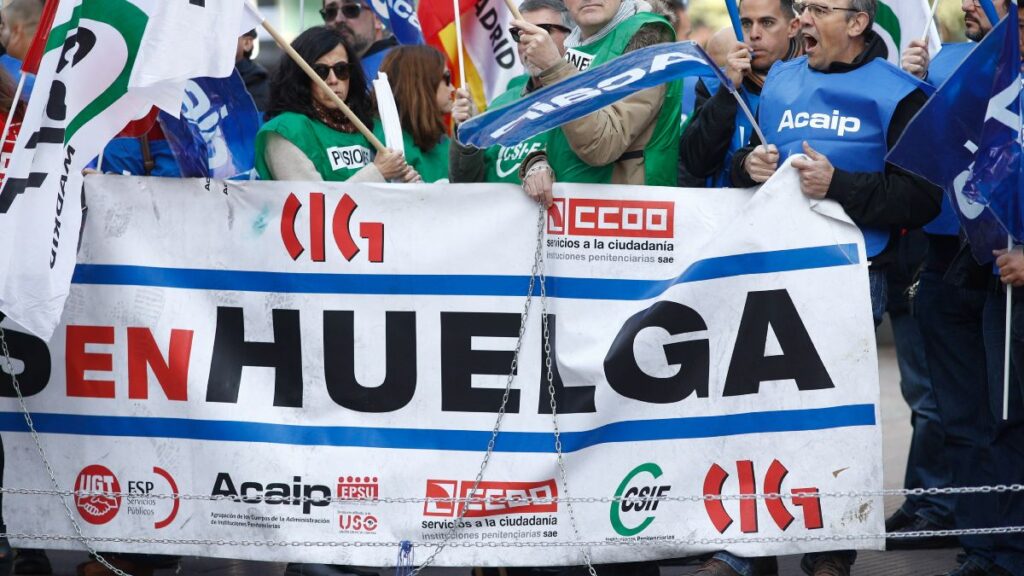
The general strike on Wednesday, November 11, will cost anyone who earns 1,500 euros gross per month, in 14 payments, about 58 euros, of which 50 will come from the November payroll for that day’s salary and just over 8 from the extra pay that it no longer generates. If the company also deducts the weekly rest portion, the cost rises to around 78 euros, while your future retirement pension will drop by less than a quarter of a euro per month (0.25 euros).
According to article 6 of Royal Decree-Law 17/1977, the rule that regulates strikes, “during the strike, the employment contract will be deemed suspended and the worker will not have the right to salary.” The same article leaves those who support it “in a situation of special registration in Social Security, with suspension of the obligation to contribute by the employer and the worker themselves” (that is, they are still registered, but no one contributes that day).
The weekly rest enters the account because the Supreme Court, in a ruling of March 13, 2001, recalled that for each day of strike the salary for the day and the proportional part of the extra pay and the weekly rest can be subtracted, although “there is no deduction or deduction due to a strike in the remuneration of vacations.” In a week from Monday to Friday, that adds up to 0.4 days of rest for each day of strike, so the salary for the day goes from 50 to 70 euros and the total, to about 78.
To support it, it is not necessary to notify the company, since the notice is given by the calling unions (article 3 of the same rule), as explained by labor lawyer Ignacio de la Calzada when detailing what the company can remove from the payroll of those who go on strike. Only those who remain in the minimum services or in the security and maintenance services included in the same article 6 have to work.
A day of strike subtracts cents from the pension and only from 2027
That day he doesn’t quote either. That is why the contribution base for November, which in this case is 1,750 euros per month (the 1,500 of the salary plus the part of the two extra payments distributed over twelve months), drops by about 58 euros, one-thirtieth.
This base will only count for those who retire from January 2027, because the fortieth transitional provision of the General Social Security Law takes the months prior to retirement. In 2027, Social Security will add the 304 highest bases of the last 308 months and divide them by 354.67.
Thus, those 58 euros leave the regulatory base about 16 cents lower (17 with the old formula of 300 months out of 350, which applies until 2040 if it provides more pension). With a complete career, which gives 100% of the regulatory base, the retirement pension drops the same, and about 22 cents if the company also deducts the weekly rest.
Those cents are in today’s euros, because the bases for more than two years are updated with the CPI when calculating the pension, and can be reduced or reduced to nothing if November ends up among the four months with the lowest base that the calculation discards in 2027.

A well-known supermarket chain reduces 26 days off per year to its workers and the unions take to the streets: “Rest is not a luxury, it is a right”

C1 officials can skip Group B and promote directly to Group A if they have qualifications
Medical leave is not charged while the strike lasts
In the case of this sick person, that day he will not receive sick leave while he is still on strike, because the same article 6 says that the striking worker will not have the right “to economic compensation for temporary work incapacity”, which is what medical leave was called then. According to the 1977 order that develops this rule, the subsidy begins to be paid with the general rules once that special registration situation ends.