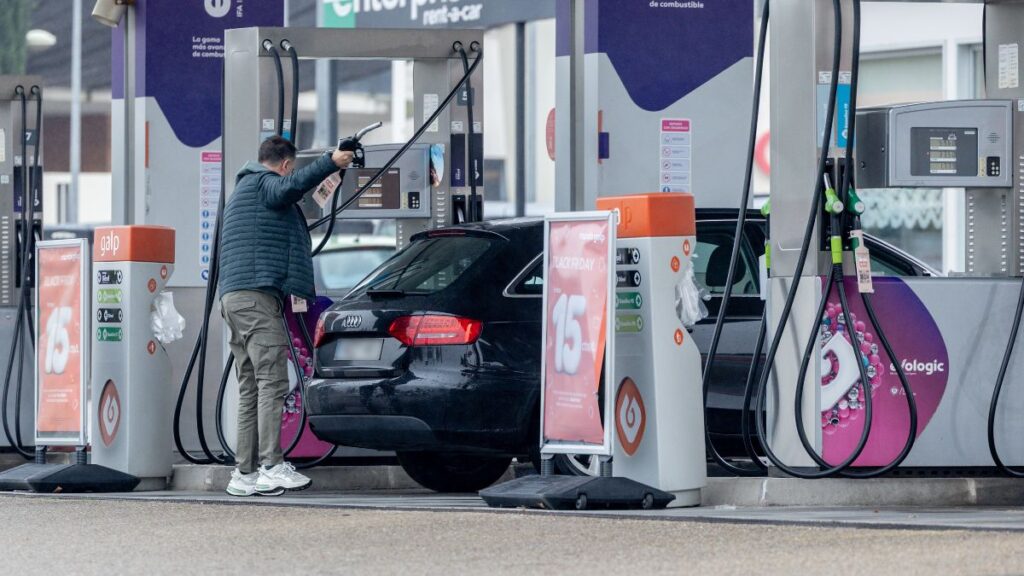
Inflation drops sharply after several months of rise. Thus, the Consumer Price Index (CPI) has fallen eight tenths in November, standing at 4.1%, mainly due to the drop that fuel prices have experienced in recent weeks. It is its lowest level since last July, according to the data advanced this Friday by the National Institute of Statistics (INE). This decline represents a change in trend after inflation reached 4.9% both in September and October, although, yes, it still adds up to four consecutive months above 4%.
The decrease is mainly due to the decrease in fuel prices, compared to the increase in prices experienced during the same month of 2025. In fact, the price of gasoline has decreased again this week, further helping to alleviate the cost of filling the tank after several months marked by fuel increases.
It should be remembered that, according to the latest final CPI data for October, inflation then remained at 4.9%, driven mainly by the rise in gas prices, despite the fact that fuel prices had begun to moderate. Now, the decline in the latter has allowed inflation to fall to levels not seen since July.
In any case, it must also be taken into account that the data published this Friday are provisional, so we will have to wait for the INE to publish the final figures for November to confirm this drop.
Gasoline and clothing, key to the great drop in inflation
The INE has indicated that the reduction of up to 8 tenths in the advance inflation data is largely due to the drop in fuels and lubricants for personal vehicles, since their prices have decreased this month, while in November of last year, on the contrary, they rose.
Added to this, although to a lesser extent, are clothing and footwear, whose prices have increased less than during the same period in 2025. In this way, both groups have contributed to moderating inflation that had been at high levels for several months.
Regarding the monthly evolution, consumer prices have fallen by 0.6% in November compared to October, after nine consecutive months of increases. This is the largest monthly decrease recorded since September 2024, when the CPI also fell 0.6%.
This behavior represents a change compared to October, when prices increased by 0.6% in a monthly rate, driven by the increase in the cost of clothing and footwear with the arrival of the autumn-winter season, as well as by the increase in certain foods and household supplies.
Core inflation also falls to 2.6%
For its part, core inflation, which excludes the impact of unprocessed food and energy products as they are the most volatile elements, has decreased five tenths to stand at 2.6%, according to the INE’s leading indicator.
This is a significant reduction compared to October, when it remained at 3.1%, and places this indicator 1.5 points below general inflation.
Regarding the Harmonized Consumer Price Index (IPCA), which allows Spanish inflation to be compared with that of other European countries, its interannual rate has also dropped eight tenths to 4.1%, while the monthly variation has been -0.7%.
Likewise, harmonized core inflation stood at 2.7%.

Yolanda Díaz accuses the right of attacking pensions and sees it as “unacceptable” to talk about “paydays”: “We are not going to allow them to not revalue pensions in accordance with the CPI”
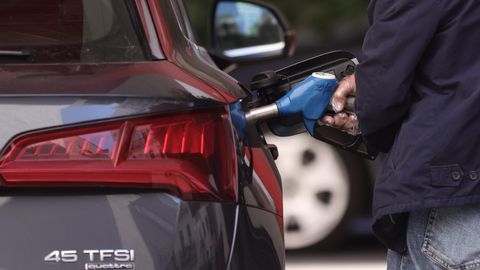
The rise in fuel prices triggers inflation to 4.9% in September, its highest level since February 2023
With these data, Spanish inflation is beginning to moderate after several months of strong increases, although prices are still 4.1% higher than a year ago. The figure must be confirmed with the publication of the final CPI data for November, which will allow us to know in greater detail which products and services have contributed to this drop.