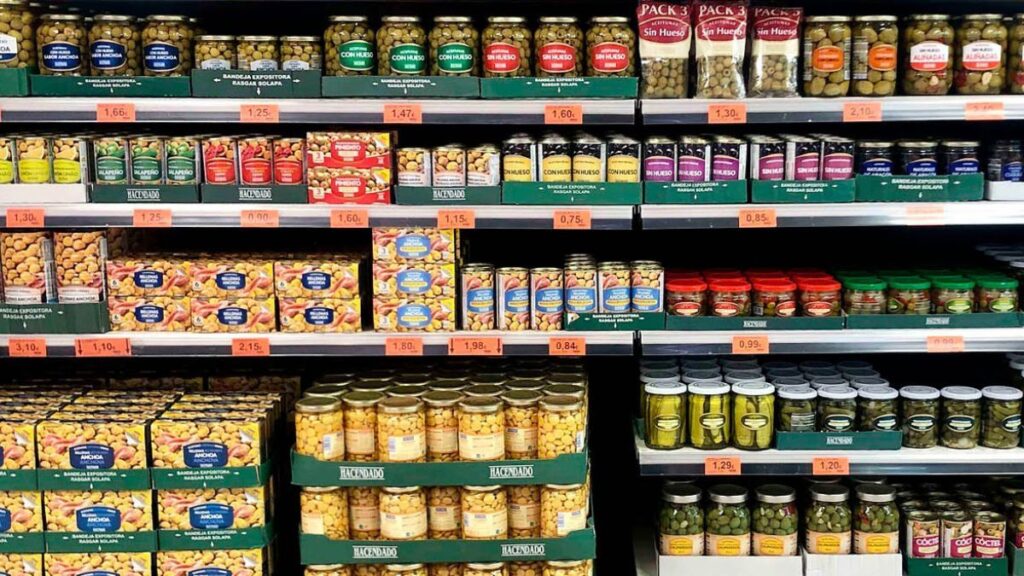
Spain changes the rules that regulate some of the most consumed foods in supermarkets and bars. The Government has approved Royal Decree 142/2026, of February 25, published in the Official State Gazette (BOE)with which numerous food provisions are modified to update the quality, labeling and production processes of such everyday products as olives, pickles, the famous gildas and other pickles, ham, horchata, cookies, bread or vinegar.
The standard, which came into force on March 1, 2026, seeks to adapt Spanish legislation to the current market reality and the new consumer demands, especially in terms of transparency, traceability and food composition. It also responds to the new European regulations regarding organic labeling of food products.
Confirmed by the BOE: thousands of opposition places to be a civil servant with 1,704 for the Civil Guard only with the ESO

The BOE confirms a fine of 200,000 euros to Gerard Piqué for using privileged information in the purchase of shares
As the BOE itself explains, the objective is to “make foods more understandable, honest and consistent with consumer expectations”, reinforcing the information that appears on the labels and updating standards that, in some cases, had remained unchanged for more than 40 years.
Stuffed olives must clearly indicate whether the filling is a paste
One of the most important changes directly affects table olives, especially stuffed ones, one of the most consumed products in Spain. Until now, many labels used ambiguous trade names that could mislead about the actual content of the filler.
With the new regulations, stuffed olives will have to expressly indicate the type of filling used. Furthermore, when the filling is made “in the form of a paste”, this circumstance must be clearly detailed in the list of ingredients.
The BOE also requires specifying the specific ingredients of that pasta, although commercially only the main or characterizing ingredient of the filling can be mentioned.
In this way, products labeled as “olives stuffed with anchovy” will have to clarify whether they really contain natural anchovies or a paste made from different ingredients.
The reform also affects other pickles and similar processed products, since the Government aims to reinforce the clarity of food information and avoid consumer confusion.
The term “natural” can no longer be used in any meat product
Another of the most relevant changes of this food reform affects the use of the term “natural” in meat derivatives such as hams, sausages or cured products.
From now on, manufacturers will only be able to use this name when the product meets very specific conditions. Among them, not using food additives, except for certain technical exceptions, or genetically modified (GMO) ingredients, irradiated or made using artificial nanomaterials.
Furthermore, they may not incorporate starches or starches and, in the case of sausages, only the use of natural casings will be permitted.
The Government explains in the BOE that the term “natural” had become a commercial claim widely used by the food industry without clear regulation, which is why specific requirements are now established to avoid confusing or misleading messages for the consumer.
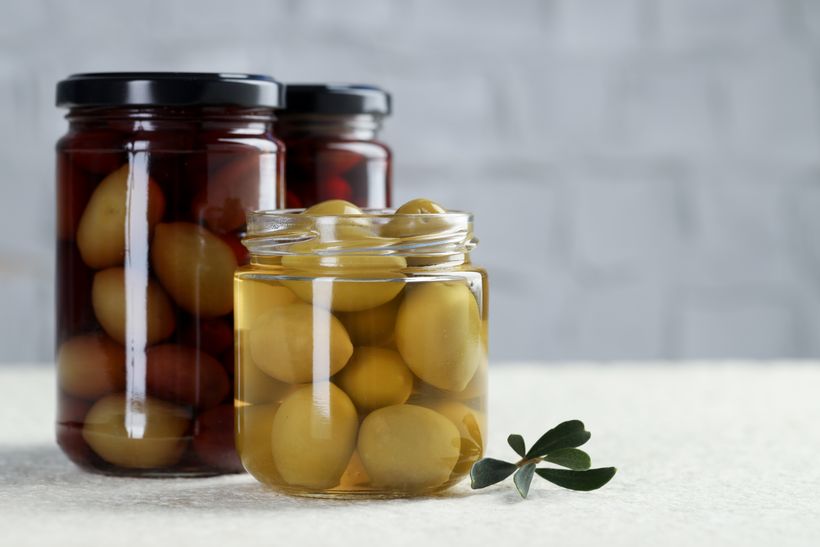
Changes also in sliced and boned ham
The new regulations also modify the traceability requirements for cured ham.
Until now, all pieces had to retain the individual marking with the week and year of salting. However, the problem appeared in boneless, sliced or fractionated products, where this marking disappeared during the transformation process.
With the new regulation, the BOE allows this information to be followed through the traceability batch included in the labeling of the final product.
Furthermore, the royal decree officially recognizes “turkey ham” as a traditional legal name, considering that it is a fully consolidated product in the Spanish market for more than 25 years.
On the other hand, the name “mortadella bologna” disappears, to avoid confusion with the Italian Protected Geographical Indication “Mortadella Bologna”.
Horchata may be sold without added sugar
The reform also introduces important new features for tiger nut horchata.
The regulations will allow the production and marketing of horchatas without added sugar or with reduced sugar content, thus responding to new consumer trends and health recommendations to reduce sugar consumption.
Of course, the BOE expressly prohibits the use of sweeteners and colorings in these products, with the aim of maintaining the traditional quality of horchata and differentiating it from other refreshing drinks made from tiger nuts.
Vinegar changes its production and labeling rules
The royal decree also introduces changes in the regulation of vinegar, especially in products covered by Protected Designation of Origin (PDO) or Protected Geographical Indication (PGI).
The new standard will allow the use of ingredients not expressly contemplated until now, such as concentrated grape must, rectified must or fresh grape must “quenched” with alcohol in certain traditional vinegars.
Likewise, the tolerance margin allowed in the indication of the degree of acidity for these protected vinegars is expanded, going from 0.2 degrees to 0.5 degrees.
The Government justifies this change because residual alcohol can evolve during the shelf life of the product and slightly alter the acetic acid content without really affecting the quality of the food.
Gluten-free bread may officially be called “bread”
Another novelty affects gluten-free bread. The BOE officially recognizes that these products can legally use the name “bread”, something especially relevant for people with celiac disease or gluten intolerance.
The new regulation allows products made with ingredients naturally free of gluten or specifically treated to reduce gluten, to be included within the category of “common bread” or “special bread”.
In addition, alternative ingredients, such as starches and vegetable fibers, are authorized to replace traditional flour and maintain the characteristics of bread.
Cookies and cider change too
Cookies will also be affected by this reform. The Government eliminates the maximum ash limit established more than 40 years ago to adapt to new products made with whole wheat flours, cereals, natural fibers and nuts.
In the case of cider, certain technical practices permitted during its production are recovered, such as clarification or depectinization. In addition, the maximum permitted limit of methanol in ice ciders is raised, from 200 mg/l to 400 mg/l.
When do all these changes come into effect?
Royal Decree 142/2026 officially came into force on March 1, 2026.
Of course, the BOE establishes a transitional period to allow products manufactured and labeled in accordance with the previous regulations to continue being sold until stocks last, with a maximum of twelve months from the entry into force of the rule, that is, their obligation will rather arrive in March 2027.
All of this is part of a Government strategy to modernize Spanish food regulations, adapt it to European legislation and respond to a consumer who is increasingly demanding with the quality, composition and transparency of the food they buy.