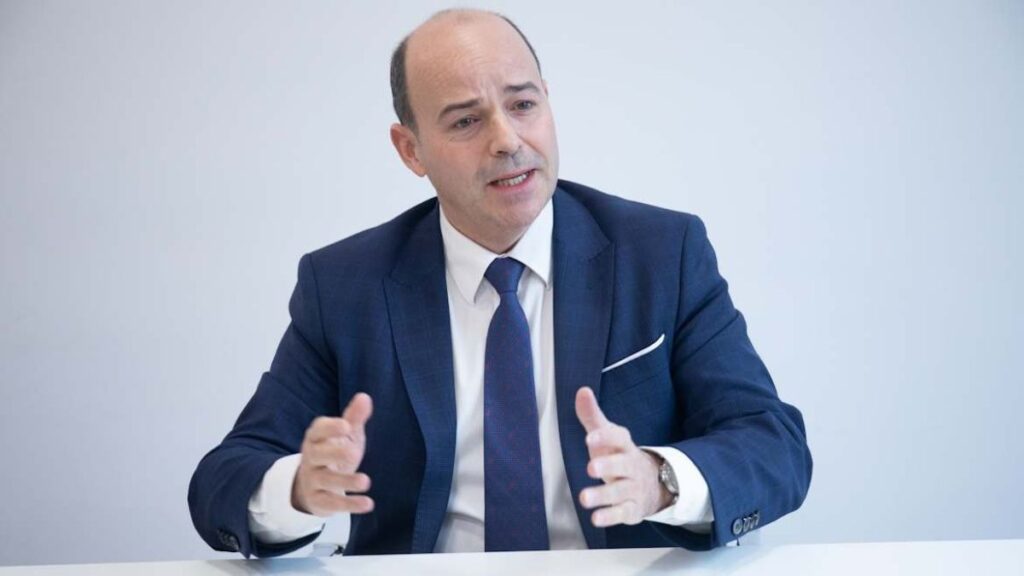
The president of the Spanish Association of Tax Advisors (Aedaf), Bernardo Bande, defended this Tuesday the need to adjust the tax to inflation, making it clear that “deflating the rate is adapting the tax to the standard of living: not doing so violates the principle of economic capacity.”
This principle, key in the tax system, implies that citizens must contribute based on their real capacity. However, according to experts, the failure to update income tax brackets causes many taxpayers to pay more taxes simply because their salaries have increased in nominal terms, not because their economic situation has improved.
“Not updating rates translates into higher taxation without increasing the taxpayer’s purchasing power,” Bande insisted.
This phenomenon, known as “cold progressivity”, is even greater in contexts of high inflation, such as the one we have had in recent years, and directly affects average incomes, which are the most exposed to changes in bracket.
Criticisms of the sanctioning system
During his speech, the president of Aedaf also questioned the functioning of the Tax Agency’s procedures, especially in matters of sanctions.
As he has pointed out, there is a tendency to apply sanctions automatically in the event of interpretative discrepancies, which places the taxpayer in a disadvantageous position. “We often start from the presumption of guilt,” he warned, in reference to the regulatory complexity and the existence of divergent criteria even within the Administration itself.
A debate reactivated by inflation
The request to deflate personal income tax is not new, but it is especially relevant in the current economic context. Tax advisors consider that, without this adjustment, the tax system loses equity and increases tax pressure covertly.
The debate, therefore, is not only technical, but also political: if the tax is not adapted to the cost of living, the taxpayer will continue to bear a greater tax burden even if their economic capacity remains stagnant.