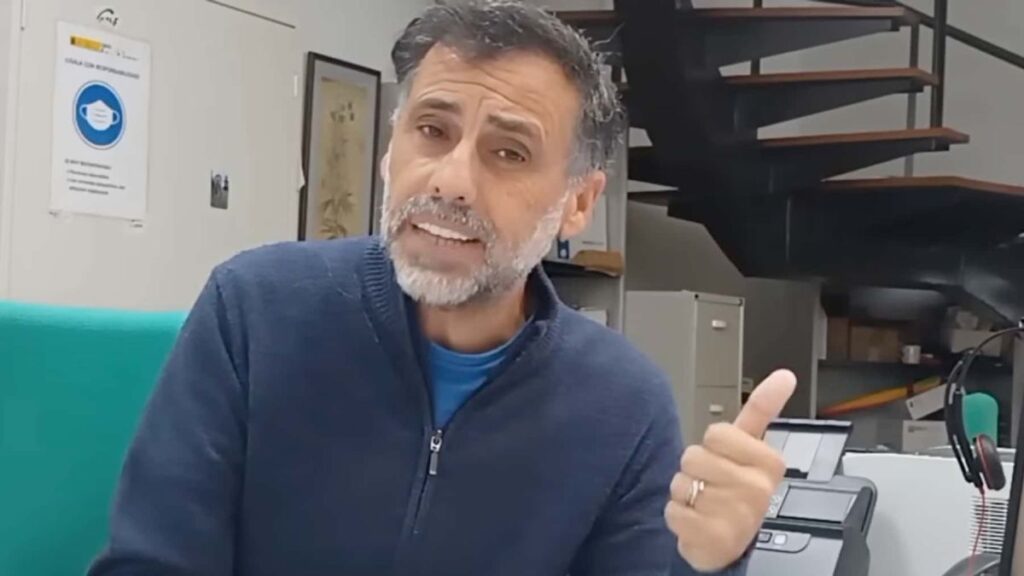
The 2025 Income Tax Declaration campaign started on April 8 and with it come the usual doubts of millions of pensioners who ask the same question every year. If I am retired, why do I have to continue paying personal income tax? Alfonso Muñoz Cuenca, a Social Security official specialized in pensions and benefits, explains what tax benefits many retirees are unaware of. And they are not few.
“The answer is in the law, specifically in the article 17 of the Personal Income Tax Lawwhich makes it clear that pensions are considered income from work,” explains Muñoz. For tax purposes, the Tax Agency treats them as a salary. Therefore, even if the pensioner has stopped working years ago, his pension is taxed exactly the same as a payroll.
But not all pensions go through the Treasury. The official details three major exceptions. Pensions for permanent absolute disability or severe disability are exempt, as well as orphanhood pensions and non-contributory pensions. For the rest, the obligation depends on income. “If your income exceeds 22,000 euros per year, you are obliged to file your income tax return,” he points out. And if there are two payers (something common when a pension plan is rescued or when part of the year was salary and part pension), the limit drops to 15,876 euros per year as long as the second payer has paid more than 1,500 euros.
The benefits for people over 65 years of age that go unnoticed
Alfonso Muñoz explains that “if you are over 65 years of age, there are many tax benefits that often go unnoticed.” The first is automatic and does not require any paperwork. Upon turning 65, the personal personal income tax minimum increases from 5,550 to 6,700 euros, which means that a greater part of the pension remains tax-free. From 75 onwards, this minimum amounts to 8,100 euros (an additional 1,400 euros that are applied ex officio).
For housing there are also advantages and he points out that “if you sell your usual house, your habitual residence, you do not have to pay personal income tax on the profit obtained.” A pensioner over 65 years of age can sell their apartment and keep the entire profit without paying a single euro for the capital gain, that is, for the difference between what they paid at the time and what they receive now. In many cases, this exemption amounts to thousands of euros. The standard is included in the article 33.4.b of the Personal Income Tax Law.
And the benefit does not end with the retiree himself. “If you live with your children, they can also benefit, since some deductions can be applied for having you in their care,” explains Muñoz. Specifically, the minimum per ascendants It allows children to reduce their tax base by 1,150 euros if the parent is over 65 years old and by 2,550 euros if they are over 75, as long as the parent does not have an income of more than 8,000 euros per year and lives with the taxpayer for at least half of the year.
Disability tax benefits that also benefit the family
Alfonso Muñoz dedicates the second part of his explanation to a group that, he insists, has “very important” tax advantages and is often unaware of them. “The main one is the so-called minimum for disability, which in practice means that a part of your income will not be taxed,” he details.
From a 33% recognized disability, the taxpayer reduces his tax base by 3,000 euros. If the grade exceeds 65%, the reduction reaches 9,000 euros. And if you also need help from a third person or have reduced mobility, another 3,000 euros are added. This, in practice, can mean paying hundreds of euros less in the declaration.
But there is an additional deduction that many are unaware of. “This deduction applies when you are responsible for a child, a parent or a spouse with a disability,” explains the official. There are up to 1,200 euros per year (100 euros per month) that can be collected in advance, without waiting for the income campaign. He article 81 bis of the Personal Income Tax Law regulates this benefit, which not only applies to the disabled taxpayer himself, but also to the family members who live with him.
Adaptation of housing and pensions that do not pay taxes
Added to all this are the costs of housing adaptation. If a pensioner with a disability needs to renovate the bathroom to make it accessible or install a ramp, these expenses may be deductible in certain autonomous communities. And as Muñoz recalls at the beginning of his explanation, absolute permanent disability and severe disability pensions are not taxed directly, an exemption included in article 7 of the Personal Income Tax Law itself.
“It is not just about knowing whether or not I am obliged to file the income tax return, but about knowing all the advantages that exist, because between disability benefits, benefits for people over 65 years of age and other tax deductions, there are many legal ways to pay less taxes,” concludes Alfonso Muñoz.