

The retirement age in Spain is about to end. In 2026, this will be 66 years and 10 months for those who do not have at least 38 years and 3 months of contributions, but in 2027 it will reach 67 full years, this being the one provided for by Law 27/2011 on updating the Social Security system.
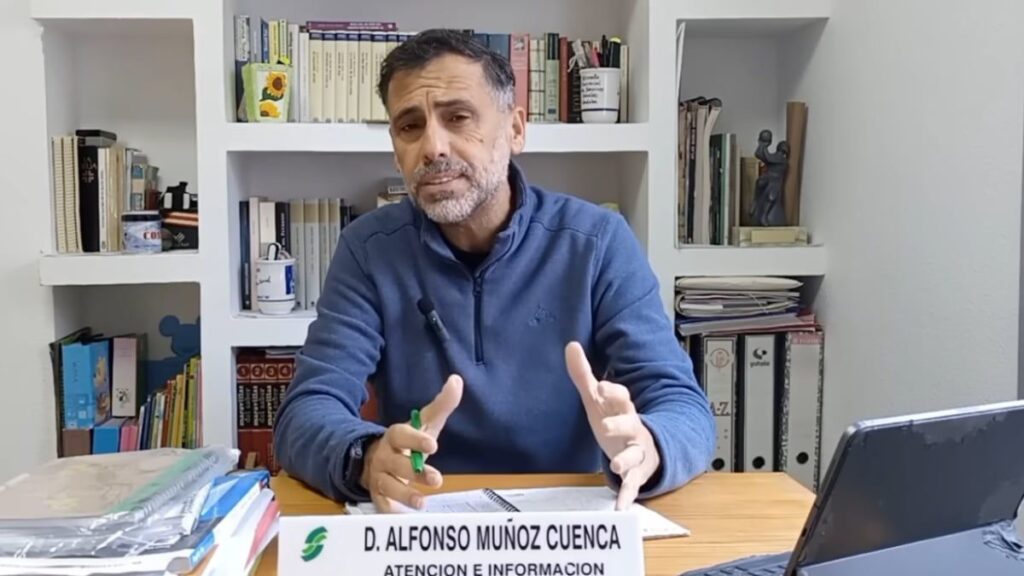
This increase, which has been applied progressively for 13 years, has returned to the forefront of the debate thanks to Alfonso Muñoz Cuenca, a Social Security official specialized in pensions. On his YouTube channel he has taken up what he himself calls work slowdown, following a recent call from a 65 and a half year old worker who admitted she could not take it anymore. Muñoz Cuenca warns that more and more experts doubt that the average worker will be able to last until that age.
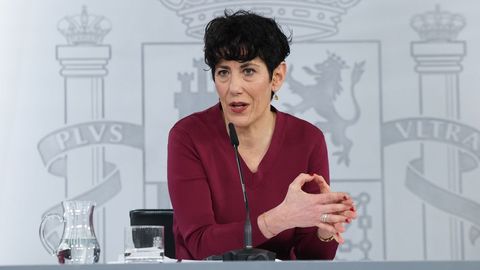
Social Security establishes that starting in 2027 the voluntary early retirement age will be 65 years unless you are 38 years and 6 months of contributions.

A 49-year-old security guard achieves a total permanent disability of 1,428.80 euros after losing sight in one eye and falling into alcoholism
The official starts his intervention with that same call. “A few days ago a colleague called me who was 65 and a half years old and who was exhausted from work and wanted to know when she could retire,” she says.
The worker leads a professional life marked by work irregularities, raising her children and the harshness of an increasingly demanding market. When reviewing her working life report, Muñoz notes that she has accumulated 25 years of contributions, a figure that leaves her well below the thresholds that the reform reserves for those who want to retire early.
Without the option of early retirement or with 25 years of contributions
With that career, he does not reach the 35 effective years required by voluntary early retirement or the 33 years required by the involuntary modality of article 207 of the General Social Security Law (which covers dismissals for objective reasons, ERE and bankruptcy proceedings). Nor can you benefit from the formula that allows you to retire at 65 with 100% of the pension, because that shortcut is reserved for those who prove 38 years and 3 months of contributions.
“The only option left is to barely endure until 66 and 8 months,” laments the official, who registered the case when that was still the current threshold. In 2026, that same profile will have to wait two more months, according to the transition calendar published by Social Security, and the next generation will now face the 67 plenary sessions. The difference seems small on paper. It is not when the worker counts the days until she leaves.
Labor slowdown and generational change
Muñoz maintains that little is said about the workers who can barely reach that age climbing a scaffold or chaining guards in a hospital without rest, a profile he describes as physically and mentally burned out and pushed to the limit. In his opinion, more and more voices agree that it is very difficult to sustain the current pace of the labor market until the age of 67 at full capacity.
For this reason, it advocates opening the debate on labor slowdown as soon as possible, that is, formulas that progressively reduce the worker’s burden as they approach the end of their active life.
And in the propositional part, he asks three questions that he addresses to the legislator and the reader. “Should a 23-year-old have the same working day as a 65-year-old worker?” asks the official. The second aims to adapt the market to new social realities.
The third opens the operational path that is closest to the system, in the midst of the pension revaluation process approved by the Government for 2026. “Should partial retirement be encouraged and strengthened even more to allow for generational change?”, concludes Muñoz, alluding to the modality that allows the worker to reduce their working hours before definitive retirement and sign a relief contract with another unemployed worker.