The Minimum Living Income is a Social Security benefit that seeks to guarantee a minimum income to all people who live alone or form a cohabitation unit. Those over 65 years of age who do not have the right to a contributory or non-contributory retirement pension can request the Minimum Vital Income, since the IMV law does not set a maximum age, in addition to requiring one year of legal residence instead of ten.
Generally, upon reaching the age of 65 and not having the right to a contributory pension, those over this age access the non-contributory retirement pension, which is regulated in article 369 of the General Social Security Law (can be consulted at this link). To access it, you must have legally resided in Spain for ten years, between 16 and the age at which the pension is requested, two of which must be just before the application. That is, people who arrive in Spain at the age of 60 and have lived here legally since then would not be able to request it.
Law 19/2021 on the Minimum Living Income explains in its article 4 that it can be collected from the age of “twenty-three years” and without an age limit. To this, article 10 adds that you must “have legal and effective residence in Spain and have had it continuously and uninterruptedly for at least the year immediately preceding the date of submission of the application”, a period that is not required, among others, for victims of trafficking or gender violence.
Furthermore, to demonstrate this situation of vulnerability, the income from the previous year must be less than at least 10 euros below what the IMV guarantees and, for a single person, the assets cannot reach 26,409.60 euros in 2026 without counting the habitual residence.
How much is the Minimum Vital Income charged?
The amount of the minimum vital income is the difference between the amount set for the family situation and what the person already earns, because article 20 of the law establishes that it counts as income “the amount of pensions and benefits, contributory or non-contributory, public or private.”
Therefore, for those who live alone and already receive the non-contributory pension, the IMV does not add anything, because article 13 compares what it guarantees with the pension that is collected at that time and it is the same 8,803.20 euros per year in 2026 that is included in the Social Security file. If you have a recognized disability of 65% or more, the benefit is completed up to 894.99 euros per month.
On the other hand, a single person who receives a pension from another country of 3,000 euros per year (250 euros per month) would collect 483.60 euros per month in IMV, which is what is missing to reach 733.60 euros.
If the eldest person lives with his or her partner, a child, a grandchild or a brother, as a general rule they form the same cohabitation unit, as stated in article 6, and the income of all is added up (article 11). Article 7 allows the victim of gender violence who left her home and, for three years, who came to that house due to eviction, because hers became uninhabitable due to an accident or catastrophe or because a separation, divorce or the breakup of a de facto couple began to request it on her own. With a child who earns 1,500 euros a month, for example, the household exceeds the 953.68 euros that the Social Security file sets in 2026 for two adults and there is no help.
Keep in mind that the Minimum Living Income is incompatible since 2023 with the old assistance pensions of Law 45/1960, which are still collected by those who had them recognized, and the non-contributory pension is not in that case. With the benefit for family members, which can be collected by the parents or grandparents of a deceased person, you must choose one of the two, as indicated on the form.
Social Security grants the Minimum Vital Income without asking workers to exhaust the unemployment benefit, but only if they live alone or with the family with whom they received it.
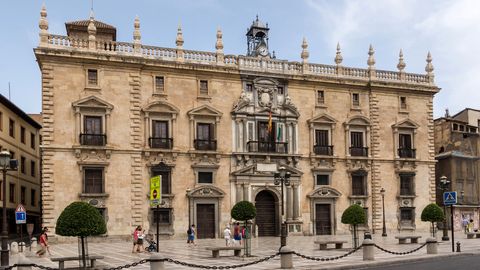
Social Security denies the minimum vital income to a recently divorced mother because her ex-husband was still registered in the apartment and the court recognizes it
Once granted, the IMV is maintained even if you travel outside of Spain. These stays cannot exceed 90 days a year, except for a justified illness, as established in article 10, and exceeding them without warning is one of the reasons why Social Security can withdraw the IMV.