
Permanent disability pensions, unlike other contributory pensions such as retirement or widowhood pensions, are not always necessary to request. Social Security can initiate the file ex officio when the medical leave (temporary disability) reaches its maximum duration or when the consequences are expected to be disabling, although the worker can also request it on his or her own.
There are two situations in which Social Security can initiate ex officio and assess whether or not to grant permanent disability and to what degree (partial, total, absolute or great disability).
Social Security explains on its website that the main situation is when the worker exhausts the maximum duration of temporary disability, which is 545 days (18 months). In this case, the medical court will examine the worker within a maximum period of 90 days, as established in article 174.2 of the General Social Security Law (can be consulted at this link). In the case of not receiving a notification from the INSS, you have to be calm, since as labor lawyer Víctor Arpa explains, “as long as they don’t call you and there is no resolution, you are still on sick leave and you are still getting paid, they can’t leave you hanging.”
The examination is carried out by the Medical Court (also known as the Disability Assessment Team or EVI), who will be in charge of examining the worker and proposing whether the permanent disability applies and to what degree. The worker does not have to request it, but he must attend the recognition and bring all the necessary documentation with him.
The second situation occurs when doctors determine that the injuries are permanent and disabling. As established in article 170.2 of the LGSS, when the 365 days are exhausted, the Social Security medical inspection is the only one that can discharge the worker and propose to recognize the permanent disability.
Furthermore, article 174.4 states that a medical discharge in which a proposal for permanent disability is made will cause the situation of temporary disability to be extinguished, regardless of the moment in which it is issued. From that moment on, Social Security will automatically open the disability file to determine whether or not the pension is appropriate.
While Social Security automatically processes the permanent disability, the worker will continue to collect the temporary disability benefit while the file is resolved. This is regulated by article 174.5 of the General Social Security Law, which explains that while the worker remains in that situation, the economic effects of the temporary disability will be prolonged until the resolution classifying the permanent disability is notified.
Social Security denies great disability to a waitress who needs help to get out of her chair, but justice grants it to her with a supplement of 991.28 euros
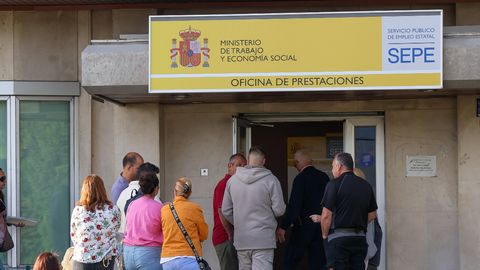
The SEPE forces a worker who had already received 20,380.43 euros to choose between total permanent disability and the subsidy for those over 52 years of age and the court says that he can collect both
Phases to grant permanent disability
Social Security establishes a series of steps to grant permanent disability and its degree when they are the ones who initiate it on their own initiative:
- The procedure begins either upon reaching 545 days of sick leave due to temporary disability or when discharge is issued with a disability proposal by the medical inspection.
- When the leave ends up reaching 545 days, Social Security must examine the worker within a maximum period of 90 calendar days to determine whether to grant the disability and to what degree. If it is expected to improve, the qualification can be delayed for a further 185 days, up to a maximum of 730 calendar days.
- Then comes the appointment with the medical court, where the EVI doctors will review how the limitations affect when working, whether in the usual profession or in any other profession as well as in your daily life (in case severe disability arises). Royal Decree 1300/1995 states that these opinions are “mandatory and non-binding”, that is, they must be made, but they do not have the final say.
- In the case of missing documents, or if the hearing process is opened before deciding, the worker has a period of 10 days to respond. This is explained by the Social Security website itself, where it states that the interested party “will have 10 days to present allegations or present documentation.”
- Finally, the medical court proposes, but it is the provincial director of Social Security who approves the pension and the degree, having a period of 135 days to do so. If after this period no response is obtained, “it will be deemed denied due to administrative silence.”
- If the pension is approved, it begins to be collected from the date of resolution. Now, there is an exception and that is when the pension is higher than what the worker received on sick leave. In that case, the pension will begin “on the day following the termination of the temporary disability.” That is, Social Security pays for the previous months, although it will be necessary to deduct what had already been collected while on sick leave.
- In the event that the permanent disability pension is denied, what was collected will not have to be returned and you will have a period of 30 days to file a claim before going to court.