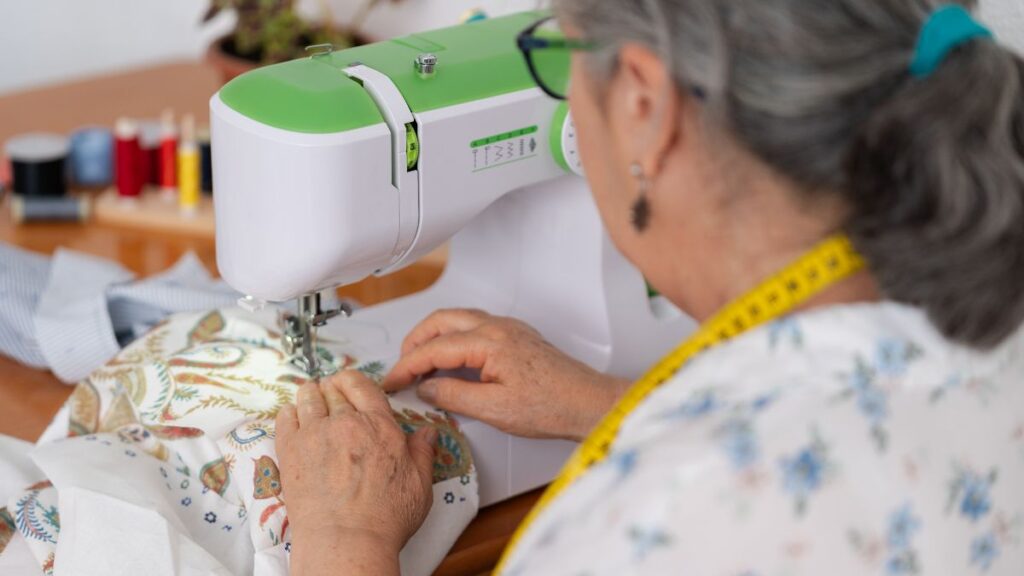
The Superior Court of Justice of Catalonia has ruled in favor of a worker and she will be able to collect a total permanent disability pension for her profession as a seamstress, due to the neuropathic and joint injuries she suffers, especially in one of her arms. The National Institute of Social Security (INSS) argued that her pathologies did not reveal any real functional limitation “beyond reporting pain”, stating that there was a “magnification of deficiencies” on the part of the employee.
As stated in the ruling (STSJ CAT 1254/2026), announced by lawyer Gemma Redondo on LinkedIn, the woman, on the one hand, suffered neuropathic pain derived from an injury to the radial nerve in her right elbow. Despite having received multiple treatments, such as infiltrations, radiofrequency, capsaicin patches and medication, the evolution had been “torpid.”
Additionally, he had problems with his right shoulder, specifically adhesive capsulitis (loss of mobility), tendinopathy, and mild degenerative changes. Due to these injuries, he had to use his left arm to compensate and continue working, which also ended up causing tendinopathy in his left shoulder due to overload.
Due to these limitations and after a certificate that declared her “unfit” for the required movements, she was fired for ineptitude from her company on December 22, 2023. In this situation, the worker requested permanent disability, but the INSS denied it, so she had to file a claim through the courts.
Social Security defends that there is no real limitation
The Social Court No. 20 of Barcelona ruled in favor of the worker, recognizing her total permanent disability for her usual profession as a seamstress, derived from a non-work accident. As a consequence, he sentenced the INSS to pay him a pension equivalent to 55% of his regulatory base of 1,482.08 euros, with effect from October 26, 2023.
Not satisfied with the sentence, the INSS decided to appeal, presenting an appeal before the Superior Court of Justice of Catalonia. In this, he argued a violation of article 194.5 of the General Social Security Law (LGSS), alleging that there was no evidence of a true functional or motor limitation of the employee, but only references to pain.
In this sense, they stated that an electromyogram had ruled out motor involvement in the radial nerve and, according to the SGAM report (the medical assessment team), there was a “magnification of the deficiencies” on the part of the employee (that is, they considered that she exaggerated the severity of her injuries).
Social Security defended that the main pathology (neuropathic pain in the right elbow) had a high subjective component, downplaying the reports provided by the affected person, arguing that they came only from the Pain Clinic and physiotherapy sessions, without any other recent evidence that showed a true disabling nature.
The TSJ of Catalonia recognizes his total permanent disability
The Superior Court of Justice of Catalonia ruled in favor of the seamstress, establishing that the disability was fully justified due to the nature of her work. The professionogram (a study of the job) detailed that being a seamstress requires the intervention of the entire hand-arm system.
This profession presents a high biomechanical load (level 3 out of 4 at the elbow) and requires repetitive movements and forced postures. Consequently, the proven injuries made it impossible for the worker to carry out the essential tasks of her job.
Consequently, the TSJ dismissed the INSS appeal and fully confirmed the lower court ruling, ratifying the recognition of total permanent disability. A case that reinforces that chronic pain, although it has a subjective component, can justify a permanent disability when it limits the performance of usual work. It should be noted that this ruling was not final, and an appeal could be filed for the unification of doctrine before the Supreme Court.