


Family balance continues to be one of the biggest challenges for thousands of workers in Spain, causing in many cases them to have to stop working. This break in working life can harm the worker in terms of receiving a retirement pension or other benefits in the future, especially affecting women, on whom the burden of care continues to fall.
However, Social Security establishes an umbrella of protection for ensure that the care of children or family members It does not penalize access to or the amount of future pensions. As stated in article 237 of the General Law of Social Security, which can be consulted in this Official State Gazette (BOE)periods of up to three years of leave to care for each child, or minor in permanent foster care or custody for adoption purposes, will count as contributions, even if during that time there is no active employment relationship.
You may be interested

Benigno, a 65-year-old bus driver, manages to recover the permanent disability of 2,593.99 euros due to his addiction to alcohol, cannabis and anxiety, despite the fact that Social Security had withdrawn it
Sweden, Germany and Chile give a lesson to Spain in the sustainability of the pension system and warn: “The current model is unsustainable without profound structural changes”
The law also extends this protection to the care of other family members. Specifically, the first three years of leave to care for family members up to the second degree of consanguinity or affinity will be considered to have been effectively contributed, provided that the family member cannot take care of themselves (due to age, accident, illness or disability) and does not carry out a paid activity.
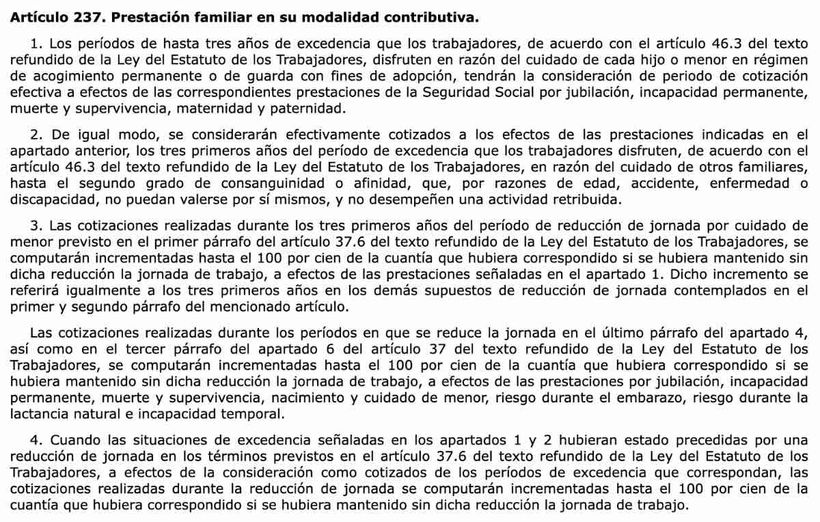
Care leave contributions contribute to the pension
What does the above mean? If a worker requests a leave of absence to care for a child or other dependent family members, they can add up to three full years to their working life to avoid contribution gaps. This benefit is crucial so that the worker does not see his retirement pension or future disability reduced.
That is, although in periods of leave there is no effective contribution from the company or the worker, they will be considered as time contributed for the purposes of the system’s benefits when they have been requested to care for a child or other dependent family members, in the latter case up to the second degree of consanguinity or affinity and provided that they cannot take care of themselves due to age, accident, illness or disability, and do not work.
In other words, during this period of leave, even if the worker is not working or receiving a salary, Social Security counts that time as if he were still contributing. The objective is to ensure that the time dedicated to the family does not represent a detriment to the calculation of the regulatory base of the worker’s pension, maintaining the contributory level that they had at the beginning of the leave.
In addition, it also helps them when it comes to reaching the years of contributions necessary to access the contributory retirement pension and avoid contribution gaps that could reduce the amount of the benefit. Now, in addition to retirement, the law also allows this protection to be applied to permanent disability, widowhood and orphanhood pensions, as well as maternity and paternity leave.