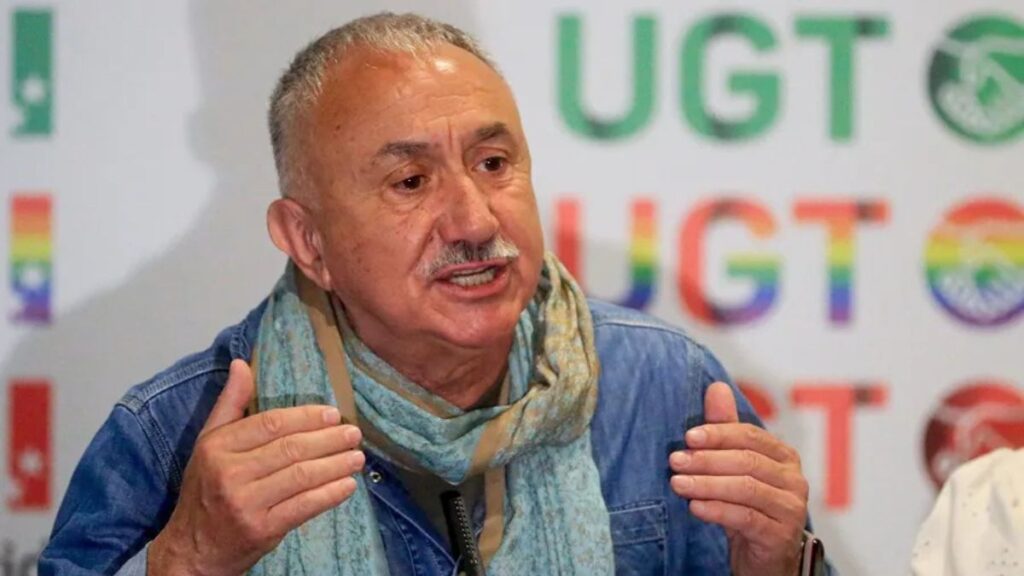
Pepe Álvarez, general secretary of UGT, has denied on Wednesday the speeches that alert youth about an alleged collapse of the public pension system. During a days dedicated to occupational health organized by the union itself, he has accused certain sectors of promoting “bulos” to weaken confidence in social security, especially among young people.
The union leader has denounced that there are economic interests behind catastrophist messages, especially by financial entities that, they said, they seek to open their way to the Partial privatization of the system. “This that the pensions are completed is constantly repeated, with different excuses in each era,” he said,
In addition, he has described as “ghostly” the statements that try generationally face young and old, insinuating that the former will have worse working conditions or lower pensions due to the maintenance of “worthy” pensions for current retirees. “It has neither feet nor head, it has never happened in history,” he insisted.
The pension system remains viable, according to Álvarez
The Secretary General of UGT has claimed the strength of the public model, relying on official reports such as the one recently prepared by the Independent Fiscal Responsibility Authority (Airef), which endorses the sustainability of Social Security accounts. According to Álvarez, the system remains viable and capable of guaranteeing long -term benefits.
In addition, he recalled that quotes not only finance current pensions, but also generate the right to future. “Young people have to know that they are paying social security so that, when they are older, they may be entitled to collect a pension,” he added.
The union leader has launched a message to young people, “they have to know that the best way to upload wages is not to take away their grandfather’s pension, which will not have any impact on him, but, in reality, is to organize in unions, in companies, in the sectors.”
In turn, he has defended the work that unions do for workers, and their importance to improve salary conditions. “Where there are unions, wages are higher,” he said.