

Early retirement is a form of Social Security that allows workers to retire before reaching their ordinary retirement age. But this entails cuts in the form of a percentage, which will be more or less high depending on the total years of contributions or the months advanced with respect to that age. This always happens, even if the advance is involuntarythat is, outside the will of the worker.
In the case of forced early retirement, which allows an advance of up to 4 years compared to the ordinary age, the cut can be up to 30%. Although the decision to retire always depends on the will of the worker, this leaves him in a difficult position, since he must decide between look for a job at 60 years old and see how the amount of your retirement is affected or retire knowing that Social Security is going to penalize you as well.
You may be interested

A man retires at the age of 65 and has to return 76,139.63 euros to Social Security for continuing to maintain his second active role as an official of the National Police: the Supreme Court endorses it
Arrate Aranceta (79 years old), widowed since she was 40 years old and with 4 children, speaks clearly about her pension: “It was 400 euros to pay for food and studies, it was not enough”
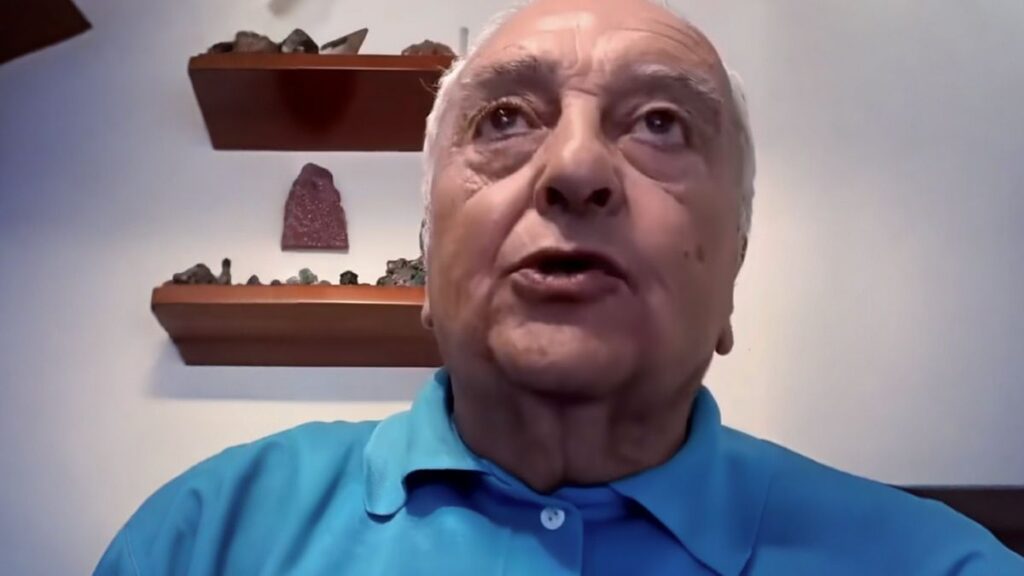
This is what the ASJUBI40 association denounces, which seeks andeliminate the reducing coefficients in early retirements with more than 40 years of contributionssomething that the Government has rejected. One of these examples is that of Paco Crespo, who tells his story about how “unfairly” he has been penalized for life, since he has lost almost a fifth of his pension, despite having contributed more than 46 years to Social Security.
Paco explains that he has been working since he was very young. “I have worked since I was 14 in three different companies, combining 8-hour work days with studying technical engineering.” He relates that he has had a long working life, since as he points out he has “contributed for 46 years after suffering several labor crises.” In fact, he spent “the last 40 years” at the last company.
Bad fortune knocked on his door and at 60 he was fired. “I went on unemployment when I was 60.” At that moment he had two options, look for a new job or retire early involuntarily, so he opted for the latter. “I retired at 62 years old, but they applied a penalty of 18%” and adds that this cut is suffered “for life and that is very unfair.”
Paco Crespo, like many other retirees, think that this penalty is abusive, since they have been the ones who have contributed the most to the system, so he does not understand why they are punished, especially when the reason for accessing retirement has been beyond their control.
This retiree thinks that, on many occasions, retirement is not a choice, but an obligation, because there are no other options. On the other hand, he adds that it is an inequality, since there are workers who are not sanctioned and can retire at 60 years of age and 30 years of contributions, without forgetting those other professions such as miners, local police, artists, pilots and passive class civil servants, who can retire even from the age of 52 without suffering the application of these reducing coefficients. For this reason, they demand an end to what they consider an “unjust conviction.”