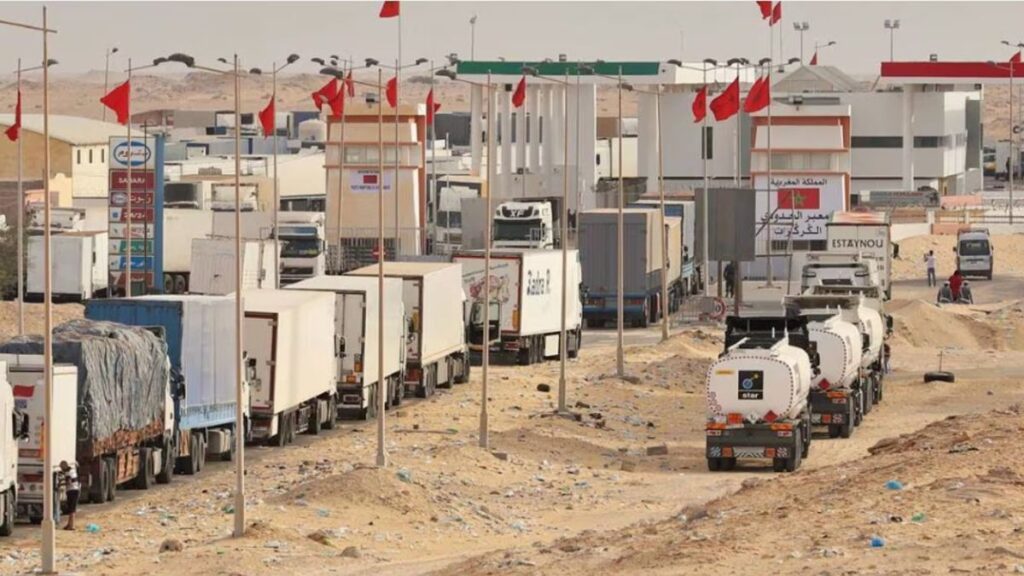
The traffic of goods between Morocco and Spain has traditionally regulated by strict customs controls, in an attempt to balance competition and guarantee legal certainty on both sides of the Strait. However, the regulations on the fuel That they can introduce the more than 100,000 Moroccan trucks that cross the Spanish territory every year, it is one of the last points of protest on an especially sensitive border for both countries.
Thus, numerous Moroccan carriers have denounced the imposition of fines of between 300 and 400 euros in the port of Algeciras, for exceeding the limit of 200 liters of fuel allowed in their deposits. A measure that they consider harmful to their competitiveness and that attribute to the strict application of a bilateral agreement signed more than three decades ago.
Why do Moroccan truckers complain
The complaint of Moroccan truckers is produced in the context of the reactivation of an agreement signed in 1992 between Spain and Morocco, which limits the amount of fuel that transport vehicles can introduce in the Spanish territory. According to this regulation, carrying more than 200 liters of diesel is considered “fuel smuggling” and is sanctioned with economic fines, according to ‘La Razón’.
Economic impact
“The continuous application by the Spanish authorities of the terms of a joint agreement signed more than thirty years ago worries Moroccan professionals and entrepreneurs, since violating it could cost them thousands of Dirhams,” said sources in the sector cited by the Moroccan digital ‘HESSPress’.
Transport associations in the Maghreb country argue that this policy forces them to refuel in Spanish service stations, which, in their opinion, favors local operators and makes their logistics costs more expensive. However, this measure aims to avoid the massive importation of foreign fuel, which historically considered a practice of unfair competition for the distribution sector in Spain.
In this way, from Morocco they demand flexibility of the regulations or a review of the established limits more than thirty years ago, claiming that the costs and size of the current trucks are much larger than years ago.