

Permanent disability is granted by degrees based not on the pathology, but on how it affects the time of working, whether in the same profession or any other. To determine one of the four degrees (partial, total, absolute or major disability), the National Social Security Institute (INSS) usually takes into account medical reports, sick leave reports and diagnostic tests. The problem is that many of these reports do not reflect how the disease affects the tasks that the worker usually does.
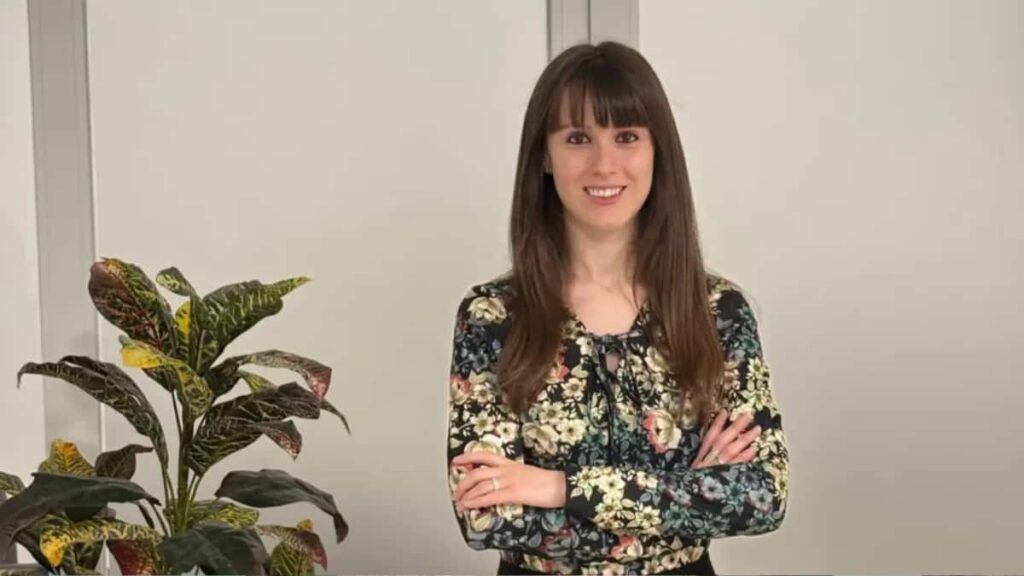
This is what Miriam Ruiz (@compromisolegal), a lawyer specializing in disabilities, warns: “This is what everyone does wrong when they request a permanent disability.” He explains that the failure is to concentrate all the energy on the clinical documentation and fail to explain how these pathologies affect the applicant’s specific profession.

A 41-year-old bus driver with an addiction to drugs and alcohol achieves an absolute permanent disability of 2,522 euros, despite the rejection of Social Security

He simulates collecting a permanent disability pension from Social Security to obtain bank loans and loans: he will have to pay 370,058.98 euros
This is because the majority of pensions recognized by Social Security are total permanent disability, the degree defined in article 194.4 of the General Law of Social Security as one that disables the worker from carrying out all or the fundamental tasks of his usual profession, but allowing him to dedicate himself to a different one.
“Social Security will assess not only the pathologies you have, but also the impact that these pathologies have on your specific profession”
This technical difference has a direct procedural consequence for whoever processes the file. The lawyer explains it this way, “many of you when you go to request a disability pension focus a lot on providing many medical reports, whether from public doctors, private doctors, or experts, and this is very good.” The problem arises when this documentation is the only thing that enters the procedure.
Social Security, through the Disability Assessment Team (EVI), does not limit itself to reading the diagnoses, but rather crosses the functional limitations described with the specific functions of the applicant’s position. That is to say, if it is not clear what that profession is or what tasks are performed in it, the resolution is usually negative even if the clinical condition is apparently serious.
Ruiz Acosta explains that “when it comes to assessing whether to grant you permanent disability or not, Social Security will assess not only the pathologies you have, but also the impact that these pathologies have on your specific profession.”
The Social Security website states that permanent partial disability recognizes a loss of performance of 33% for the usual profession, total disability completely disqualifies you for that profession and absolute disability does so for all work activities. The three degrees are evaluated on the same axis, which specific tasks the person can no longer perform in their job.
Why severe knee arthritis does not incapacitate a computer scientist
To understand it better, the lawyer presents an extreme example that is frequently seen in her office. “You may have severe knee arthritis that prevents you from walking, but if your usual profession is, for example, computer science and you sit all day, in the end Social Security is not going to grant you any type of disability,” he says. This paradox disappears when applying the criteria of article 194 LGSS, since a pathology limits in the abstract, but only disables if it prevents the execution of the tasks of the position that the person performs.
This also happens the other way around, since the same knee arthritis applied to a construction worker, a delivery person or a waiter, jobs that require prolonged standing, walking and carrying, usually leads to total permanent disability.
To understand it, Social Security does not value the illness, but rather how it affects the worker in their work. Hence, the EVI summary report, which is the document that closes the medical court’s assessment, must contain both the physical or psychological limitations and a precise description of the position. If the second part is left blank or filled in with a generic (“employed worker”, “service employee”), the chances of denial increase.
This dynamic also explains why cases with the same pathology come to contradictory resolutions of Social Security which later end up being resolved in court. Social Security does not compare the files with each other, it analyzes them individually with the profession declared by each applicant.
Differentiate between “having a serious pathology” and “being incapable of your profession”
Ruiz Acosta ends his explanation by clarifying that the burden of proof of the habitual profession falls on the applicant himself. The company does not provide this information ex officio, and the general practitioner or public system specialist usually describes the diagnosis, not the specific tasks of the position. The professional category that appears on the payroll is not enough either, because two workers in the same group can have physically very different days depending on the sector.
“It is very good that you provide medical reports that benefit you to your permanent disability file, but do not forget to tell Social Security what your usual profession is and what specific functions you perform, because it may happen that Social Security considers that you have sufficiently serious pathologies, but if you have not been able to tell it how these pathologies affect your profession, then it will most likely end up denying you permanent disability,” concludes the lawyer.