


With the arrival of November, supermarkets begin to fill with the usual Christmas sweets, such as mantecados, Polvorones, nougat or marzipan, which announce the start of the festive campaign. Alongside them, other types of formats coexist, such as Advent calendars, which have become established in many families due to their playful nature and affordable price.
With the Christmas campaign already underway, Mercadona has begun to distribute its Hacendado Christmas Advent Calendar, a case containing 24 small milk chocolate bars, one for each day from December 1 to 24, and which is usually among the seasonal products most in demand by families. Its price is 1.85 euros and it is available in two different designs, which helps it to sell out easily every winter.
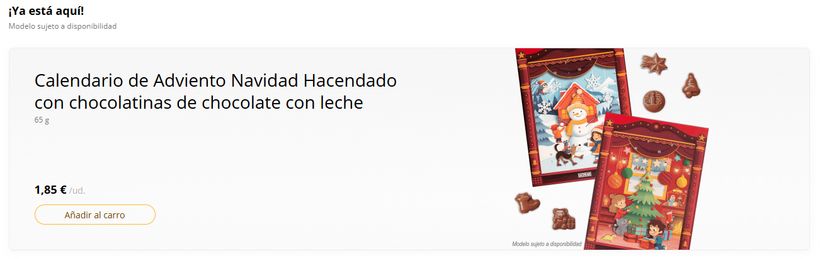
The container, with a net weight of 65 grams, includes chocolate figures made from sugar, cocoa butter, whole milk powder and cocoa paste. The manufacturer, the company Rübezahl Schokoladen GmbH, is located in Dettingen/Teck (Germany), one of the countries with the longest tradition in the production of Christmas sweets.
The product should be stored in a cool, dry place, between 12 and 20 degrees, a common recommendation for chocolates to maintain its texture and avoid crystallization. Additionally, the calendar may contain traces of nuts, peanuts, gluten and soy, an important warning for consumers with food allergies.

The tradition of Advent calendars
Advent calendars, popularized in central Europe at the beginning of the 20th century, have become a very common product in Spanish supermarkets that usually mark the beginning of the Christmas campaign and have a strong emotional and family component. In the case of Mercadona, these products are marketed under the Hacendado brand and are usually purchased in the first weeks of December due to their low price and playful format.
In recent years, the offer of calendars in the retail sector has diversified, with versions that incorporate toys, cosmetic products or gourmet items. However, chocolate ones continue to be the most widespread due to their accessibility and their connection with the children’s tradition of discovering a figure every day until Christmas Eve.