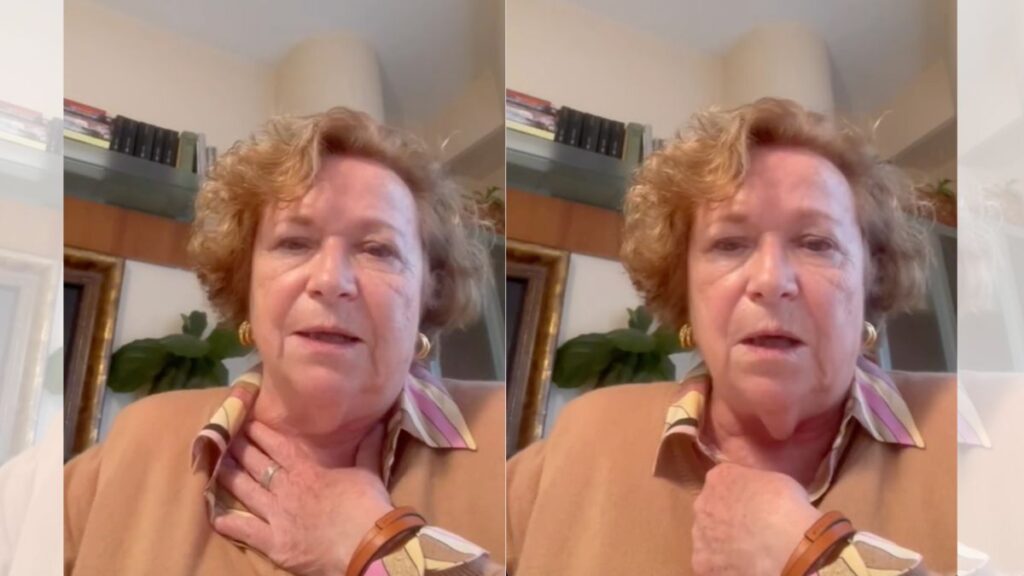
María Jesús Margarit Pelaz has been contributing for more than 43 years. She is a solicitor of the courts of the Castellón college, a member since 1983, and at 71 years old she cannot retire. And not because he lacks years of professional practice, but because all the years he accumulates are in the attorneys’ mutual society, not in the public Social Security system. Their case is that of thousands of registered professionals (lawyers, architects, engineers and solicitors) who were left out of the Special Regime for Self-Employed Workers (RETA) by contributing for decades to alternative mutual societies that in most cases provide an insufficient pension.
“I feel deceived on the one hand by the mutual society, which has clearly become a failed mutual society. On the other hand by the politicians, because they are incapable of reaching an agreement, and by the State, for having forgotten its duty to supervise the functioning of the mutual society,” María Jesús denounces in a video published on the social networks of the J2 Movement (of lawyers and attorneys), which fights to guarantee an adequate retirement for the group.
Certainly, this attorney’s complaint puts its own name to a situation that affects nearly 200,000 professionals throughout Spain, according to the figures managed by mutual associations. More than 95% of them receive benefits below 700 euros per month. In fact, many do not reach 400.
A law backed by Congress that has been in the drawer for a year
On May 6, 2025, the Plenary Session of the Congress of Deputies approved the taking into consideration of a bill promoted by the PSOE to enable a voluntary gateway to the RETA. The rule had 311 votes in favor and 32 abstentions, with Vox being the only group that did not support the initiative (although it did not vote against it either).
This standard was articulated in three main axes. The first, ending alternativity starting in 2027, so that the new registered self-employed workers would compulsorily contribute to the public system. The second, improve the minimum benefits of existing mutual societies until reaching 100% of the minimum pension in 2027. And the third, create a way for mutual members to transfer their accumulated rights to the RETA and count those years as contributions.
However, this parliamentary consensus has not translated into legislative progress. The amendment period ended in September 2025 and the Labor Commission’s presentation was never convened. In December, the process was suspended without an agreement. The PP’s Justice spokesperson, María Jesús Moro, registered a request to reactivate the process and denounced an “anomalous blockage in parliamentary work.” To this day, the law still does not advance.
Mutual societies that went from a pension system to a private plan
The origin of the problem dates back to 2005, when alternative mutual societies began to function as individual capitalization systems, that is, as private pension plans. Until then, registered professionals could choose between contributing to RETA or to their association’s mutual insurance company. Many chose mutuality. The regulatory change converted their contributions into an individual fund that, decades later, offers pensions that do not cover basic needs.
“I am waiting for the resolution in the Congress of Deputies of the request for the gateway to RETA and as of today it has not yet been resolved, despite having been presented on May 6, 2025,” says María Jesús in the aforementioned video.
Another association of affected lawyers, ANAMA, has warned that the PSOE text, as drafted, would leave out 66% of those affected, by requiring that they be active as of December 31, 2022 and not have reached 15 years of contributions to Social Security. The J2 Movement collective completed one year of protests before Congress in February 2026 and has called for new mobilizations.
43 years working and without the right to a decent pension
The case of María Jesús perfectly summarizes the conflict. They have been working uninterruptedly since 1983, more than four decades, but those years do not count for the public pension system because they contributed to a mutual insurance company that is not part of Social Security. Without the gateway, your options are to collect the mutual pension (which in many cases does not exceed 400 or 500 euros) or to continue working indefinitely.
Nearly 200,000 professionals, like her, are waiting for a response from Congress. An answer that, after more than a year, has not arrived. The direct consequence is that, after decades of contributing, they cannot access a decent retirement.