
When our spouse dies it is a painful situation and that nobody is expected, but the emotional burden does not eliminate the need to meet the legal and fiscal obligations related to the will and inheritance. In this sense, one of the most widespread errors and beliefs in inheritances is to think that, if we marry in separation of goods, we can stop paying part of the goods to the other. This is not so, as the notary María Cristina Clemente warns, “you have married in separation of goods because you think you don’t have to leave anything in the inheritance. You are very wrong.”
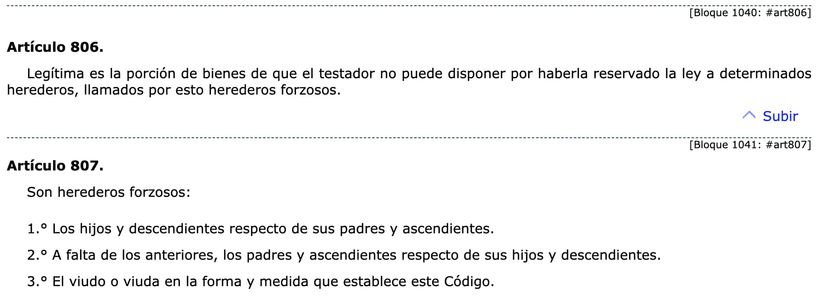
The expert explains that “the matrimonial economic regime does not influence the legitimate one that the spouse has always received. It doesn’t matter if you are married in profit, in separation of goods or in participation in profits.” That is, and to understand it, “the spouse is always forced heir.” This is so, since according to the Civil Code published in this Official State Gazette, that right always materializes in usufruct (articles 806 and 834 cc), and its extension will depend on each family situation.
You may be interested
A mother transferred 68,000 euros in life to a son and after his death his brother claimed to be part of the inheritance: justice is right

A 92 -year -old retiree who lived only leaves his inheritance of 930,000 euros to a nurse who took care of him only 24 days and now the family claims it
“If you have children, it will be a third of the inheritance. If you have no children, but your in -laws live, then it will be half. And if you have no children and your in -laws died before your spouse, then, two thirds of the inheritance,” says Clemente.
A simple testament that avoids family conflicts
Beyond what the law marks, the notary explains that the best way to protect the spouse is through succession planning. As he says with his words, “the widower or widow always has the right to a part of the inheritance of his spouse”, but if there is no will, the distribution can lead to family conflicts, especially with the ascendants of the deceased.
With a will, the legitimate of children or parents can be respected and, at the same time, attribute to the spouse the full property of housing or other goods, ensuring patrimonial stability and avoiding having to share them with the in -laws.
The legitimate spouse does not disappear
Getting married in property does not eliminate the succession rights of the spouse. In common law, the widower or the widow is always forced heir and its legitimate consists of a usufruct whose scope depends on the family that exists to death: if there are children, it falls on the third of improvement; If there are no children, but the deceased’s parents live, it reaches half of the inheritance; And if there are neither children nor parents, it extends to two thirds. These fees operate regardless of the marriage economic regime.
This “usufruct of the spouse” is the right to enjoy foreign goods with the obligation to preserve its form and substance, which explains that, even without being full owner, the widower or the widow has insured a use and performance of part of the inheritance.

With testament it is possible to plan the inheritance to protect the widower spouse respecting the legitimate ones. When there are no descendants and there are parents, the legitimate of these is reduced to a third, which allows to attribute to the spouse most of the heritage, for example housing, in full property.
The notary also recalls that the spouse is among the forced heirs in the manner and measure that the Civil Code sets, regardless of the economic regime of the marriage, and that the order of the intestate succession conditions who inherits in property if descendants or ascendants are missing. For all these reasons, choosing notary and granting testament helps adapt the succession to the reality of each couple and to prevent conflicts.