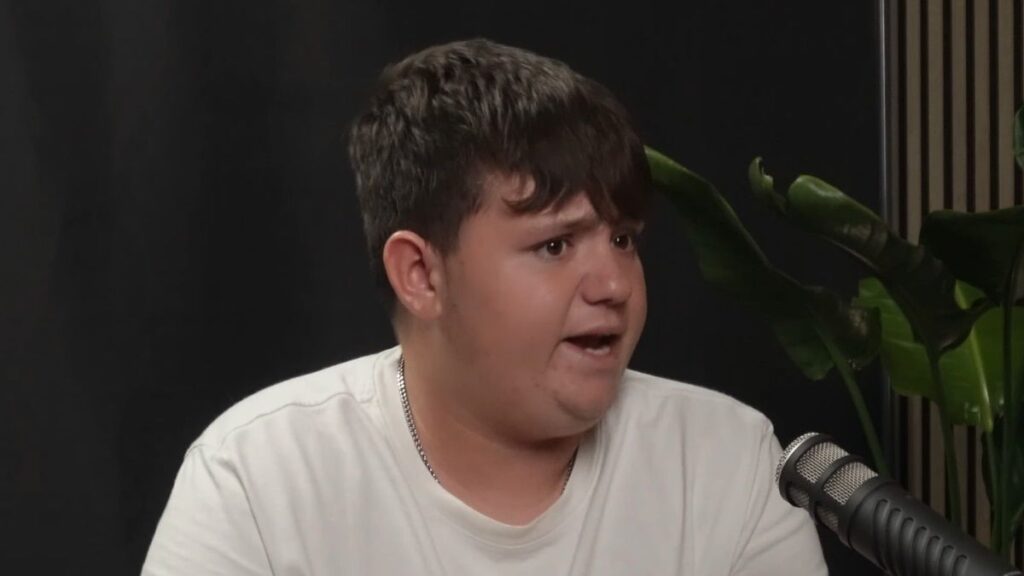


The Spanish countryside faces a double threat, in which, on the one hand, there are other countries like Morocco with great competition and on the other hand, the lack of generational change. The latter is important, since the average age of farmers is increasing every year and is close to retirement age, the incorporation of young people is practically anecdotal.
There is a lack of labor in several areas of Spain, one of which is Catalonia. This is how Marc Miralles, a young 19-year-old farmer from Mont-roig del Camp (Tarragona), explains it. He is a rare bird in a sector that sees how farmers’ children flee to the cities.
You may be interested

Oswaldo Martín (75 years old), retired with a pension of 900 euros per month: “I worked for 22 years from 12:30 at night to 12 noon for 1,500 euros”

Price of electricity today, December 1, 2025, by hour: the cheapest and most expensive hours within the PVPC
In a recent talk with Germán, creator of the Agrolife channel, Marc has given voice to an uncomfortable reality that many prefer to ignore. “There the farms are being abandoned, they are being sold. There is no generational change,” he says with a maturity inappropriate for his age. “It is very sad to hear it because there are many older people who die or who can no longer take care of themselves and the lands are left to be lost.”
Marc, known on social networks as the “farmer boy”, started with four tomato plants during the quarantine and now manages family hectares of olive and carob trees while studying landscaping due to the lack of specific agricultural training in his area. But, his vocation collides head-on with a bleak outlook: “If there is one new young farmer per year in my area, it is already a lot.”
The message of this young man from Tarragona goes beyond the sectoral complaint; It is a direct warning to the end consumer about what will happen if the trend is not reversed immediately. “Think that in 5, 6 or 10 years, when the current farmers have retired and people don’t want the land, what are we going to eat?” Marc throws crudely into the air. His response is as brief as it is alarming: “Shit from outside.”
For Miralles, abandoning the national field implies total dependence on third countries, losing control over the quality and origin of what reaches our table. “What we make is a local product, from our land, and we have to end up buying from abroad,” he laments, pointing out the paradox of seeing imported oranges in Valencia or foreign tomatoes in Catalonia.
Profitability and unfair competition
Why don’t young people your age want to know anything about the countryside? The answer for Marc lies in profitability and inequality of conditions. “Agriculture is not mathematics, two plus two does not equal four,” he explains. “One year you can do very well, and the next, like what happened to me this year with the carob, you are swallowing it with potatoes and losing money.”
Added to the instability of prices is competition that he describes as “ridiculous” due to the disparate demands between European producers and those from third countries. “They demand a lot from me. Between tariffs and extreme health measures to enter other countries, they put us in such a difficult position that we hardly export,” he denounces. Meanwhile, he criticizes the fact that foreign products enter easily: “They throw absolutely everything at them, namely if they meet the security deadlines, and they send it. And we don’t here, because you have to present a thousand papers.”
Drought and political abandonment
The situation in his homeland has been aggravated by drought management that Marc describes as negligent. “In Catalonia last year’s drought was chilling. Plots and plots of dead trees and dry swamps,” he says. The young farmer denounces the administration’s inaction to save agricultural heritage: “Was a treatment plant enabled to filter water and irrigate those trees? No, absolutely nothing was done. Thousands of hectares of hazelnut and olive trees were left to die.”
For Miralles, the solution inevitably involves a political class that steps on the ground and leaves the offices. “Let them get their act together, reduce bureaucracy,” he demands. “If it can be done in two steps, they do it in five. They try to complicate things.”
Despite everything, Marc maintains a thread of hope and launches an appeal to his generation, convinced that, in the face of the imminent shortage of professionals, the trade will be revalued out of pure necessity. “This trade will be highly sought after in 10 years because there will be no farmers left,” he predicts. “Young farmers, if you are listening to me: go ahead, without fear. Be brave, I’m sure things will go great for you, but you have to stand up.”