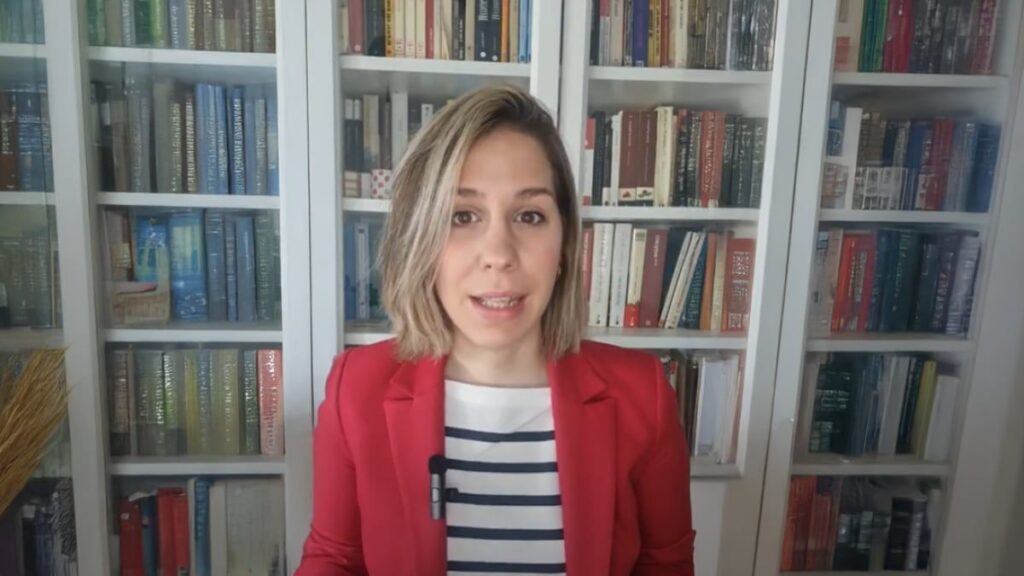
One of the most common doubts among couples is what happens when one provides the money for the purchase of some good, but it is the other who appears as the buyer. Although it may seem that paying is equivalent to being an owner, the legal reality is different. Lawyer Laura Lobo sums it up clearly: “If your partner buys something with your money, it is not yours.”
Through her social networks, the expert gives a very common example: “If a person married in separation of assets You buy a car, for example, to buy it you invest in all or part of someone else’s money, the car does not belong to the person who paid for it, but to the person who bought it.” A situation that, as he warns, can generate conflicts if one does not fully understand how this economic regime works.
Furthermore, he insists that these types of problems usually appear when there are shared accounts or a lack of clarity about the origin of the money: “be very careful with asset separation regimes in which there are joint accounts or there is confusion about the money of one or the other because it later generates many problems.”
What the law says about ownership of property
The Civil Code supports this interpretation. Specifically, article 1437 establishes that in the regime of separation of assets “the assets that they had at the initial moment of the separation and those that they later acquire by any title will belong to each spouse.” That is, ownership corresponds to the person who acquires the good.
Along the same lines, article 609 of the Civil Code states that property is acquired, among other ways, by contract. For this reason, as the lawyer explains, “the ownership of the property depends on the acquisition title, whether it is a car, a house or any other asset.”
The most common problems in practice
One of the key points that Laura Lobo highlights is that, in this regime, “it is not appropriate to investigate the origin of the money with which that asset was purchased to determine who it belongs to.” This means that even if a person has paid, it does not give them automatic rights to the property.
For this reason, it emphasizes a fundamental idea: “The good will belong to the person who bought it and not to the person who paid for it.” In practice, this can make subsequent claims difficult if there is no document evidencing a loan or agreement between the parties.