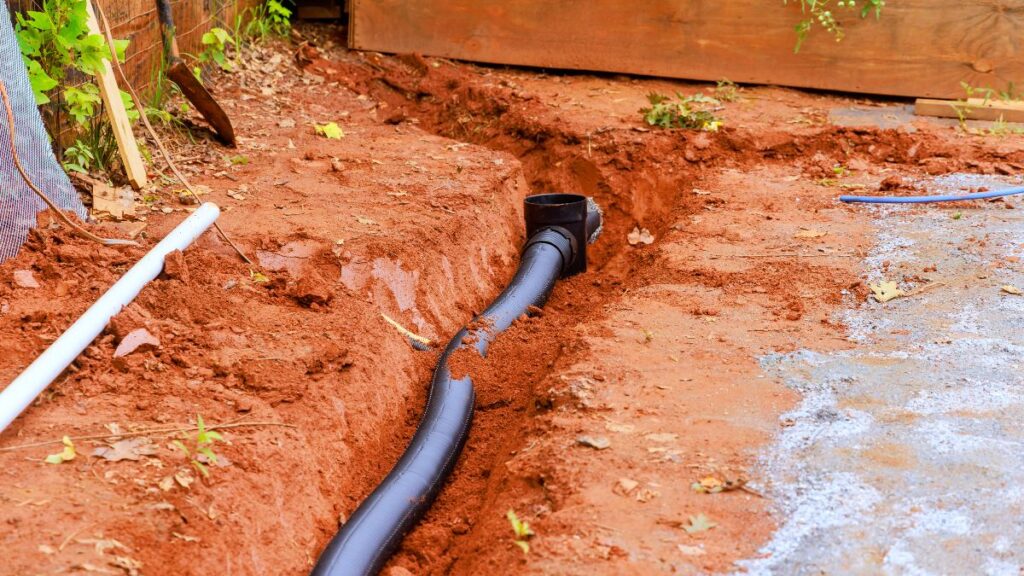
The Provincial Court of Malaga has ruled in favor of an owner who closed the drain through which the neighbor evacuated rainwater because it passed through his land. Although the pipe had been like this since the houses were built and, by blocking it, the other’s patio flooded when it rained, the court considers that, since that neighbor had done work on his home, he had to have installed a own draininstead of continuing to use the one that crossed the next plot.
According to the ruling of February 6, 2026, the homes had a drainage system through which rainwater passed from one patio to another until it reached the municipal sewer. However, one of the owners decided to close the pipe that crossed their land, so the neighbor began to have problems evacuating the water when it rained. He went to court to have his right to continue using the drain recognized and the neighbor to be forced to remove what was preventing the passage of water.
The Court of First Instance number 2 of Antequera initially rejected the claim and declared that the drainage easement claimed by the affected owner did not exist, and the Provincial Court agreed with the neighbor who had closed the pipe, considering that the works carried out in the other home forced its owner to find his own outlet for the water.
Although the drain had existed for years, the neighbor had done work and had to install his own
It is worth clarifying that, when the patio of a home is surrounded by other properties and it is not possible to evacuate rainwater through the house itself, article 588 of the Civil Code (which can be consult in this BOE) allows requiring water to pass through a neighbor’s land, as long as the corresponding compensation is paid. Furthermore, the pipe should be placed in the place that facilitates the flow of water the most and causes the least damage to the affected owner.
According to the sentence, when the houses were built, rainwater was evacuated through the neighbors’ patios, following the slope of the land until it reached the municipal network. In fact, the reports provided to the trial supported that this system originally existed, which is why the owner defended that his neighbor could not close a pipe that had been used for years to evacuate water.
The Court considered that, although this system had existed since the construction of the homes, the works carried out subsequently had to be taken into account. According to the municipal architect, when carrying out these works she had to have provided an outlet for rainwater and sewage to the public sanitation network.
Therefore, the Court rejected the owner’s argument that the drain should be maintained simply because it had existed for years. For the court, the important thing was that the conditions of the home had changed and that the works required a separate outlet for the water.
The neighbor who closed the drain is not obliged to endure more water due to the works on the house next door
Although the affected owner claimed that he had the right to continue using the pipe, the Provincial Court considered that the works carried out had also increased the amount of rainwater that reached the neighbor’s patio, because the drain from two bathrooms had been added to it, causing bad odors, and could not force him to continue supporting that load.
In this sense, article 543 of the Civil Code establishes that the owner who benefits from an easement can carry out the necessary works to use and preserve it, but cannot modify it or make it more harmful to the owner of the land. That is to say, even if there is a right to drainage, the damage suffered by the neighbor cannot be increased by the reforms made to the home itself.
According to the ruling, by covering a large part of the patio, the owner had considerably changed the original configuration of his property. Furthermore, the expert reports indicated that the works caused a greater amount of rainwater to reach the adjacent land. For this reason, the Court considered that maintaining the same drainage meant imposing a greater burden on the neighbor than the one he had previously had to bear.
The Court noted that, in accordance with article 588 of the Civil Code and the jurisprudence of the Supreme Court, the right to demand a drainage easement is no longer justified when the need that allowed it to be established disappears. In this case, he considered that the owner had to have planned an exit to the public network when renovating his home, without continuing to use the neighbor’s land.
Sánchez announces that he will extend the bank tax in 2027 to raise 1,400 million for housing

A neighbor installs a closet in her patio to store junk and Justice says she has to remove it because it was anchored to common elements and the statutes prohibited it
Therefore, the owner who had closed the pipe was not obliged to allow the water to continue passing through his plot, although an appeal could be filed against the ruling (SAP MA 754/2026).