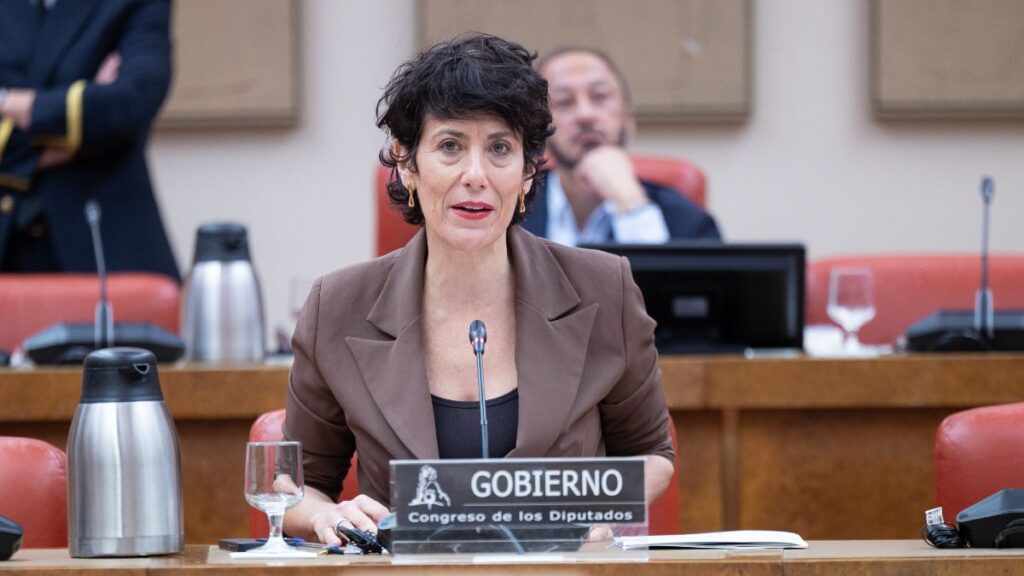
Royal Decree-Law 31/2026 is validated, which introduces important changes in medical leave, widow’s and orphan’s pensions and other Social Security benefits. The Permanent Deputation of Congress gave the green light this Wednesday to the rule with 63 votes in favor and six against Vox, allowing the measures approved by the Government on October 20 to remain in force.
This is one of the seven royal decree-laws that Pedro Sánchez’s Executive has managed to carry out this Wednesday, practically in extremisbefore the general elections on November 29. Among the validated regulations are also the expansion of the rights of single-parent families and the increase in financing of the dependency system by 2027.
It must be remembered that the Permanent Deputation had already been used by the Government to try to save the two housing decrees promoted after Maricarmen’s eviction. In fact, this body, which remains active after the dissolution of the Cortes, is the “ace in the hole” that Sánchez and his Government used to recover those measures, although in the end only the decree of protection against evictions went ahead while the other was overthrown.’
Now, the Executive has once again resorted to this parliamentary mechanism to validate the seven regulations that appeared on this Wednesday’s agenda, including the Social Security reform.
According to the BOE itself, the latter aims to respond to “new social and health realities that require a specific response from the public social protection system”, in addition to correcting situations of lack of protection.
New medical leaves due to menopausal disorders and gender violence
One of the most notable measures affects special situations of temporary disability, regulated in article 169 of the General Social Security Law.
Specifically, the standard recognizes as a special situation that in which a worker finds herself due to a “limiting pathology due to secondary menopausal disorder coded for this purpose”, provided that she receives health care and is prevented from working as a consequence of that pathology.
Therefore, it is not an automatic sick leave for being in menopause, but rather specific protection when there is a pathology that prevents carrying out work activity.
In addition, the decree contemplates sick leave due to injuries caused by gender violence, as long as the medical and documentary requirements established in the standard are met.
These modifications relating to the new special situations of temporary disability will take effect from December 1, 2026, according to the fourth final provision.
Improvements in pensions for widows, orphans and care of sick children
But the modifications do not stop only at pathologies or sick leave due to gender violence, they also include changes in the widow’s pensions of de facto couples with children in common, eliminating certain formal requirements that could prevent the recognition of the benefit.
With regard to orphan’s pensions derived from violence against women, the rule establishes that, when there is a situation comparable to absolute orphanhood, the minimum monthly amount will be equivalent to double the current interprofessional minimum wage.
On the other hand, the benefit for the care of children affected by cancer or other serious illnesses is expanded, allowing it to also be recognized when there are treatments of special intensity without the need for hospital admission.
Furthermore, the new wording of article 191 establishes that the right to collect this benefit may be recognized “in favor of one of them or in favor of both alternatively or simultaneously”, in reference to the parents or caregivers who meet the requirements.
It is also contemplated, exceptionally, that the benefit may be maintained beyond the age of 26 when care needs persist and a disability equal to or greater than 65% or degree III dependency is proven.
Aid of up to 300 euros for non-payment of alimony pensions
But if there is another measure worth highlighting, it is the one that affects the Maintenance Payment Guarantee Fund, intended to protect minors when one of their parents fails to pay a judicially recognized alimony.
The maximum amount of the advance increases to 300 euros per month and, thanks to this rule, the economic requirements for access are changed, taking into account the minimum interprofessional salary.
On the other hand, the decree on single-parent families, which has also been validated this Wednesday, expands the protection of the fund to include certain cases of adults with disabilities equal to or greater than 65% or in a situation of dependency.
In 2027, Social Security will increase the average widow’s pension to about 1,011 euros per month, about 34 or 35 more, and that of men will stand at about 695.

Rosa, widow of a common-law couple forced to choose between two pensions: “I consider it unfair to have to give up one of these benefits when they respond to different circumstances”
In this way, with the validation of both standards, the measures approved by the Government to expand social protection continue at the forefront, although the application of each standard and its corresponding new measures will be different depending on the dates established in each royal decree.