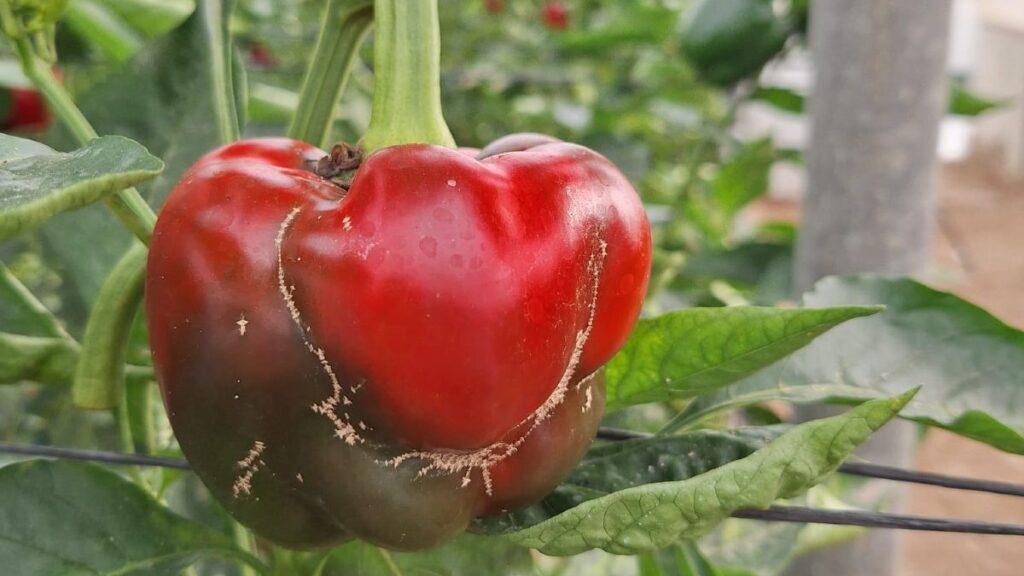
The Junta de Andalucía has carried out 922 inspections and imposed 272 sanctions in Almería due to non-compliance with mandatory measures to stop the Thrips parvispinus infestation, focusing mainly on violations of the crop uprooting protocol.
The Ministry of Agriculture met last week with representatives of the fruit and vegetable sector, attended by organizations such as Hortyfruta, COEXPHAL, Asaja, COAG, UPA and Ecohal, to address the evolution of the pest and the need to reinforce prevention and control measures.
In it, the Association of Organizations of Fruit and Vegetable Producers of Almería (COEXPHAL) demanded that the Board implement new extraordinary and mandatory measures to stop the expansion in Almería and Granada. The association warned that the damage caused by the pest endangers the viability of numerous horticultural farms and considers that current recommendations are not sufficient.
COEXPHAL calls for mandatory measures to stop the plague in Almería and Granada
The Board of Directors of COEXPHAL unanimously approved, also last week, a battery of proposals that have already been transferred to the Ministry of Agriculture. The association considers that the seriousness of the situation forces us to move from the recommendations to measures that all farmers in the affected areas must comply with.
Among the actions proposed is a ‘zero sweep’ of agricultural waste, especially on boulevards, rural roads and land near farms. In this sense, he warned that the accumulation of plant remains can favor the persistence of the pest and its spread to other farms.
The association also requests that biological stoppages be established according to the needs of each area and the time of year, in addition to increasing surveillance over the uprooting and removal of crops. Added to these measures is the obligation to apply techniques such as soil solarization and biological control during spring crops.
The organization also demands that agricultural waste treatment plants and transport services have sufficient capacity to cope with the periods of greatest activity. The objective is to prevent plant debris from accumulating due to lack of means to remove it.
It also states that the current situation requires “a coordinated, forceful and immediate response” from the administrations and all the agents involved in fruit and vegetable production. Therefore, it requests that seed growers, marketers and the auxiliary industry also participate in prevention measures.
They ask for help for farmers who have lost more than 30% of their production
Another of COEXPHAL’s main demands is the creation of financial aid for producers who have suffered the most serious consequences of the pest. Specifically, it proposes compensatory aid for producers who prove damages exceeding 30% of their production.
The organization also plans to study exceptional authorizations of phytosanitary products that may be useful against Thrips parvispinus, as well as reinforce prevention actions in seedbeds and other possible sources of dispersion. On the other hand, it positively values the existence of a complaints channel to locate abandoned properties that could become sources of the plague and facilitate the intervention of the authorities.
Meanwhile, the Junta de Andalucía maintains inspections to verify that farmers comply with the measures already established.
The University of Almería welcomes the new course with a day full of workshops and activities for its students
More than 32,600 foreigners request regularization in Almería and 3,218 already contribute to Social Security
Lastly, COEXPHAL insists that the current recommendations should become mandatory to ensure that they are applied uniformly in the affected areas. The association recalls that “the fight against this pest cannot fall solely on farmers” and demands the involvement of the entire agri-food chain to prevent damage from continuing to increase and jeopardize the continuity of farms.