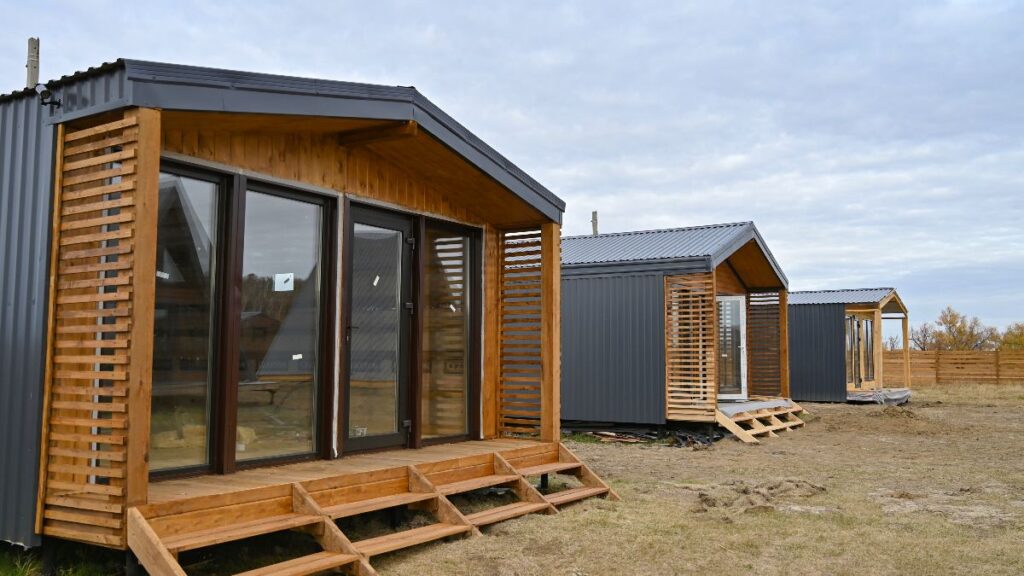
The Superior Court of Justice of the Basque Country has confirmed that an agricultural company will have to remove 7 prefabricated houses that it had installed on its land to house temporary workers hired for field work. Although the company defended that the accommodations were necessary for its activity, for Justice this does not allow it to maintain certain constructions that had been installed without planning permission and whose use was not permitted on that land.
According to the ruling of January 21, 2026, the company had installed several of these prefabricated homes on the land of its agricultural operation to house temporary workers arriving for the campaign. However, this land was classified as non-developable land and did not have a municipal license to install them.
The City Council, considering that these were illegal constructions, sealed them and suspended the supplies they had intended for residential use. Subsequently, it rejected the legalization request presented by the company and ordered its removal and return of the land to its original state within a period of three months. The company appealed this decision, but the Contentious-Administrative Court number 3 of San Sebastián ruled in favor of the City Council, something that was later confirmed by the TSJ of the Basque Country.
Prefabricated houses needed a license even if they were to house temporary workers
To avoid having to remove the prefabricated houses, the company argued that it needed to have accommodation for its temporary workers due to the difficulties in finding labor in the agricultural sector, and that there were even regulations that regulated this type of accommodation and public aid to build or condition them.
However, for the TSJ, the fact that these regulations exist did not imply that they could be installed on land where urban planning regulations did not allow it and, in this case, article 207.1.n) of Law 2/2006 on Land and Urban Planning of the Basque Country requires a license to install prefabricated houses, both provisional and permanent.
Furthermore, article 64 of the General Urban Planning Plan (PGOU) of Ibarra (where the exploitation was located) considers the stable implementation of prefabricated constructions as a new building. For this reason, the modules that the company installed needed a municipal authorization that it did not have.
The agricultural land did not allow the construction of housing for workers.
The company also argued that the accommodation could be considered auxiliary facilities for its agricultural operation. However, the TSJ recalls that article 28 of Law 2/2006 prohibits, as a general rule, the construction of new homes on non-developable land, with certain exceptions.
One of them, included in article 31, allows the construction of a home linked to an agricultural holding when it is to be used as the habitual residence of the owner and manager of the holding, but not to collectively house temporary workers.
Although article 72 of the Ibarra PGOU allows certain agricultural constructions, such as warehouses, greenhouses or facilities to store machinery, it excludes residential uses, so the court considered that accommodation for workers could not be equated to these facilities, since “its closest or analogous use would be housing.”
Denise, 65, leaves her home and moves to a prefabricated house in her daughter’s garden to save money and take care of her granddaughters.
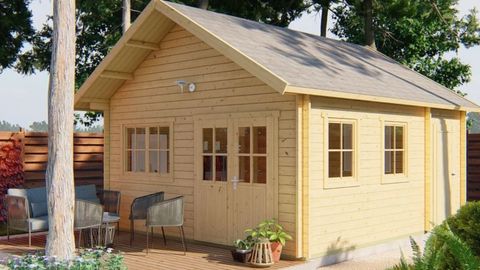
The prefabricated house with two floors and 3 rooms that is sold at a discount for 7,246 euros
For all these reasons, the TSJ of the Basque Country confirmed the municipal decision to deny legalization and order the removal of the prefabricated houses, returning the land to its original state. However, against said ruling (STSJ PV 289/2026) an appeal could be filed before the Supreme Court.