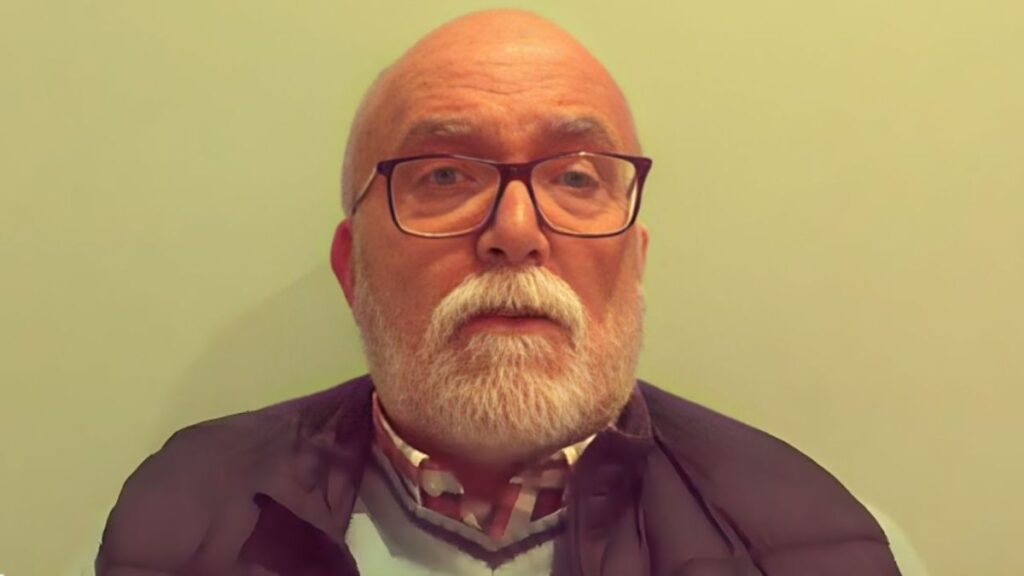
Agustín is not a random name, he is the face of a generation that built Spain through overtime and multiple jobs. He began working at the age of 15, securing contracts in locksmith shops and workshops; He reached the end of his working life after 47 years of effort.
However, upon requesting retirement at the age of 63 after closing his company, he found himself with a 24% cut in his pension and the administrative ‘forgetfulness’ of periods where he paid double to the system. And, for Agustín, the numbers do not add up, but for the Administration, the rules are what they are.
Retirement in Spain
To retire in Spain, you have to wait until you are 66 years and 10 months old for those who do not reach 38 years and 3 months of contributions. Despite this, the country is in the midst of launching the dual system: Social Security calculates the pension by comparing the last 25 years with the last 29, always applying what most benefits the worker.
But, despite the 2.7% revaluation applied this January, cases like Agustín’s show that having many years of contributions does not always guarantee a pension as we dream of.
The problem lies in the reducing coefficients. If you decide to retire before the legal age, as Agustín did when he was forced to close his business, the law applies a “penalty” for each month of advance.
Although the Government softened some cuts that reached 21% for maximum pensions, those who retired earlier carry losses that are difficult to recover. “Social Security did a self-calculation of my retirement and applied a penalty for which I began to earn 24% less,” he confesses to Asjubi 40.
The ‘military’: a time without contributions
One of the points that generates the most indignation is mandatory military service. Today, the “military” only serves as a “wild card” to reach the minimum number of years necessary for early retirement (maximum one year), but does not increase the amount of the pension.
The State argues that at that time there was no effective contribution. Agustín remembers it well: “During the 15-month period I did not contribute because I was in military service, and then it was not counted as a contribution.” That 15-month gap is, for many, a historical injustice.
Added to this is the drama of multiple employment. Agustín not only worked as an employee, but for a decade he paid twice: “Those 10 years I was contributing twice: once for the general regime and another for the self-employed regime… and then Social Security did not want to recognize me.”
Even his time in local politics was left in administrative limbo: “I was a councilor for the Socialist Party for 2 years… which they did not want to acknowledge to me either.” In the end, of a potential 59 years of contributions, the system only validates a portion.
“I will continue fighting for my rights to be recognized”
After contributing to the maximum as a self-employed person in his last working stage, paying 455 euros per month for ten years, the reward was bittersweet. “I had a pension of 740 euros; and fortunately and thanks to the demands of these 2 years, they have risen a little and I am currently receiving 810 euros,” explains Agustín.
“I will continue fighting for my rights to be recognized, as well as the time I spent doing military service,” the man finally says to the followers of Asjubi40.