For years, the construction sector in Spain has been the engine of thousands of families, but now the situation has changed. Not only are homes missing, but also qualified labor to lift them. The lack of generational relief threatens to leave without workers a sector that has always been essential. The problem, as always, the low salaries in a work as demanding and physically exhausting as construction.
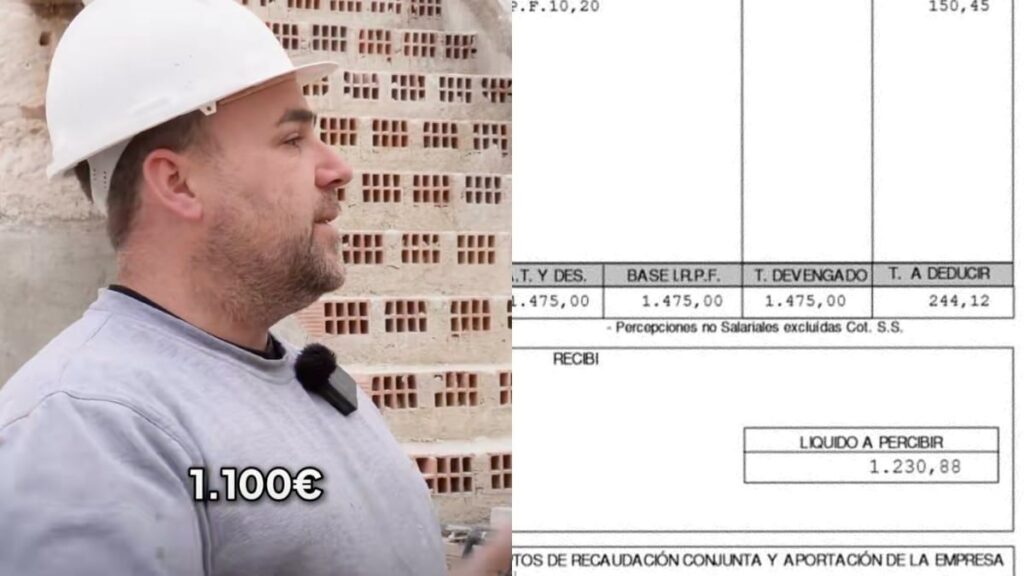
In this context, the influencer Adrián G. Martín has interviewed Albino, a Bolivian bricklayer with more than six years of experience in Spain, that nothing is kept when talking about the current conditions of a trade that, in his words, “is undervalued” and is increasingly attractive to young people. “You pass cold, you pass heat, you leave your back … In the end, we all ended up dusty,” he confesses while remembering the days in which they have to move between 50 and 100 cement bags of 25 kilos each.
You may be interested
Ángela Rosas, young mother: “My husband pays me for being a housewife, I feel recognized”
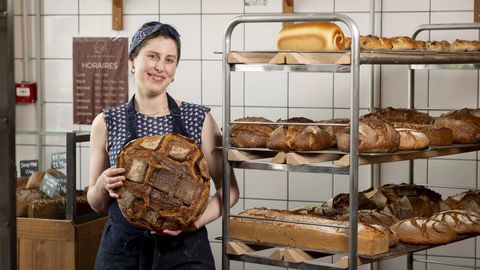
Alice Gréjon, changed working at the UN for being a baker: “I wanted to spend less time doing Excel”
“Before weighing 50, but they were limited by regulations because it was a barbarity for the back.” The physical effort, he says, is constant and little visible to the majority: “You are crouched all day, loading weight, and when you get home, what hurts you most are the knees and back.”
“In Bolivia I won 400 euros, here 1,300 … but I leave my back the same”
The salary, although greater than in its country of origin, remains one of its main complaints. “In Bolivia I earned about 400 euros, here between 1,300 and 1,400 … but I leave my back the same,” he says. The work is dangerous: “Scaffolding, radial, compressors … if you don’t know what you are doing or not take precautions, you play it at any time.”
One of the most serious problems that Albino sees is the lack of generational relief. “Many young Spaniards do not want to work on this. They prefer jobs where they win the same and do not destroy their backs,” he says. In his work, most companions are immigrants: “People are always coming, because if not, there would be enough masons to get the works.”
The reasons for abandonment are clear to him: “Before, when you started, you worked as a pawn, almost free, to learn the trade. Now nobody wants to make that effort. They want to start charging as officers, but they do not know how to put a brick. And the entrepreneurs do not compensate them to hire someone who still does not yield, with which it is difficult to keep a worker.”
“Impossible to buy a home”
The interview also addresses the increase in housing and materials. “Only the plot costs 200,000 euros, and a work like this in which I work can go between 400,000 and 500,000. With a normal salary it is impossible for a young man to get into something like that,” he laments. The price increase has changed everything: “Before a tile cost 49 cents, now more than one euro. Iron, cement, wood … everything has risen, and when it goes up, it doesn’t fall anymore.”
In spite of everything, Albino continues to be proud of his trade. “I like my work, I like to see the final result and think that what I do will be there for many years,” he says. But it also launches a warning: “Our work is devalued. It seems that we only serve to do the dirty work, but without us no one would have a house. If it is not valued and conditions are not facilitated for young people to learn, the construction in Spain will run out of expert hands.”