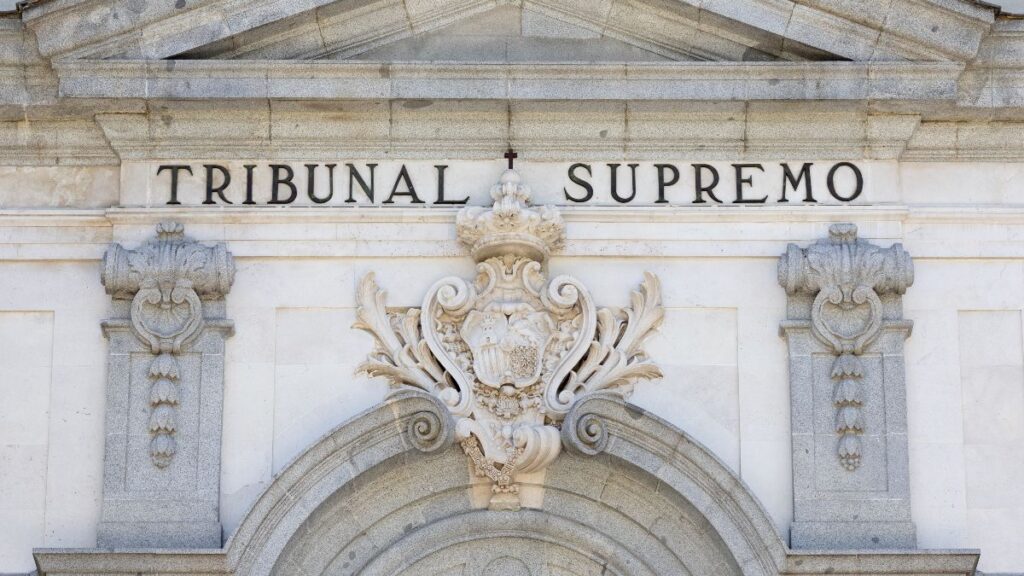
The Supreme Court has validated an administrative liquidation of the State Public Employment Service (SEPE) and a company has been forced to pay more than 750,000 euros to the Public Treasury for carrying out a collective dismissal in which the percentage of workers over 50 years of age was higher than what they represented in the workforce. The High Court establishes that the requirements of Law 27/2011 are met and flexible interpretation criteria cannot be applied in the face of clear regulations that seek to discourage the dismissal of senior workers.
In 2018, a multinational decided to unilaterally break the commercial relationship that it had maintained since 1981 with the affected company, taking away the exclusive distribution of two brands in the El Corte Inglés centers. This loss generated large economic losses for the company between 2018 and 2023 and, as a consequence, in April 2018, a collective layoff began to amortize 41 jobs. Of these 41 workers, 25 were over 50 years old.
Thus, the percentage of dismissed workers (or in similar situations) over 50 years of age represented 66.67% of the total, while before the dismissal, this age group only represented 37.25% of the workforce.
Due to this collective dismissal, the SEPE demanded from the company (dedicated to the trade of electronic products) the payment to the Public Treasury of two settlements corresponding to the years 2020 and 2021, for amounts of 555,603.04 euros and 195,462.98 euros, respectively (751,066.02 euros in total). The claim was based on Additional Provision 16 of Law 27/2011, which obliges companies with benefits that carry out collective dismissals that affect workers aged 50 or over to make a financial contribution.
The conflict reaches the courts
The company, not compliant, challenged both SEPE resolutions and, initially, the Superior Court of Justice of Catalonia agreed with it, annulling them. The TSJ argued that, although the objective requirements of the law were met, a rigid interpretation went against the spirit of the norm.
In this sense, the court reasoned that the dismissal was due to a reasonable business decision (closing the sales line) and not the intention to get rid of seniors to save costs. Furthermore, he concluded that forcing the company to pay these amounts, given its poor economic situation, would lead to bankruptcy, paradoxically generating greater spending on unemployment benefits.
The State Public Employment Service appealed this ruling, filing an appeal before the Supreme Court. In this, he argued that the TSJ of Catalonia had broken the law by adding a requirement that the rule does not contemplate: investigating whether the company fired the seniors with the intention of saving costs.
The SEPE defended that the purpose of the rule is objective (companies with profits that fire people over 50 years of age must contribute to financing the expenses they cause) and that the principle of proportionality could not be applied, since it is not a sanctioning rule.
The Supreme Court agrees with the SEPE: the law must be applied without concessions
The Supreme Court recalled the arguments of a previous ruling (STS 1042/2025) that resolved an identical controversy, appealing to the principles of legal certainty and equality. The High Court indicates that there is no dispute that the objective requirements demanded by Additional Provision 16 of Law 27/2011 are met (company with more than 100 workers, percentage of dismissed people over 50 years of age higher than the percentage in the company, and obtaining benefits).
That said, it clarifies that this economic contribution is not punitive in nature, but rather is a levy of a parafiscal nature (similar to a tax), governed by the principle of legality. For this reason, the Supreme Court rebukes the decision of the TSJ of Catalonia by pointing out that the courts must confirm administrative acts that are in accordance with the law.
Regarding this, it establishes that if a court considers that the strict application of a law may go against the Constitution, it cannot simply disapply it, but must raise a “question of unconstitutionality” before the Constitutional Court, something that the TSJ did not do. Finally, the Supreme Court clarifies that it sees no reasons to consider that the applicable norm is unconstitutional.
Consequently, the High Court ruled in favor of the Administration and upheld the SEPE’s appeal, thus validating the company’s obligation to pay the settlements required by the SEPE, insisting that exceptions not provided for in the law cannot be introduced when the objective requirements are met.