The Government has authorized the release of up to 11.5 million barrels of oil from industry reserves in Spain, in a measure already forecast and are within the 400 million barrels of oil that the International Energy Agency (IEA) agreed to release to address tensions in the markets derived from the conflict in the Middle East.
The decision, approved by the Council of Ministers at the proposal of the Ministry for the Ecological Transition, is part of the international agreement reached by the members of the IEA last week, which consisted of making 400 million barrels available to the market in a period of 90 days in order to address the price of crude oil, which has skyrocketed since the conflict broke out in Iran. In the Spanish case, the committed volume is equivalent to 2.9% of the total and just over 12 days of national consumption.
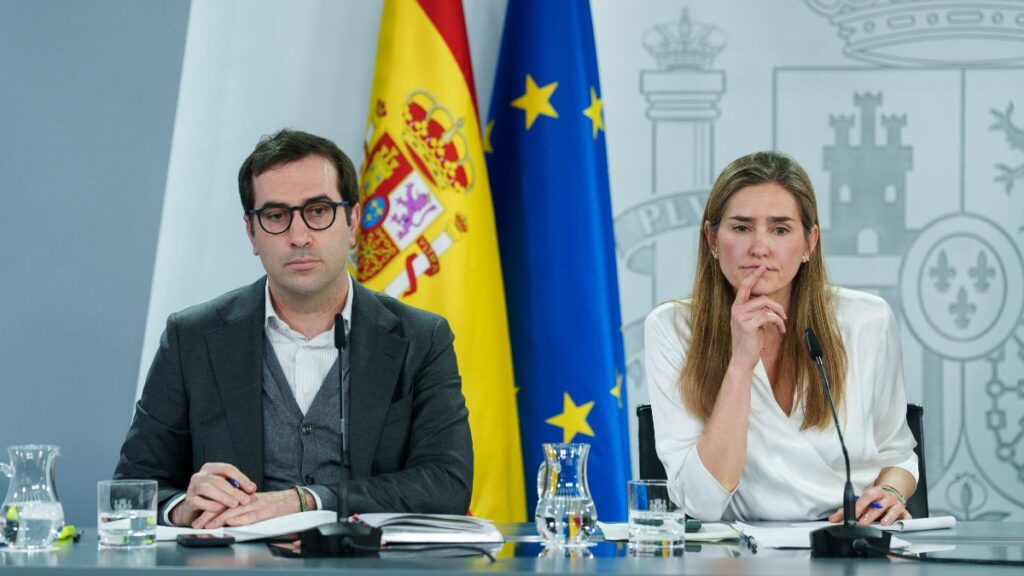
The third vice president and minister of the sector, Sara Aagesen, defended the measure as an “important” tool to cushion the volatility of the energy market in a context marked by geopolitical uncertainty. As explained after the Council of Ministers, the release will be carried out entirely with reserves in the hands of private operators, both distributors and industry, to speed up their arrival to the final consumer.
“It is a procedure that we understand that, after having discussed it, will be the one that will allow these reserves to be brought more quickly to the final consumer,” said Aagesen.
Oil will be released progressively based on how the war evolves
The plan will be implemented in a phased manner. In a first phase, immediately, 3.75 million barrels will be released, which represents about 4 days of consumption, while the following stages will be conditioned by the evolution of the international crisis and its impact on the energy markets.
Spain currently has reserves equivalent to 92 days of consumption, of which 42 days are managed by the Corporation of Strategic Reserves of Petroleum Products (Cores) and the rest correspond to the industry. This cushion allows, according to the Executive, to act with margin in exceptional situations without compromising security of supply.
In terms of products, most of the volume released will be concentrated in diesel fuel, now more important than ever for transport and economic activity, followed by gasoline and, to a lesser extent, fuel oils and kerosene for aviation. The Government anticipates that these resources will be marketed at market prices to facilitate their rapid absorption.
The measure is part of the coordinated response of consumer countries to a risk scenario in the global supply of crude oil, aggravated by the escalation of the conflict in the Middle East. Although the Executive emphasizes that the Spanish energy system maintains stability, it admits that it will be necessary to closely monitor the evolution of prices and international flows in the coming weeks.