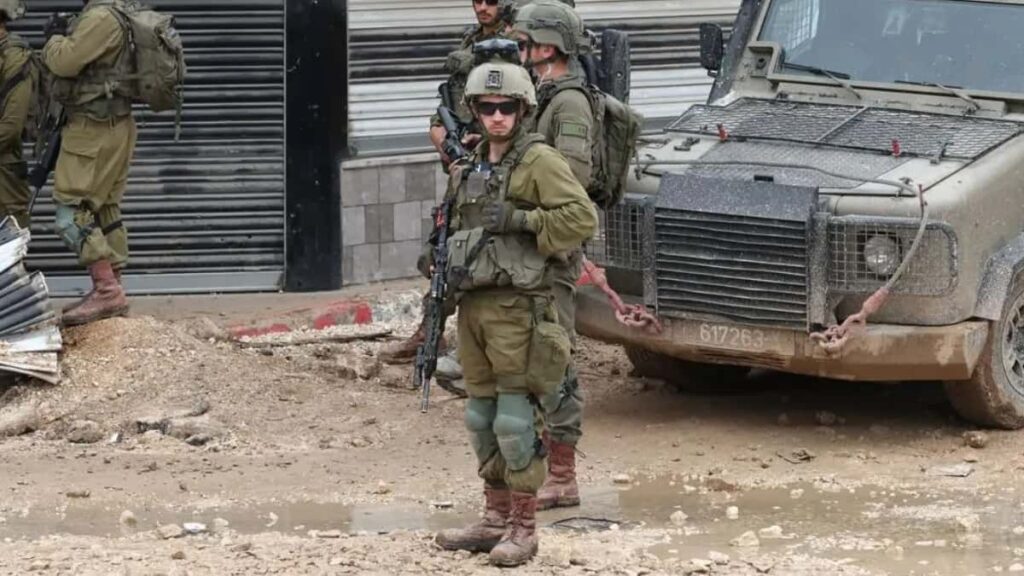
Serving in the Israel Defense Forces (IDF) is a mandatory duty and one of the most demanding roles in the country, especially with the government’s new plans to extend mandatory service to 36 months due to lack of personnel and in the face of its enemies such as Iran. As in any other professional sector, many wonder how much an Israeli soldier earns and what their working conditions are.
Within the Israel Defense Forces there are mainly three types of profiles: the regular conscript soldier, the “Lone Soldier” or Lone Soldier and career officers.
The regular conscripted soldier is a recruit who fulfills his mandatory military service duty and receives a low base salary that varies only according to his operational role and the risk level of his unit. On the other hand, the ‘Lone Soldier’ is also usually a recruit in service, but is characterized by serving in the country while his parents live abroad, which is why the army gives him various benefits to make up for this lack of family help, including additional direct stipends, help to pay rent, food vouchers and financed flights to visit his family.
Career officers are military professionals who have chosen to remain in the military long-term on a voluntary basis. These have housing assistance, academic scholarships and compensation for lost wages for their spouses.
Next, we break down how the salary and benefit tables in the FDI have been for the different profiles, as explained on the website itself. Nefesh B’Nefesh FIDF.
How much does a regular conscript soldier earn?
The base pay of draft recruits varies dramatically depending on their operational role and the risk level of their unit.
| Type of Service | Risk Level | Gross Monthly Salary (Base + Hazard Pay) |
| Fighter | High | NIS 3,010.05 (2,515 base + 495.05 risk), about 813 euros |
| Combat Support | Half | 2,077.68 NIS (1,830 base + 247.68 risk), about 561.17 euros |
| Non-Combatant Support | Low | 1,327 NIS, about 358.42 euros |
In addition to this monthly salary, the military system covers the basic lodging and food needs of soldiers while they are within military installations and bases.
How much does a ‘Lone Soldier’ earn?
The “lone soldier” profile corresponds to those young people who serve in the IDF while their parents live abroad. To support these recruits who face the enormous challenge of lacking a local family network, the army and various organizations provide them with a much superior economic and logistical package. To his regular salary, a direct stipend of NIS 637.11 per month, about 172.08 euros, is added.
| Type of Service | working days | Total Monthly Salary (Salary + Solo Bonus) |
|---|---|---|
| Lone Fighter | According to planning | 3,647 NIS, 985.04 euros |
| Lone Combat Support | According to planning | NIS 2,715, 733.31 euros |
| Lone Noncombatant | According to planning | 1,964 NIS, 530.47 euros |
In terms of conciliation and economic well-being, the advantages for this group are multiplied. Lone soldiers receive an extra monthly NIS 150 (about 40.51 euros) on their military card (choger), which are for making food purchases in supermarket chains, and receive gift cards worth 500 NIS (135.05 euros) on important holidays such as Passover and Rosh Hashanah.
For their accommodation, they can receive up to NIS 1,800 per month (486.17 euros) as assistance to pay the rent for an apartment, or opt for free housing options. The latter include military hostels (Beit Hachayal), rooms in kibbutzim, or apartments fully furnished by the army (Dirat Alach), which give the soldier an extra 400 NIS per month (108.04 euros) for maintenance expenses. Added to this is the right to a 50% discount on the electricity bill and 100% exemption from municipal tax (Arnona) for small apartments.
Finally, they have up to 30 days of leave a year to visit their families abroad, with military-funded round-trip flights up to two times during their service.
What benefits do career officers receive?
For professional military personnel and career officers, the Israeli government recently approved an unprecedented aid package of 3.25 billion shekels (NIS) (877.81 euros) to financially support the troops after the deep economic toll that the war took on them and their families.
Along with the salaries of their scales, this package includes funds aimed at facilitating direct subsidies for housing needs and the recovery of academic benefits. As a vitally important social and family benefit, the State will be responsible for replacing the lost wages of those spouses who have been forced to leave their jobs to care for a physically or emotionally injured officer or soldier who requires regular care. Additionally, staff have an internal digital platform designed to access multiple discounts in the civil sphere.