The European Union has begun the process to provisionally apply the free trade agreement with the countries of Mercosurafter Argentina and Uruguay have completed their respective ratification procedures.
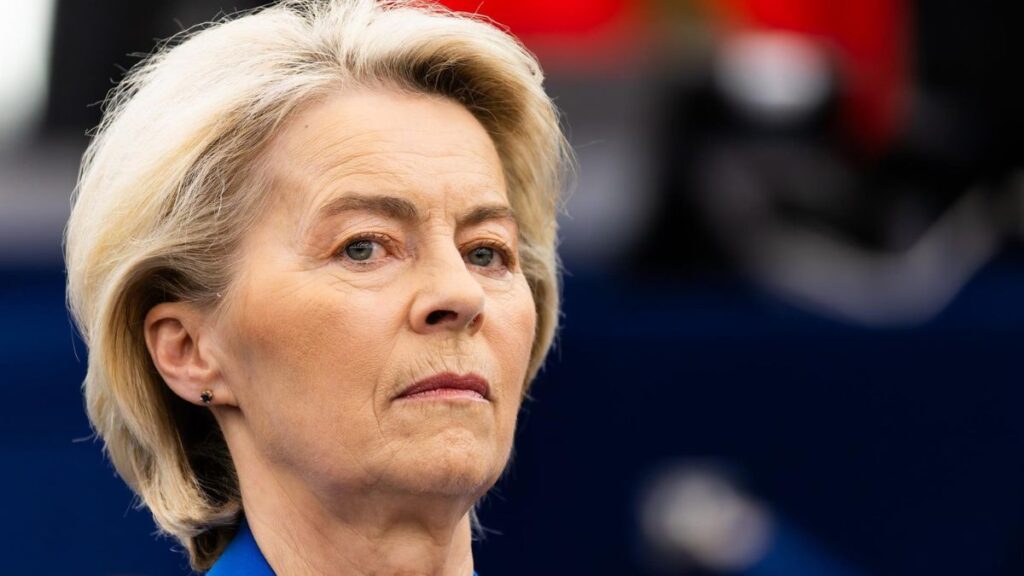
This was announced this Friday by the president of the European Commission, Ursula von der Leyenwho has stressed that the step responds to Brussels’ desire to reinforce its economic autonomy in an international context marked by instability, according to ‘Europa Press’.
“This is about resilience, about growth and about Europe forging its own future,” Von der Leyen said in a statement without questions from the Commission’s headquarters in Brussels. The German leader recalled that the Council, which brings together the Governments of the Twenty-seven, gave the green light last January to proceed with the temporary application of the trade pillar when the necessary conditions were met.
In this way, the Commission considers that this requirement has already been satisfied after ratification by Uruguay and Argentina. Since the signing of the pact, Brussels had maintained that “the Union would be ready when the Mercosur countries were ready”, although the Community Executive has not yet specified the exact date on which the provisional application will come into force.
An agreement after 26 years of negotiations
The EU and the four Mercosur countries (Argentina, Brazil, Paraguay and Uruguay) signed the political and trade agreements in January that culminate almost 26 years of negotiations. The treaty creates one of the largest free trade spaces in the world and contemplates the progressive elimination of tariffs in numerous industrial and agri-food sectors, in addition to commitments on sustainable development and regulatory standards.
For this reason, Brussels defends the agreement as a tool to diversify markets, strengthen supply chains and reduce strategic dependencies. However, the pact has sparked strong rejection among European agricultural organizations and in several member states, including France and Poland, which fear a negative impact on sensitive sectors such as beef or sugar.
Final approval depends on Parliament and the European court
The provisional application would only affect the commercial part, the exclusive competence of the EU, which allows its interim entry into force once at least one of the Mercosur countries has completed its national ratification process, a condition already met.
The definitive entry into force of the entire agreement, on the other hand, requires a more complex procedure, since the formal adoption has to take place by the Twenty-Seven and the consent of the European Parliament, which can approve or reject the text, but not modify it.
The vote of the European Parliament remains in the air waiting for the Court of Justice of the European Union to rule on an appeal presented by MEPs regarding the compatibility of the pact with Community law.